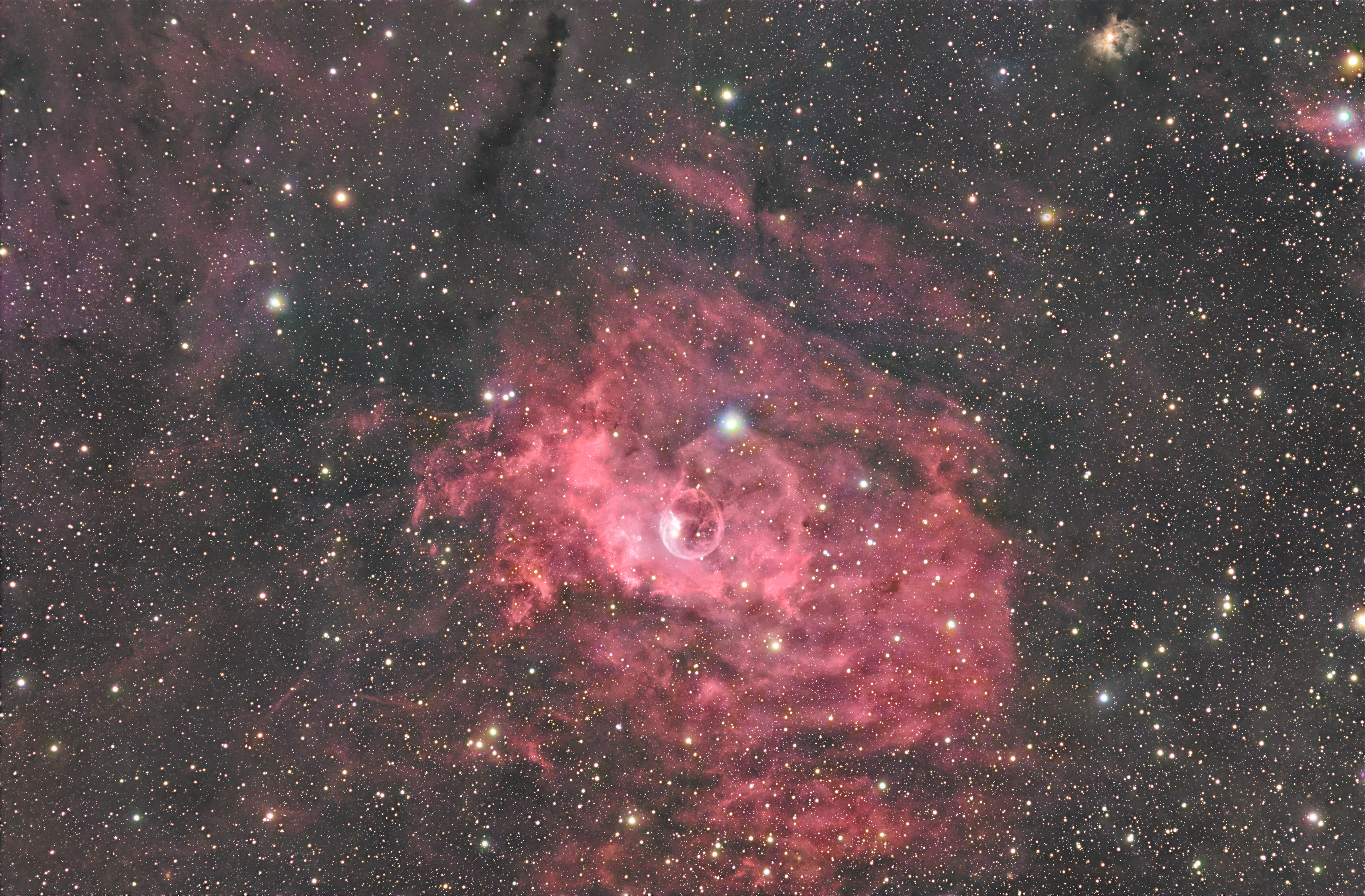
Observation by Paul Whitmarsh: NGC 7635 The Bubble nebula

Uploaded by

Paul Whitmarsh

Observer

Paul Whitmarsh

Observed

2026 Aug 14 - 03:06

Uploaded

2026 Aug 14 - 23:16

Objects

The Bubble Nebula (NGC7635)
Sharpless 162

Equipment
  • 152mm F7.9 refractor
  • Player One Poseidon-M Camera
  • Astronomik R G B CCD filters
  • Astronomik Luminance filter
Exposure

300s x 199 Luminance, 300s x 38 each in RGB

Location

Jasper Observatory Mileaway

Target name

NGC 7636 Bubble nebula

Title

NGC 7635 The Bubble nebula
About this image

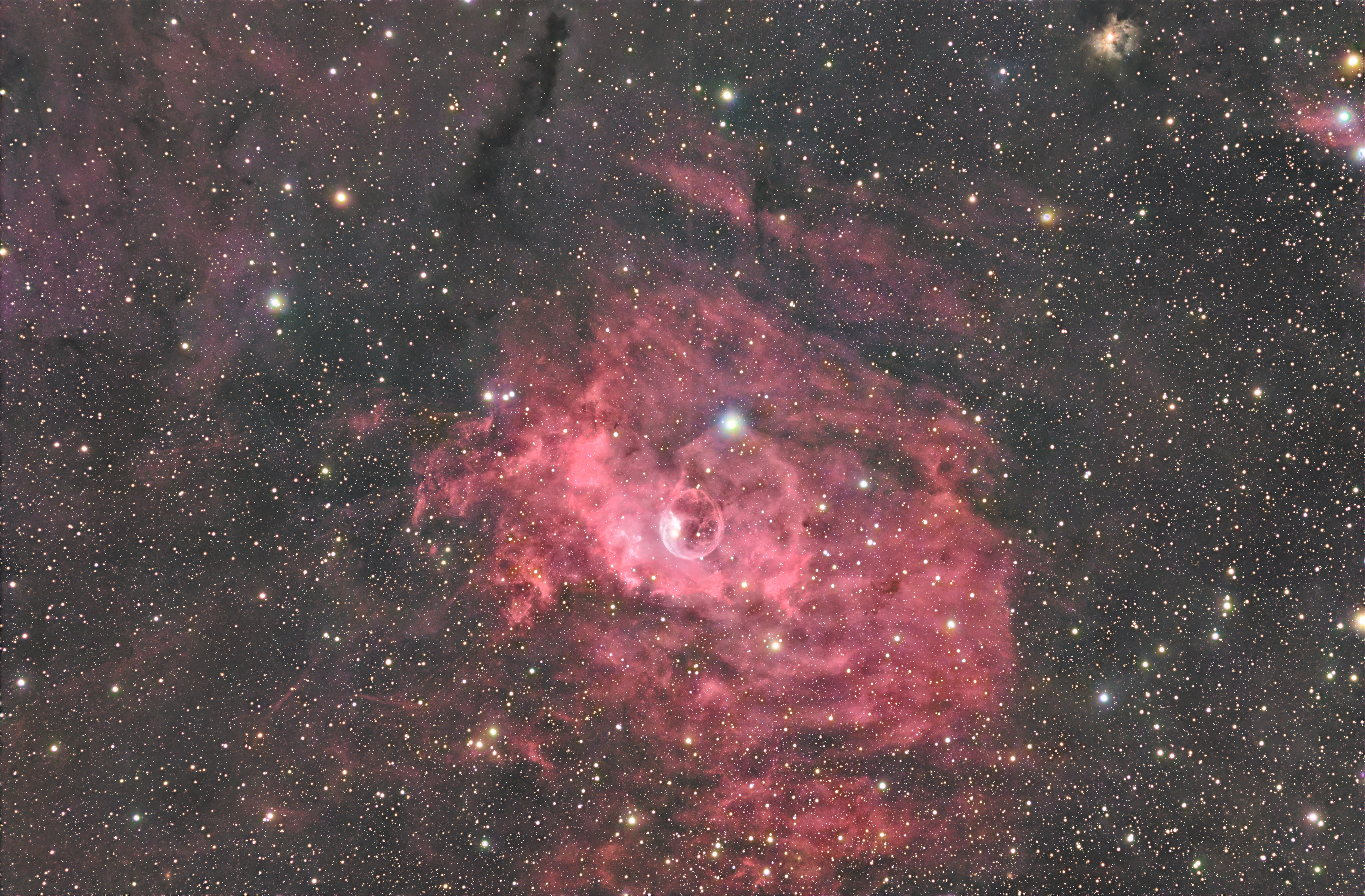
This image is of NGC 7635, known as the Bubble Nebula. It was taken with a 152mm f/7.9 scope and a Player One Poseidon-M mono camera. The total exposure was 16h 35m through a luminance filter, plus 3h 10m each through red, green and blue filters. Taken over several nights from 7th to 14th August.


The nebula is in the constellation of Cassiopeia. It is an H II region, a cloud of gas in which the hydrogen has been ionised by the radiation from a hot, massive star. At its centre is a bubble, from which the nebula gets its name.


The star that is exciting the nebula is not, as you might expect, at the centre of the bubble. Instead, it is embedded in the bright area on the left-hand side, giving the nebula the appearance of a diamond ring. This monster of a star is called BD +60° 2522. It is estimated to be around 44 times as massive as the Sun and has a spectral type of O6.5, with a surface temperature of around 37,500 K. 


Another astronomical rock star, one that lives fast and dies young. Its enormous luminosity drives a powerful stellar wind, which has excavated a bubble in the surrounding gas and dust from which the star was born. 


If you look a little further to the left, you can see a brighter area with structures that look like fingers reaching towards the bubble. These are dense clumps of gas and dust that are resisting the effects of the star’s powerful radiation and stellar wind. The radiation is eroding and illuminating the clumps, producing the distinctive finger-like structures. Some are described as cometary knots or globules. 


Some estimates suggest that the Bubble has a diameter of around 7 light-years

Files associated with this observation
Like this image
Copyright of all images and other observations submitted to the BAA remains with the owner of the work. Reproduction of work by third parties is expressly forbidden without the consent of the copyright holder. By submitting images to this online gallery, you grant the BAA permission to reproduce them in any of our publications.