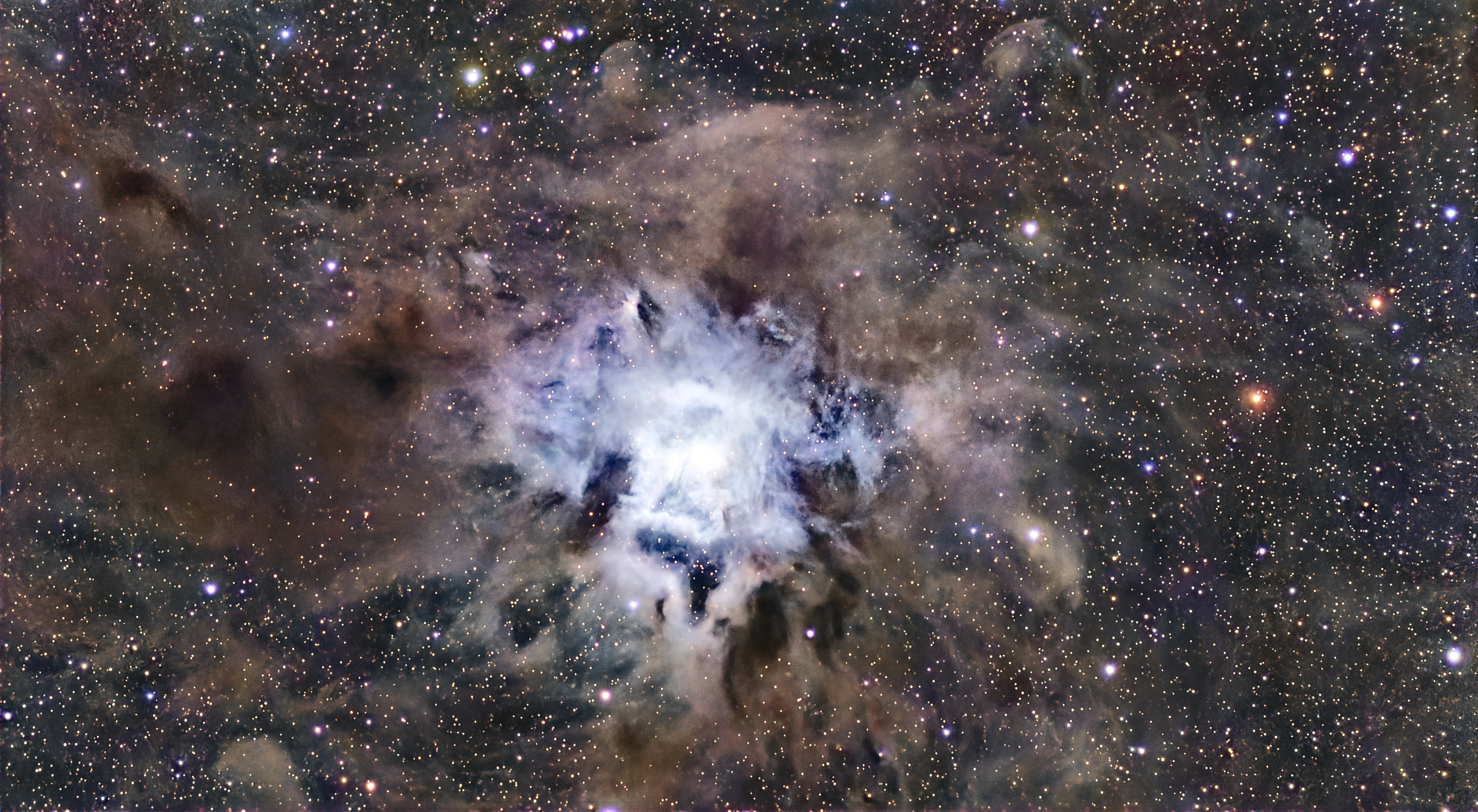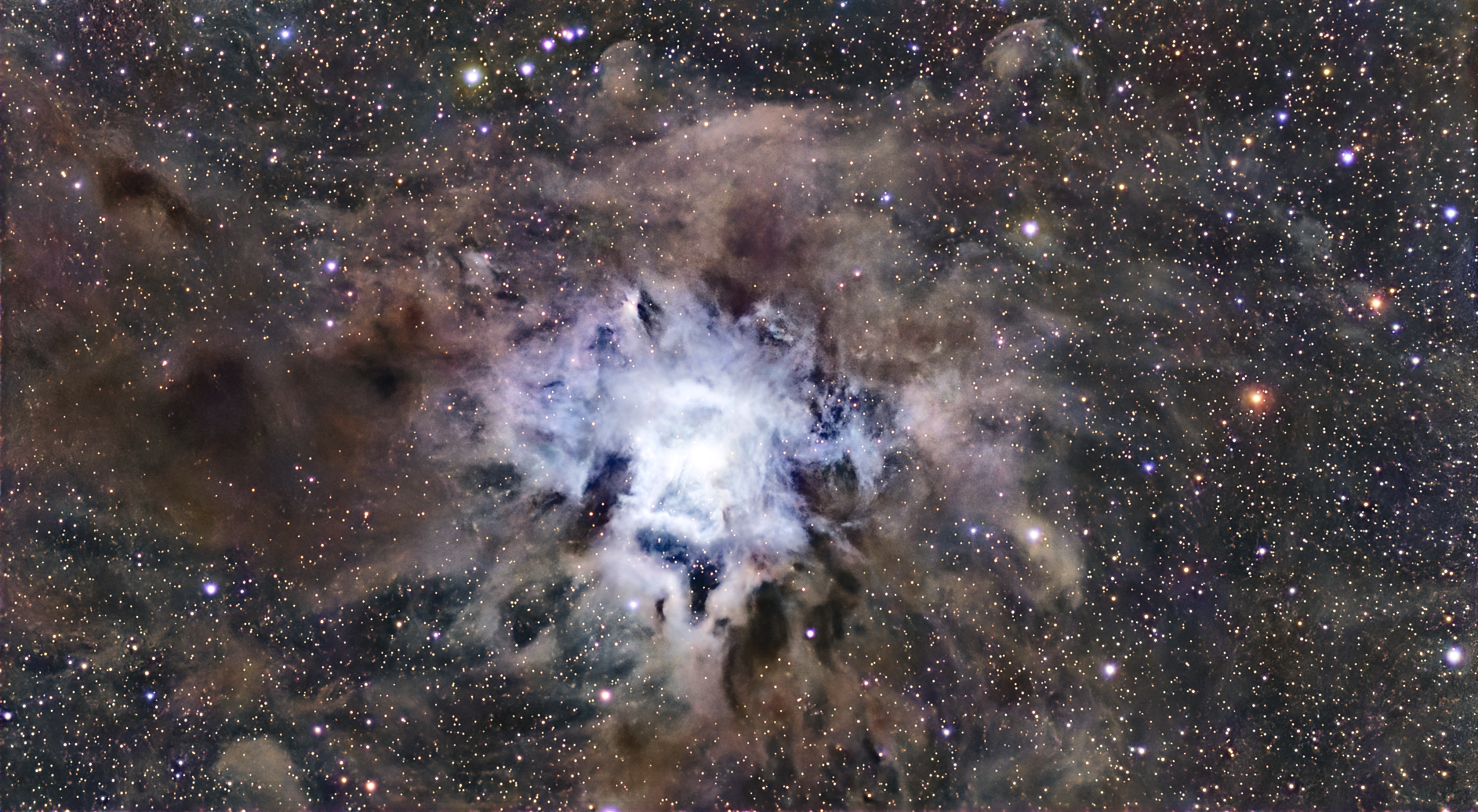
This image was captured between 15th September and the 10th October 2026
NGC 7023 is a reflection nebula in the constellation of Cepheus, better known as the Iris Nebula. Its blue, flower-like petals are formed by starlight scattered by dust within the surrounding cloud. The visible nebula is just a small part of a much larger molecular cloud, a region where new stars are forming.
The star cluster Collinder 427 can be seen peeking through a key hole in the nebula, to the bottom in this image.
The nebula is illuminated by HD 200775, a young, hot binary star system embedded in the cloud. Its two components have estimated masses of around 10 and 9 times that of the Sun. They are classified as Herbig Be stars, young, massive stars that are still in the process of reaching the main sequence.
As these stars formed, gravity caused the material within them to contract and heat up. Gravitational contraction provides energy during this process, but stars of this mass can begin hydrogen fusion before they have fully settled onto the main sequence, where stars spend most of their lives generating energy by fusing hydrogen into helium.
The stars also produce powerful radiation and stellar winds that interact with the surrounding gas and dust. Over time, these effects can disperse the material from which stars form, potentially bringing star formation to an end nearby. However, the compression of surrounding gas can also trigger the formation of new stars.
For now, we can enjoy this beautiful cosmic bloom in the northern sky.