
› Forums › General Discussion › Use of night vision devices (NVDs) for visual observing
Tagged: Night Vision; NVD
- This topic has 0 replies, 1 voice, and was last updated 1 hour, 52 minutes ago by
Joel Silber.
-
AuthorPosts
-
16 October 2026 at 11:47 am #643408
Joel Silber
ParticipantI read Callum Potter’s article in the August 2026 journal entitled “The North America Nebula — A visual challenge” and mused that it’s not a challenge for me at all with my 4″ Tak FC-100DC, Tele Vue 55mm Plössl and 67mm converter, a narrowband H⍺ filter, and a night vision device (NVD).
I’ve been fortunate enough to own an NVD since March this year and it’s been transformational for me under B5 (19.4 to 20.4 mag/arcsec²) skies, initially with my Tak and more recently with a C11 EdgeHD. I was wondering if anyone else in the BAA uses a night vision device (NVD) for visual observing?
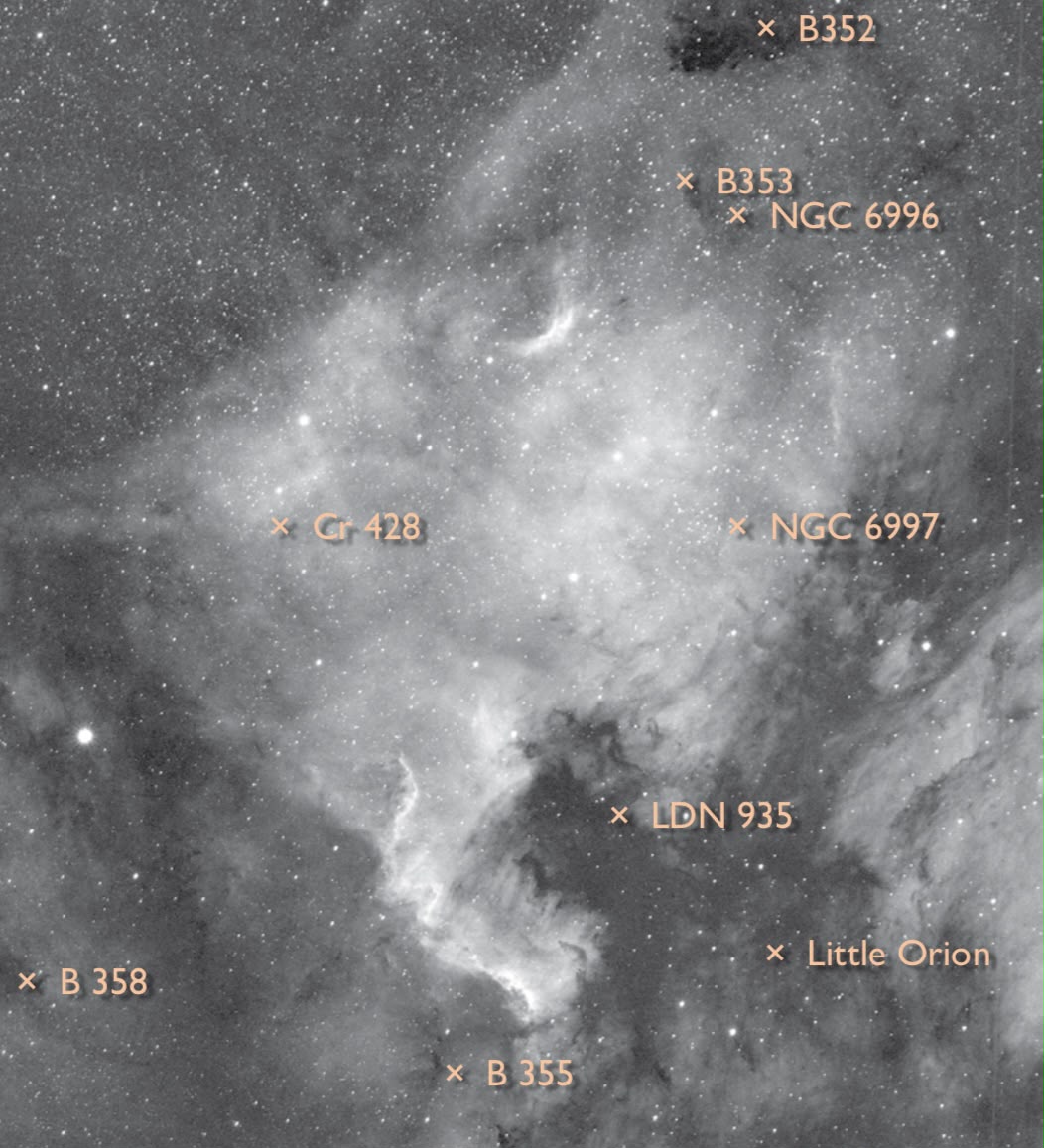
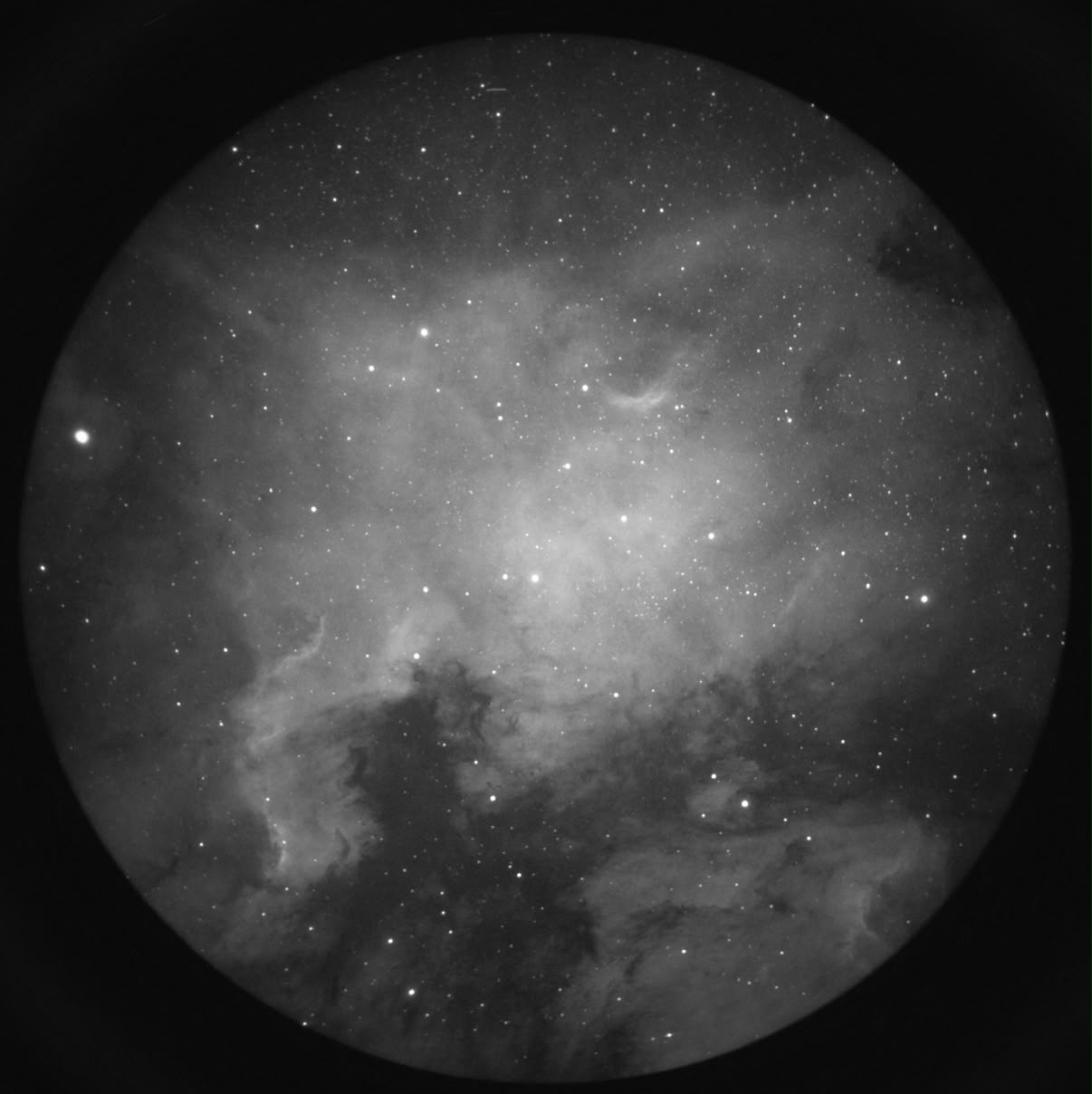
I attach an image taken from that article and a friend’s afocal image taken through his NVD from the Isle of Wight under a 21.0 mag/arcsec² sky. Not bad for a 30 second phone shot with no post processing! The slightly wider-field view is better than I see from my skies, but not by that much; it’s not a question of whether or not I can see the NAN, but how much detail I can see.
One can argue the merits of whether or not it’s “real” vs. a pure glass experience — I’m told that the subject of NV has been met with hostility in the past on Stargazers Lounge — but I find that kind of discussion moot. I retain the experience of looking through a scope in real-time (vs. EAA/stacking) and I see things that I’d never see otherwise. Based on how rich the Wild Duck Cluster looks through my 4″ Tak, its notional limiting magnitude, and the B5 sky, I estimate (very roughly) that I’m probably getting an additional three magnitudes of reach with both scopes. To steal a phrase from The Martian, I regard the use of NV in astronomy as “sciencing the sxxt” out of the light pollution mess that we find ourselves in today.
See also this Tele Vue blog article by Gavin Orpin. Al Nagler was a huge proponent of NV in astronomy, something which is continued by David Nagler.
-
AuthorPosts
- You must be logged in to reply to this topic.