
Saturn 2026 Apparition Notes
Return to the Saturn, Uranus and Neptune Section home page
2026 April
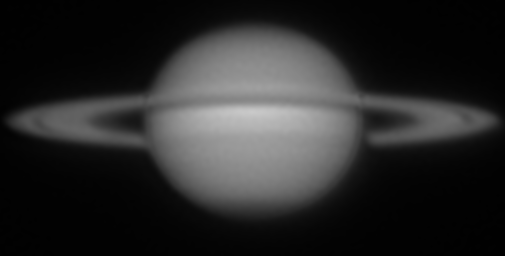
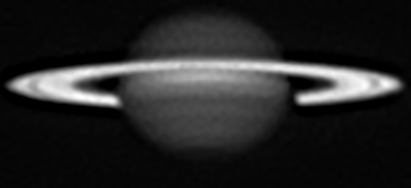
The first observation of Saturn for this apparition was made by Trevor Barry on April 26, followed by observations made on April 27. On both dates, the planet was low and images were taken with both an IR filter (IR >685nm) and a methane filter. The south face of the rings is now tilted towards the Sun and the Earth, and the Cassini Division was visable in each ansae. The EZ was bright in IR but only the northern half was brighter in methane with a prominent EZB also visible in methane.
2026 May
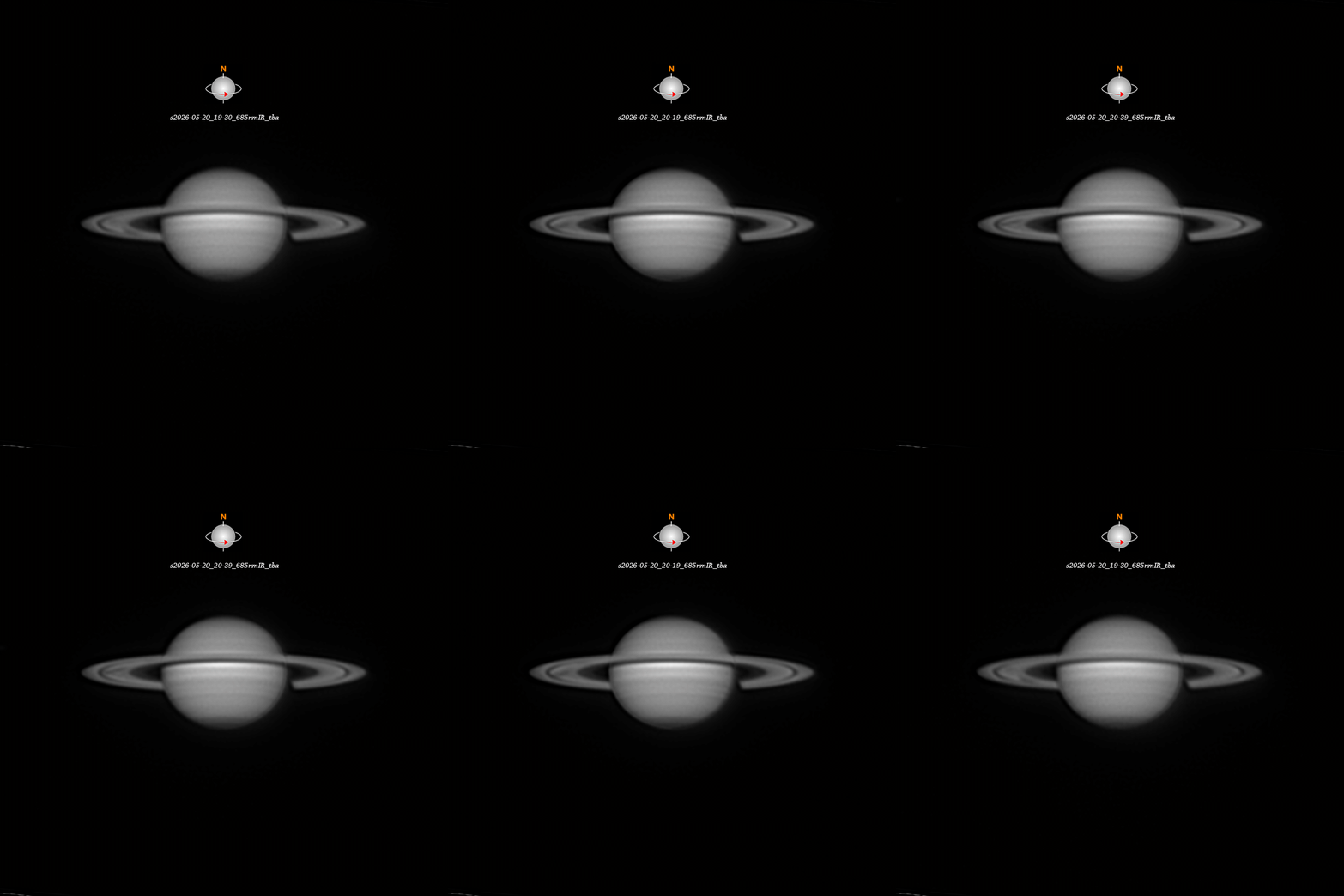
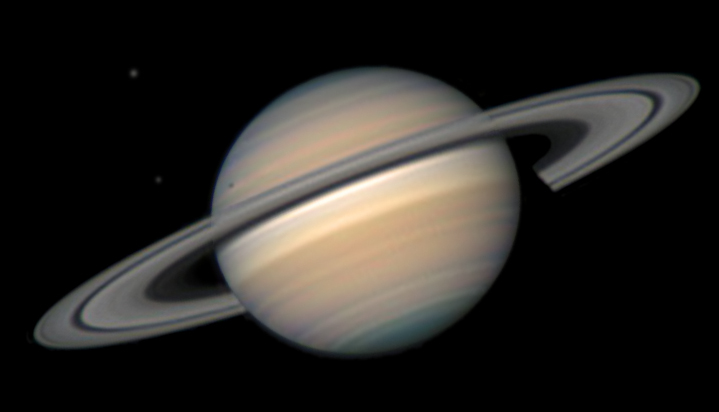
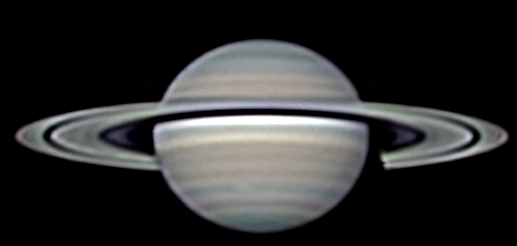
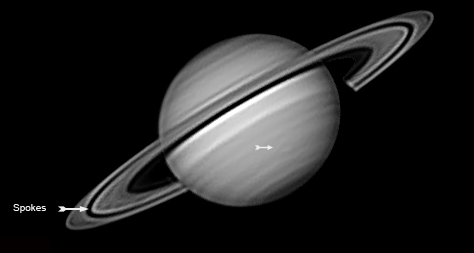
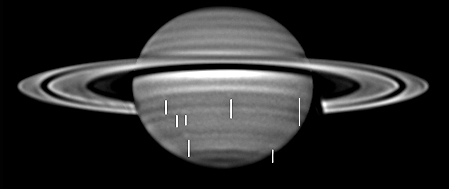
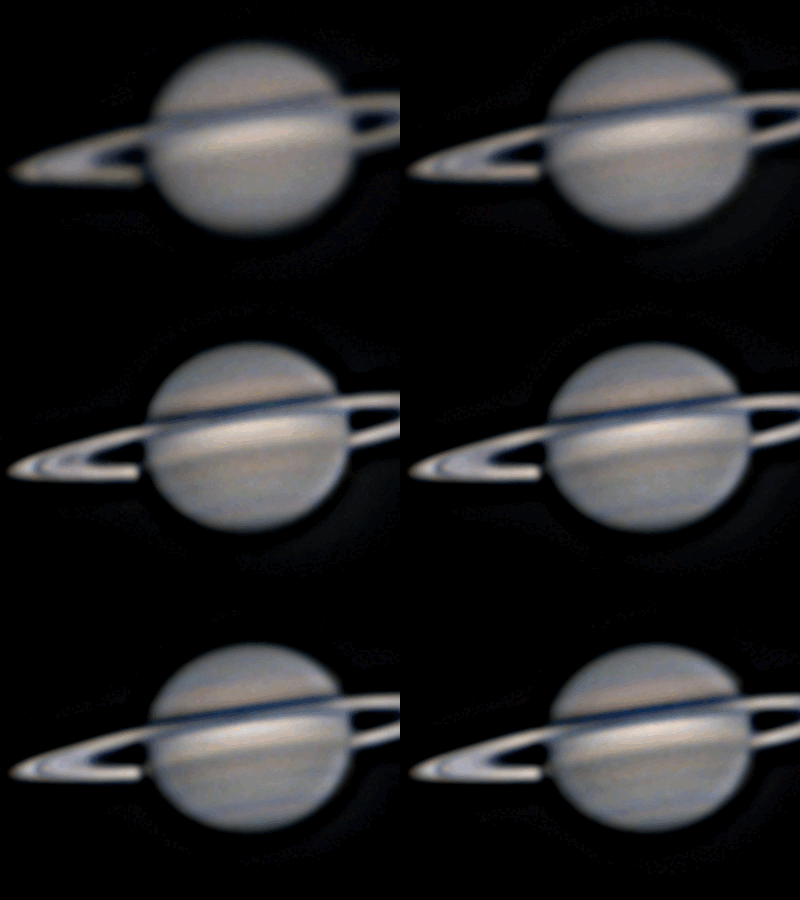
During May, further observations were made by Trevor Barry, i.e. on May 3, 10, 18 and 20, again with IR (>685 nm) and methane (890nm) filters and Efrain Morales on May 29. With improving conditions as the planet became higher, more detail was recorded including more belts and zones. On May 3, Dione’s shadow was recorded in transit. On May 18, some light spots were recorded at approximately -7 degrees, -43 degrees and 60 degrees. On May 20, Trevor made a remarkable observation recording spokes on Ring B using both the IR and Methane filters. An animation of these images is shown below.
2026 June.
During June, observations have been received from Trevor Barry on June 7, 10 and 21; Kevin Kell on June 3, 24 and 29; Efrain Morales on June 4 and 6; Gregory T. Shanos on June 23 and Peter Tickner on June 13.
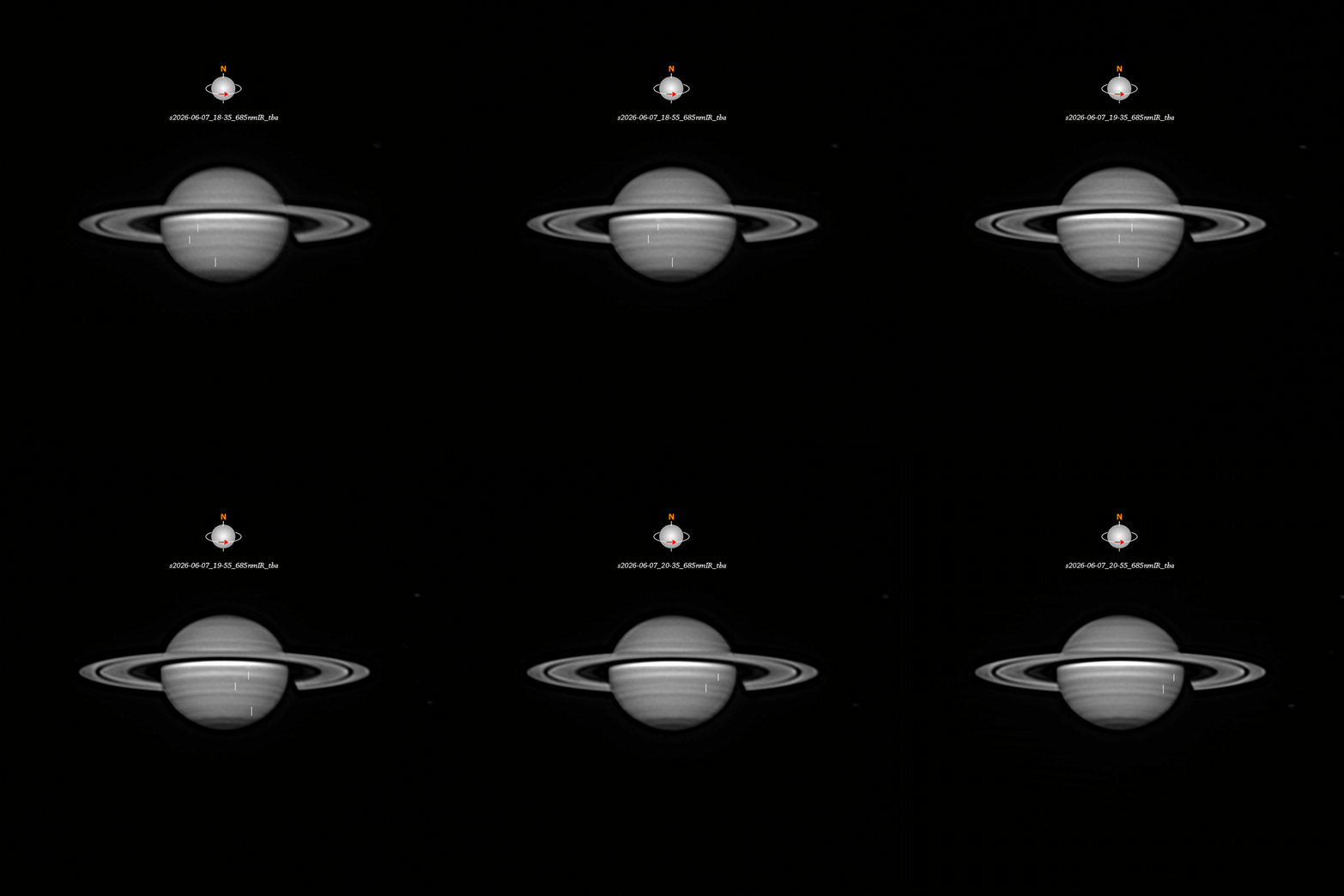
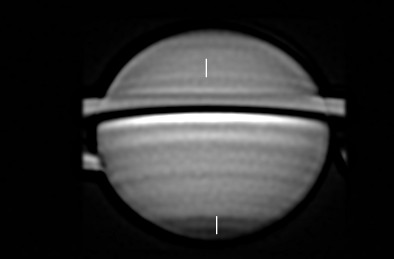
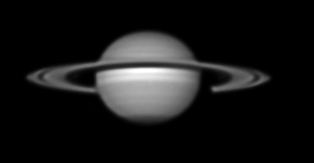
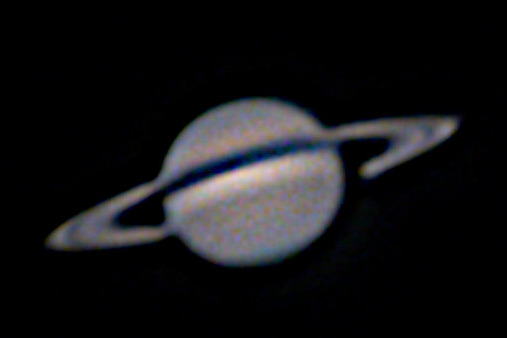
All observations have revealed the major belts with a bright EZ. Trevor was able to image the long-lived Anti Cyclonic (AV) vortex on June 21 with an approximate latitude of 43 degrees north. This was the first observation of this object during this apparition. He again imaged ring spokes; this time on June 7. Trevor has also recorded a number of light spots including an oval at approximately 43 degrees south (on (June 7 and 10) and one at 58 degrees south. During the last apparition, similar ovals were observed at these latitudes but further observations are required to see it they are identical.
2026 July
With the increasing altitude of the planet, more observations were received during this month. Observations have been received from Paul Abel on July 20; Trevor Barry on 6, 15, 27 and 31; David Basey on July 4 and 7; David Graham on July 24;Alun Halsey on July 25 and 28; Mike Hood on July 4; Mike Karakas on July 5, 6, 9, 10, 18 22 and 28; Kevin Kell on July 7, 12, 20 and 23; Efrain Morales on July 23 and 26; Luigi Morrone on July 21; Damian Peach on July 9, 17, 21, 22, 24, 25 and 29; Randy Tatum July 10; Peter Tickner on July 11, 15, 16, 18, 22, 25, 28,29 and 30; Anthony Wesley on July 7, 10, 21 22, 23, 27 and 31.
The long-lived Anti Cyclonic oval was detected by Trevor on July 15, 27 and 31. It was also detected by Anthony on July 31. Spots have also been detected in the EZ(S), the SEB and STropZ. The two light ovals in the southern hemisphere have continued to be visible.
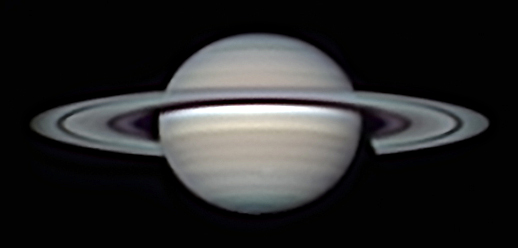
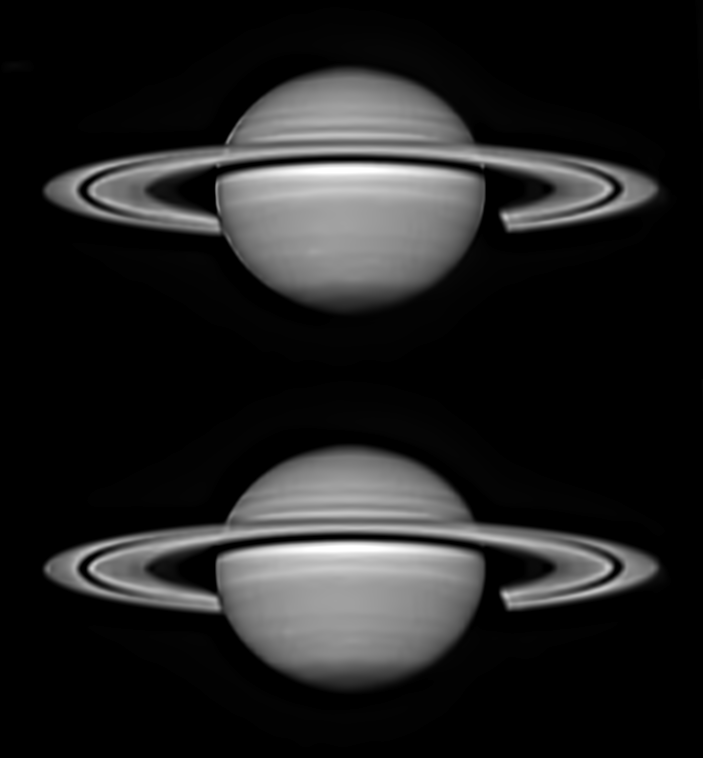
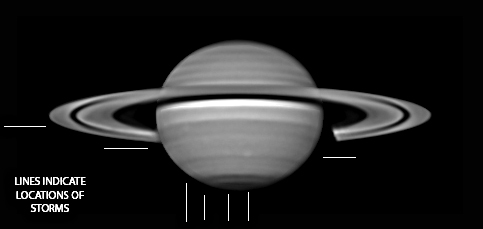
Ring spokes have been frequently reported during this month; often using IR filters. They appeared on the f. side of Ring B. Observations by Anthony using IR filters on July 7, 10, 21; Damian on July 24 and 25; Mike K. on July 5, 9 and 28 and Randy on July 10. They were suspected on other dates in images taken by Anthony and Mike K.
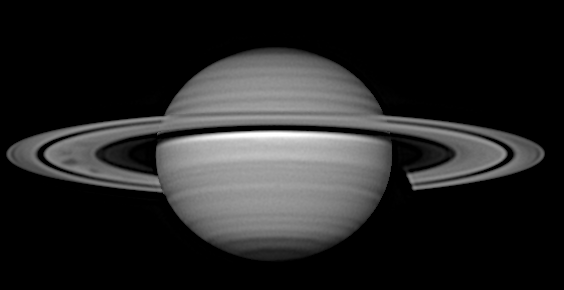
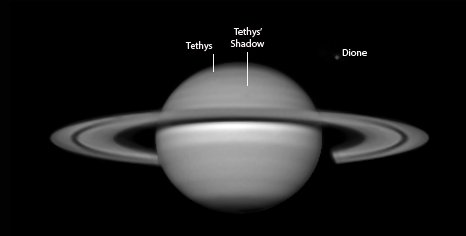
Transits of Dione’s shadow were observed by Trevor on July 27 coupled with Dione and its shadow on July 31. Tethys shadow transit on July 9. Transits of Tethys and its shadow were observed on July 5 (Mike K), July 11 (Peter), July 22 (Mike K) and July 28 (Peter). Damian observed a shadow transit of Tethys on July 9.
2026 August
During this month observations have been received from: Paul Abel on Aug 7; Trevor Barry on Aug 12, 20, 22 and 30; David Basey on Aug 3, 8,11, 24 and 25; Rob Bullen on Aug 24; Mike Hood on Aug 9, 19 and 20; Mike Karakas on Aug 1, 9, 11, 19 21, 23 and 27; Manos Kardasis on Aug 19; Kevin Kell on Aug 5, 11, 18, 21, 22 and 29; Bill Leatherbarrow on Aug 22 and 23; Paul Mettam on Aug 22; Efrain Morales on Aug 7 and 13; Damian Peach on Aug 3, 4, 6, 7, 8, 11, 14 and 28; Gregory T. Shanos on Aug 3 and 10; Randy Tatum on Aug 26 and 30; Peter Tickner on Aug 2, 3, 7, 8, 20, 23, 24 and 28; Jim Tomney on Aug 19; Gary Walker on Aug 9, 20 and 25; Anthony Wesley on Aug 1 and 3.
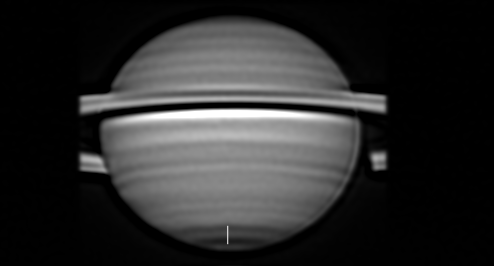
Recently there has been an announcement of the discovery of a Decagon wave in Saturn’s southern hemisphere (A Decagon Wave around Saturn’s South Pole . Agustin Sanchez-Lavega et al. Sci.ADV 12(36) DOI 10.1126/sciadv.aee4251, 2 Sep 2026). Trevor is a co-author of this paper.
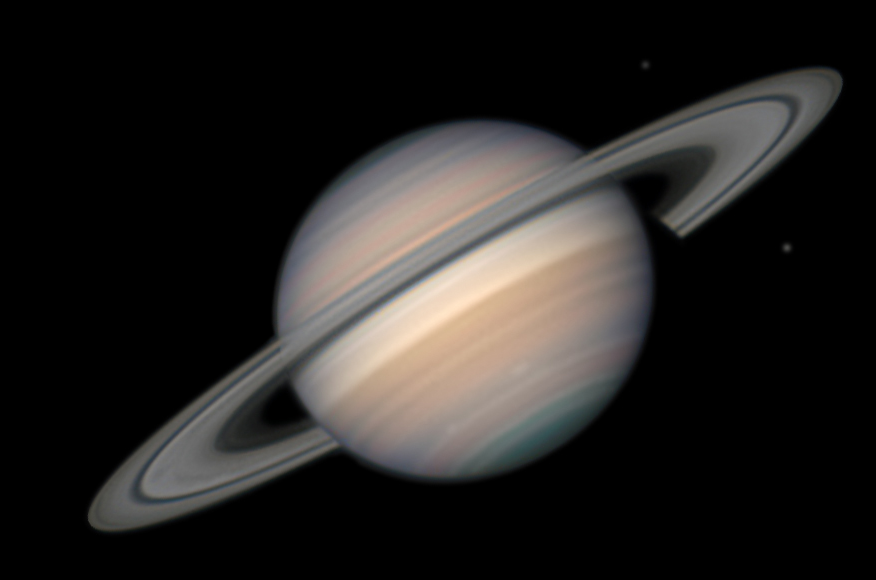
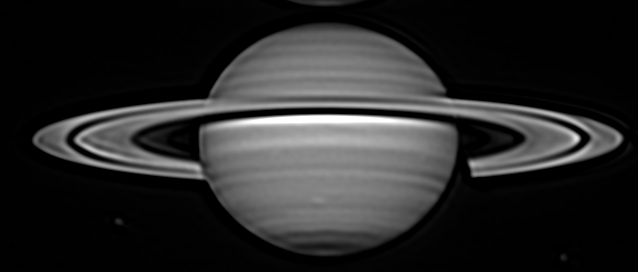
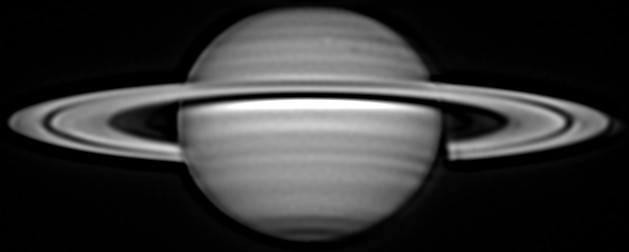
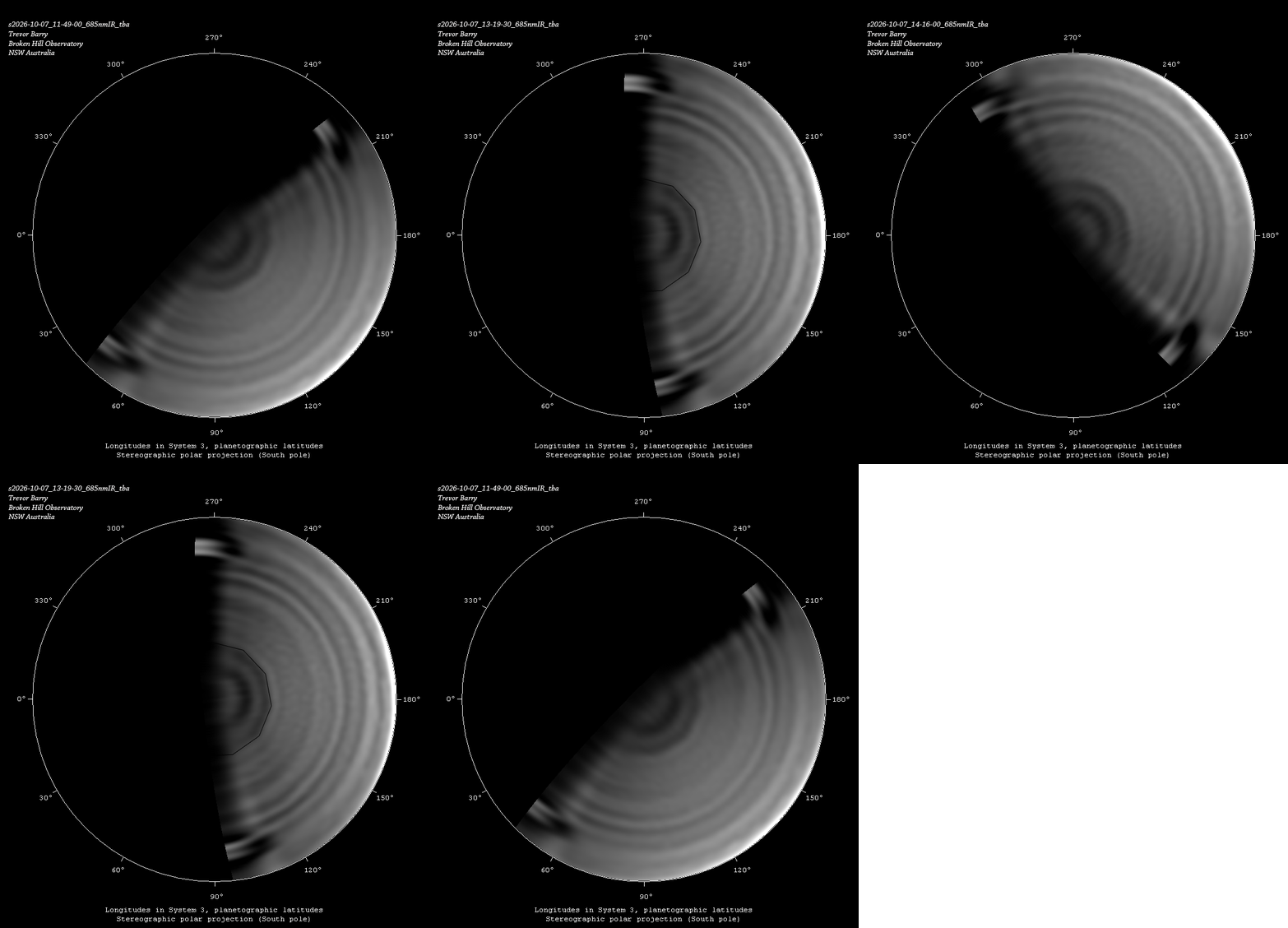
During the last apparition, Trevor reported ‘ripples’ at high southern latitudes which may have been vertices of this features. Further, On Aug 30, he imaged one of the vertices of this feature (see below).
Higher resolution images have revealed a number of belts, some of which were narrow. Some very approximate planetographic latitudes of these belts are given below. However these will be revised with more latitude measurements, as will fitting these into the classical nomenclature. In the northern hemisphere, a broad double belt extended from 54 to 46 degrees north, with a narrow dark belt centred at 40 degrees north. Some images show a narrow dark belt centred at approximately 19 degrees north with several fainter narrow belts further north. These cover the latitudes of the NEB described in previous apparitions. The southern EZ was bright and yellowish white in colour and divided by a broad EB. This stretched from approximate latitudes 5 to 10 degrees south although some images showed a narrow belt further north centred at approximately 2 deg south. The most prominent southern hemisphere belt lay from approximately 14 to 26 deg south which was probably the SEB(N) based on previous apparition latitudes measurements. A fainter double belt lay from 30 to 36 deg south – probably the SEB(S). Further south was a double belt lying from 41 to 48 degrees south. Embedded in this belt was the prominent southern hemisphere oval. Another double belt lay from 51 to 59 degrees south. The northern edge of a dark belt lay at 62 to 63 degrees south which is the approximate latitude of the decagon.
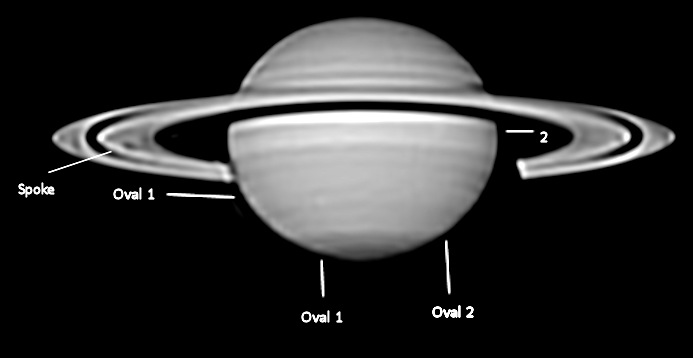
A number of spots have been detected at a number of latitudes including the long-lived southern hemisphere spot at 42 to 44 degrees south, one further south and a white spot in the EB. The AV was detected by Trevor on Aug12 but it appeared faint.
The shadow of the planet onto the rings was visible on the p. side but slowly narrowed throughout the month. The shadow of the rings onto the planet was projected onto the southern EZ; south of where the rings crossed the planet.
Ring spokes have been recorded on the f. side of Ring B throughout this month. The following lists the dates when they have been definitely recorded, although they were suspected on a few other dates. Aug 3 (Anthony), Aug 7 (Damian, Peter and Efrain), Aug 8 (Damian), Aug 9 (Gary), Aug 10 (Gregory), Aug 11 (Damian), Aug 14 (Damian), Aug 20 (Peter) Aug 23 (Bill and Peter) and Aug 28 (Damian).
Some satellite transits were observed this month. Transits of Dione’s shadow were detected on Aug 21 (Mike K.) and on Aug 28 (Peter). Transits of Tethys and shadow were observed on Aug 14 (Damian) and Aug 25 (Gary). Enceladus was detected by Kevin on Aug 22 and Peter on Aug 28.
2026 Sep
During this month, observations have been received from: Paul Abel on Sep 23; Trevor Barry on Sep 5, 10, 17 and 21; David Basey on Sep 1 and 25; Guy Earle on Sep 18 and 19; Mike Foulkes on Sep 21 and 24; David Graham on Sep 11, 15, 23, 26 and 28; Alun Halsey on Sep 16; Mike Hood on Sep 1, 9, 15 and 29; Chris Hooker on Sep 21; Mike Karakas on Sep 2, 3, 20 and 21; Manos Kardasis on Sep 21 and 25; Kevin Kell on Sep 4, 7, 14 and 18; Paul Mettam on Sep 12, 15 and 22; Efrain Morales on Sep 30; Luigi Morrone on Sep 5 and 28; Peter Mulligan on Sep 28; Damian Peach on Sep 20, 21, and 22; Mattia Piccoli on Sep 5; Karl Schwarzkopf-Bowers on Sep 21; Gregory T. Shanos on Sep 15, 18 and 27; David Strange on Sep 21; Peter Tickner on Sep 6, 9, 12, 16, 21, 22 and 24; Gary Walker on Sep 4; Anthony Wesley on Sep 10, 11, 12, 13, 14, 16, 18, 19, 23, 25, 27, 29 and 30; Callum Wingrove on Sep 9 and 25.
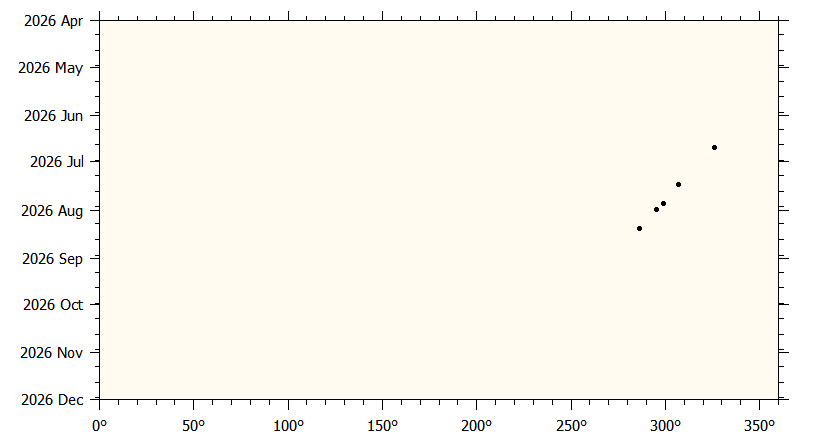
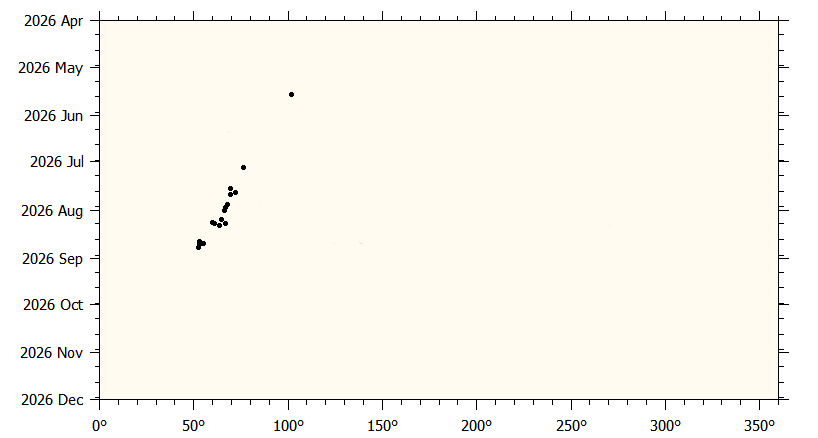
Some light spots have been recorded on the EB in a few observations. If more data becomes available, a drift chart may be generated with the October notes. The white oval at approximate latitude of 42 to 44 degrees south was followed by many observers. The AV was difficult to detected but was observed by Anthony on Sep 13 and Trevor on Sep 17. Updated drift charts for both of these be added with the October notes. One very high southern latitude white spot was detected by Anthony on Sep 19 at an approximate System III longitude of 72 degrees.
The shadow of the planet onto the rings was visible on the p. side but was becoming narrower as the planet approached opposition. The shadow of the rings onto the planet was projected onto the planet; south of where the rings crossed the planet and through ring C.
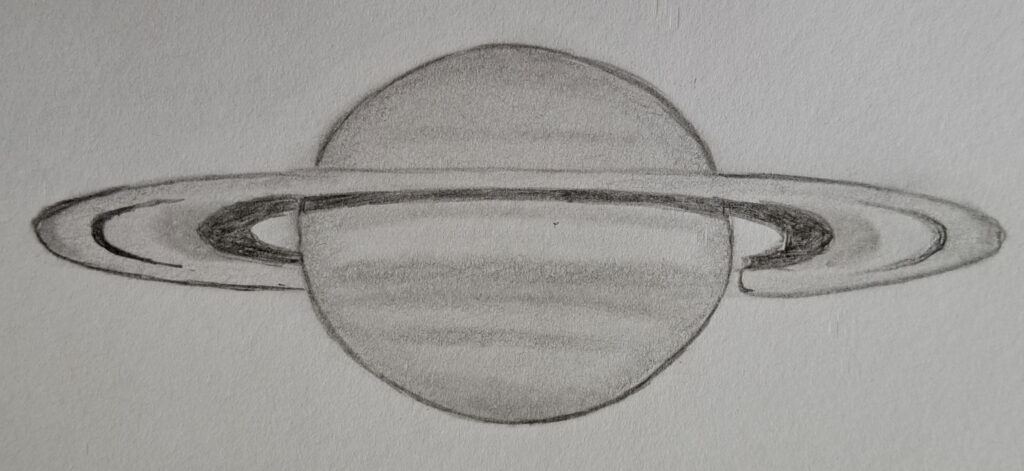
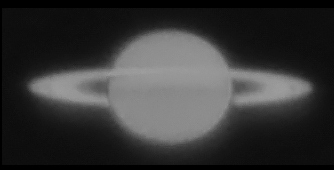
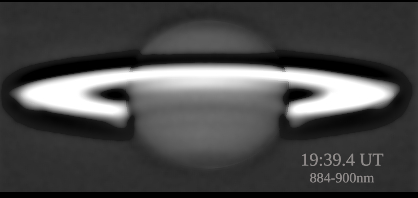
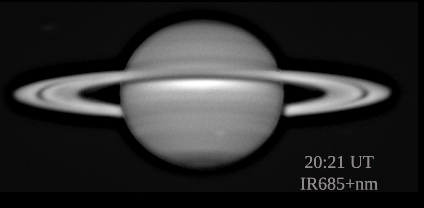
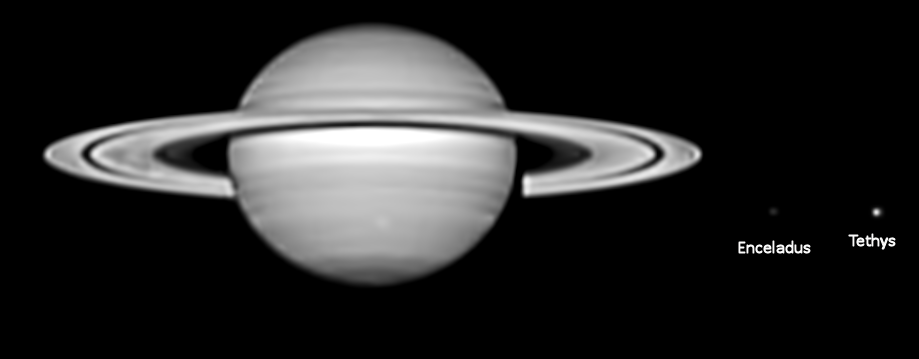
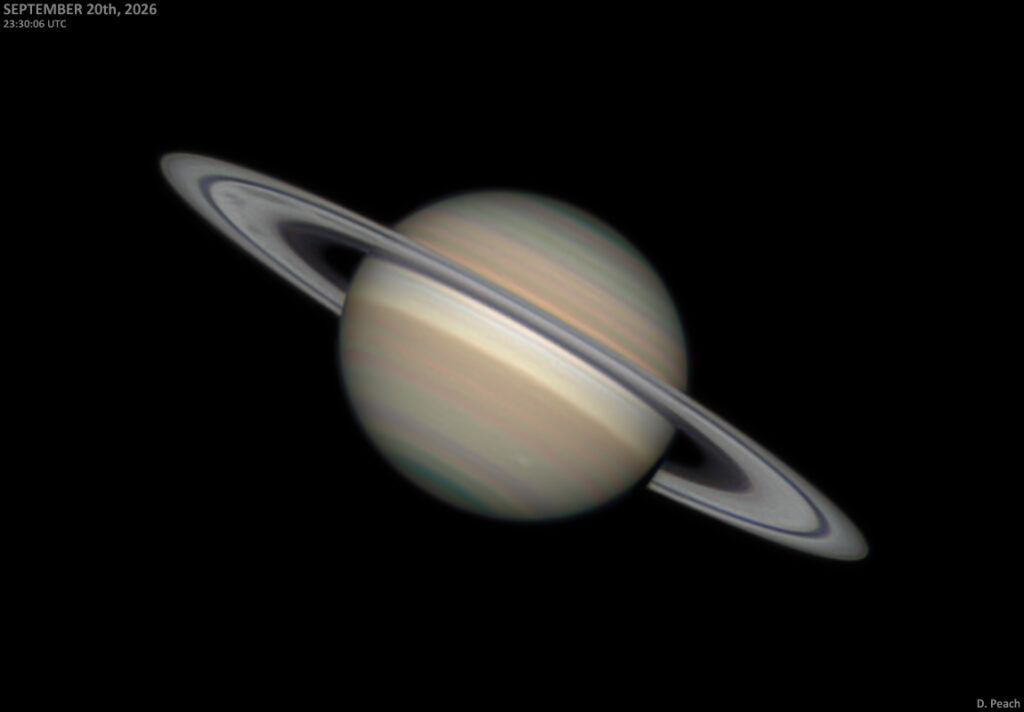
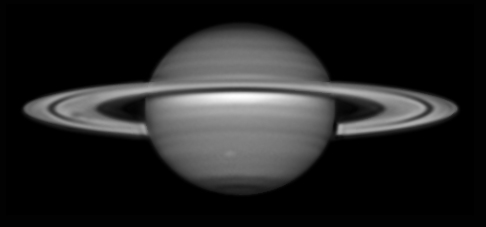
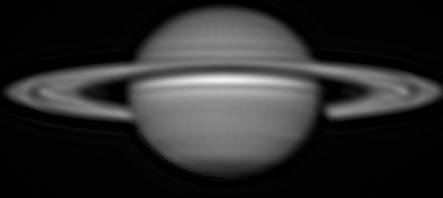
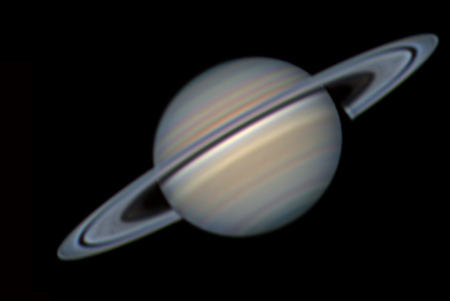
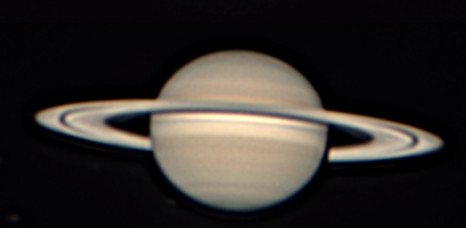
A few observers were able to detect the decagon (at approximately 63 degrees south)
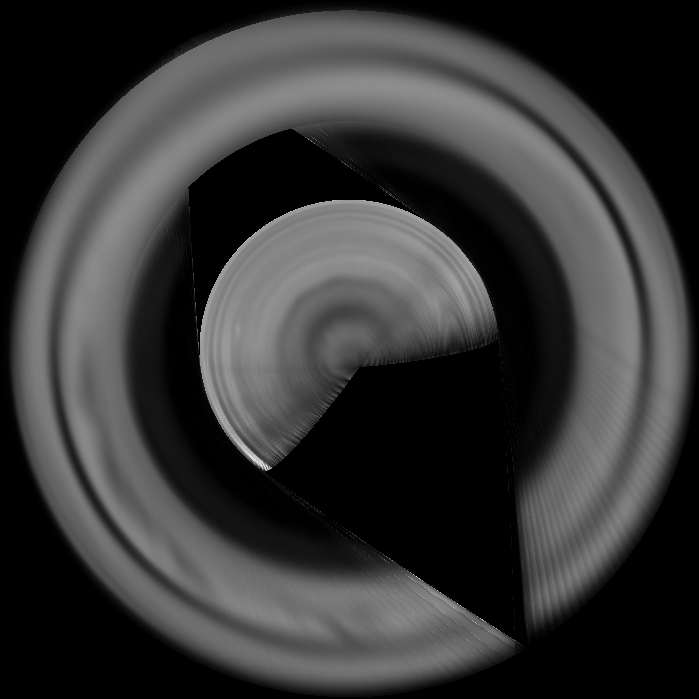
Spokes were detected on Ring B throughout this month by many observers. These spokes generally appeared on the f. side. In some observations they were only suspected. However they were definitely seen on the following dates: Sep 1 (Mike H), Sep 10 (Anthony, Trevor), Sep11 (Anthony), Sep 12 (Anthony, Peter T), Sep 13 (Anthony), Sep 14 (Anthony) Sep 16 (Alun, Anthony, Peter T.), Sep 18 (Anthony), Sep 19 (Anthony), Sep 20 (Damian), Sep 21 (Mike K, Peter T.) Sep 23 (Anthony), Sep 24 (Peter T.) Sep 25 (Anthony, Callum), 27 (Anthony), Sep 28 (Luigi), Sep 29 (Anthony, Mike H.) and Sep 30 (Anthony, Efrain). However some spokes were also detected on the p. in a limited number of observations, i.e. Sep 12 (Anthony), Sep 13 (Anthony) and Sep 21 (Damian). In a couple of high resolution observations, they were detected where the rings passed in front of the planet, i.e. Sep 20 (Damian), Sep 27 (Anthony).
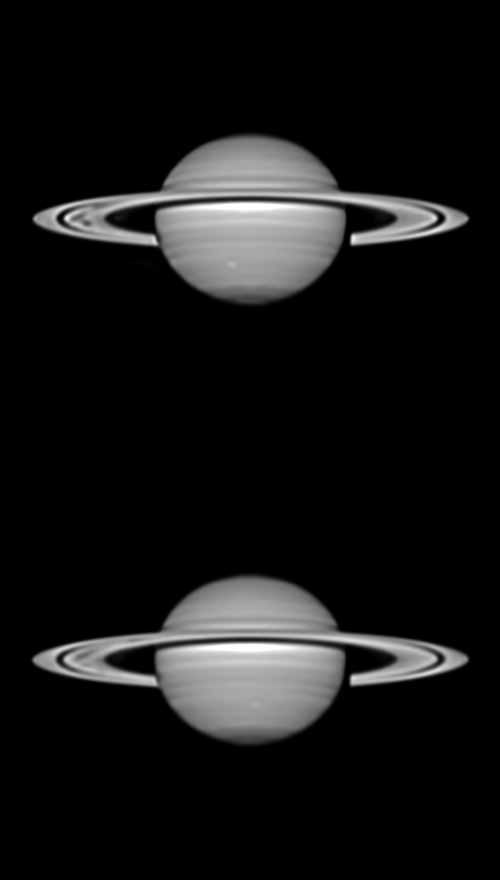
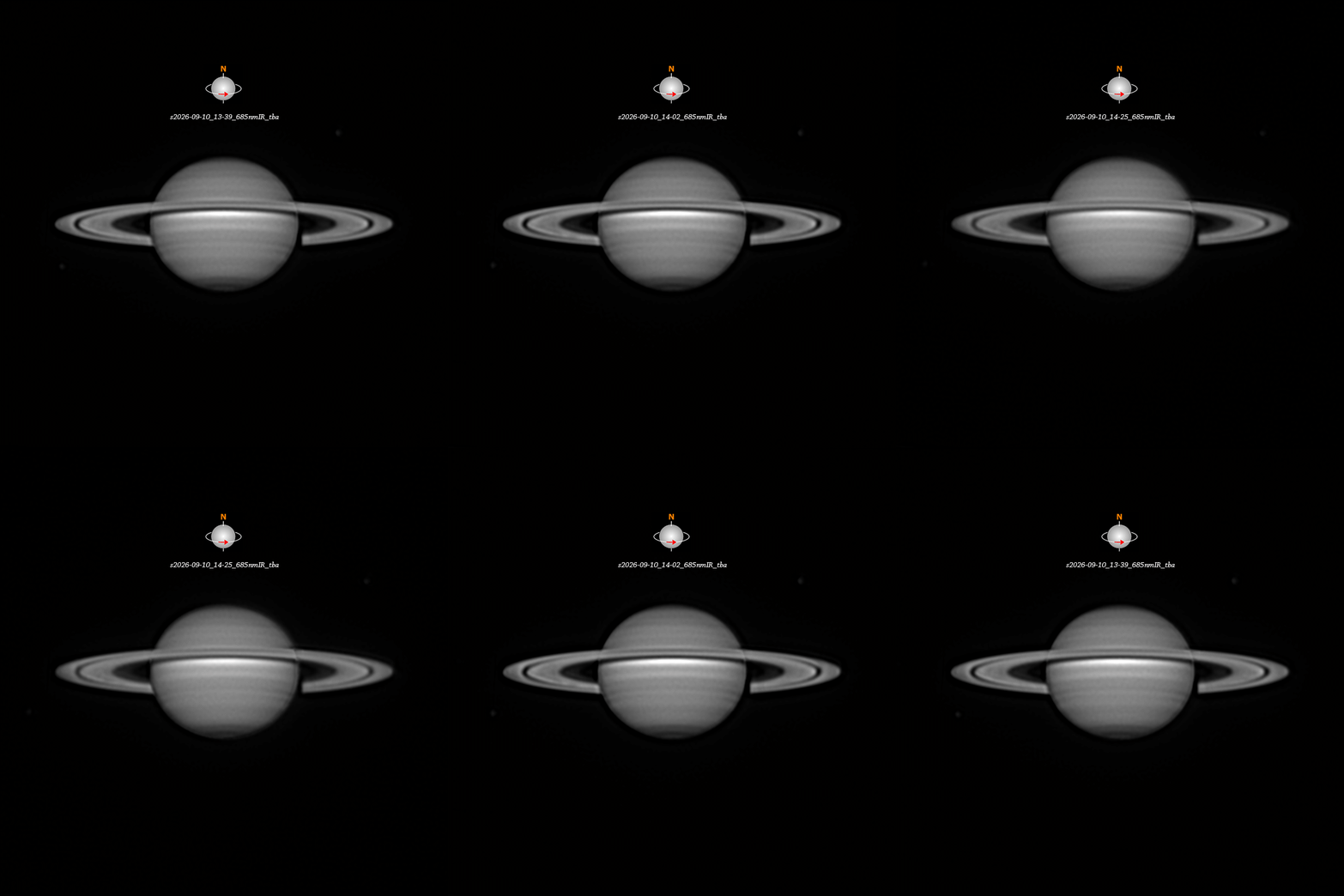
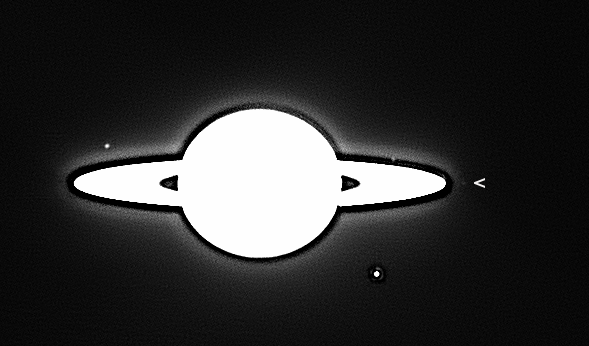
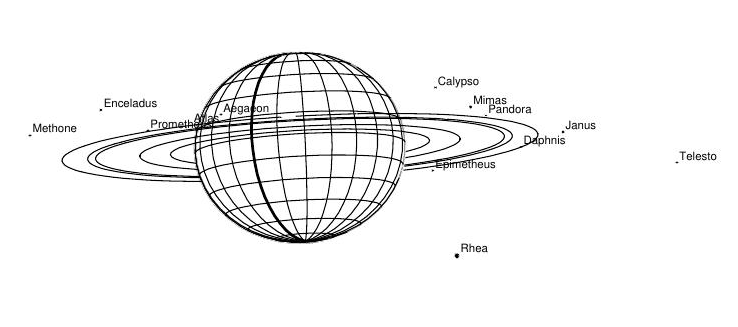
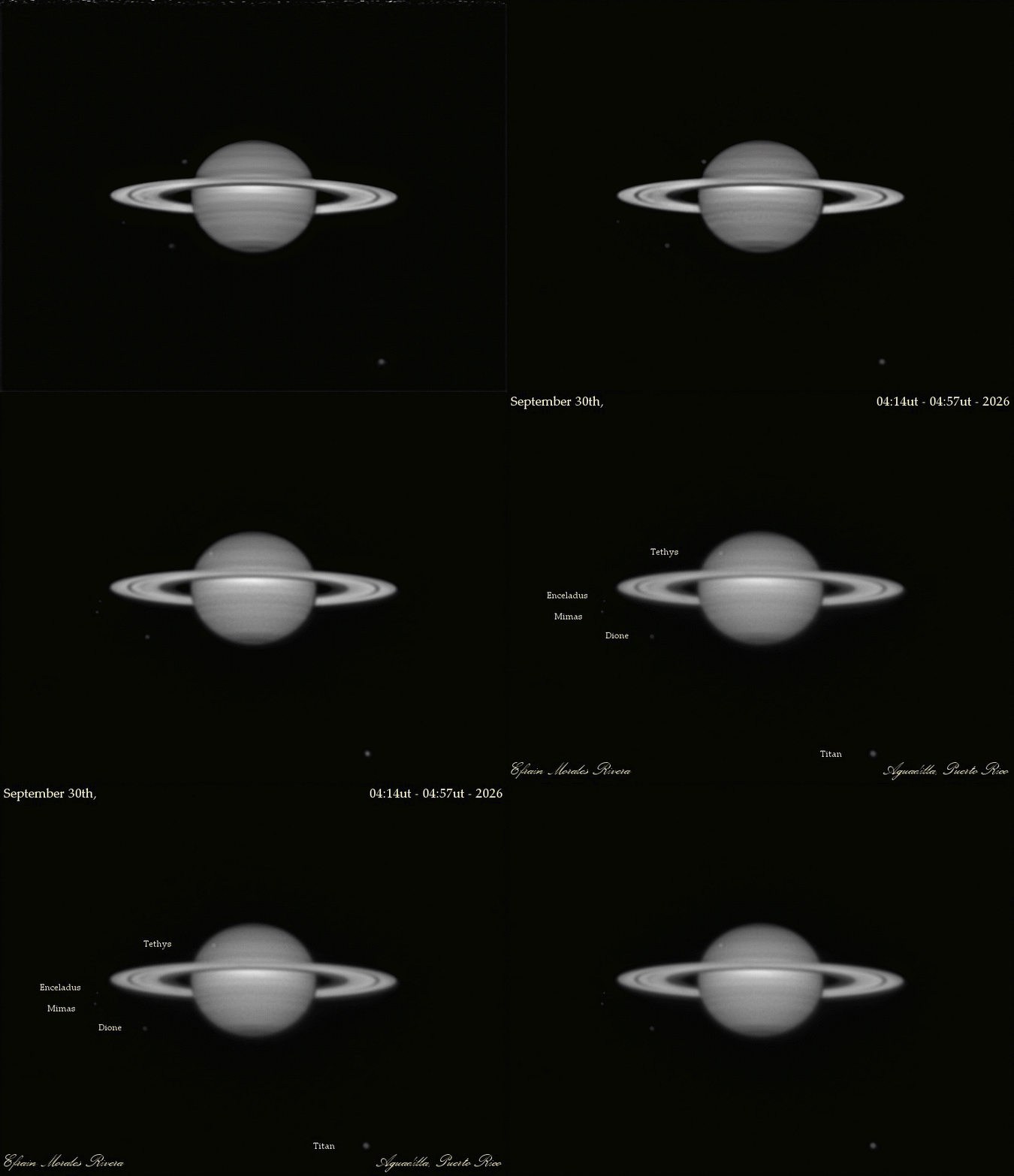
On Sep 30, Anthony imaged a faint object p. the rings whose position matched the position of satellite Janus as predicted by the Planetary Data System. In addition, Anthony noted that there was possibly a spot roughly in the predicted position of Epimetheus but he felt that this was very uncertain and not at all convincing.
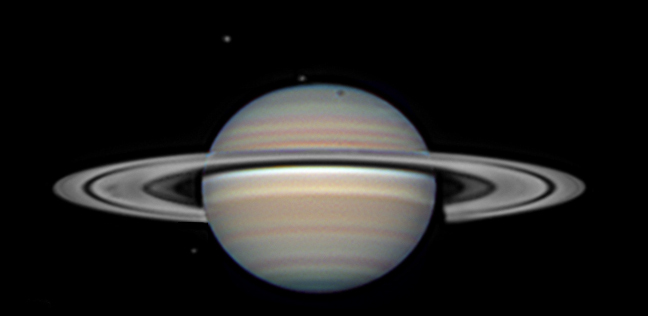
Some satellite and shadow transits were also observed, i.e. on Sep 1, Dione’s shadow in transit (Mike H.), on Sep 5, Dione and its shadow in transit (Trevor) and on Sep 30, Tethys and its shadow in transit (Efrain).
2026 Oct
During this month, observations have been received from: Paul Abel on Oct 13 and 30; Trevor Barry on Oct 6, 7, 18 and 28; Simon Dawes on Oct 3; Guy Earle on Oct 4 and 13; Mike Foulkes on Oct 1, 3, 4, 9, 13, 25, 27 and 29; David Graham on Oct 1, 3, 7, 11, 13, 16, 27, 29 and 31; Alun Halsey on Oct 5 and 29; Carl Frederick Hansen on Oct 31; Rik Hill on Oct 1 and 8; Mike Hood on Oct 15, 20 and 28; Chris Hooker on Oct 5; Vojtěch Jančura (on Oct 16) Mike Karakas on Oct 5 and 22; Manos Kardasis on Oct 8, 10, 12, 17, 18, 19, 20, 21, 22, 23 and 24; Kevin Kell on Oct 10, 19 and 29; Bill Leatherbarrow on Oct 3 and 16; Geof Lewis on Oct 2, 5, 9 and 30; Martin Lewis on Oct 4 and 5; Frank J. Melillo on Oct 4; Paul Mettam on Oct 1, 5,13 and 16; Darryl Milika and Pat Nicholas on Oct 7 and 28; Efrain Morales on Oct 4; Luigi Morrone on Oct 3; Peter Mulligan on Oct 3; Damian Peach on Oct 2, 4, 5, 13 and 29; Mark Radice on Oct 16 and 31; Gregory T. Shanos on Oct 4, 21 and 23; Peter Tickner on Oct 1, 2, 5, 13, 17 and 31; Ivan Walton on Oct 13; Anthony Wesley on Oct 1, 2 and 3.
UNDER CONSTRUCTION
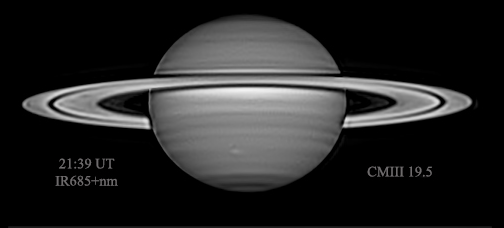
The light oval lying at an approximate latitude of 42 to 44 deg south was still visible this month and was the most prominent spot visible. It often appeared more prominent in IR images but Manos was able to image this with a methane filter on Oct 10. An updated drift chart is shown below.
Some other light spots were detected at several latitudes. In particular some light spots were again detected in the EB. However the positional measurements haven’t yet been sufficient to establish any reliable drifts.
The AV was again detected by Trevor on Oct 7 but was difficult to detect. The measured position on this date fits the track derived during previous months. The updated drift chart is given below.
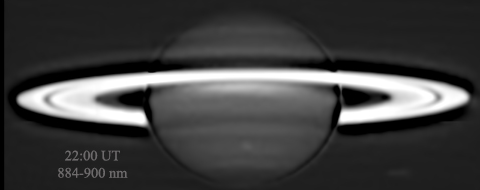
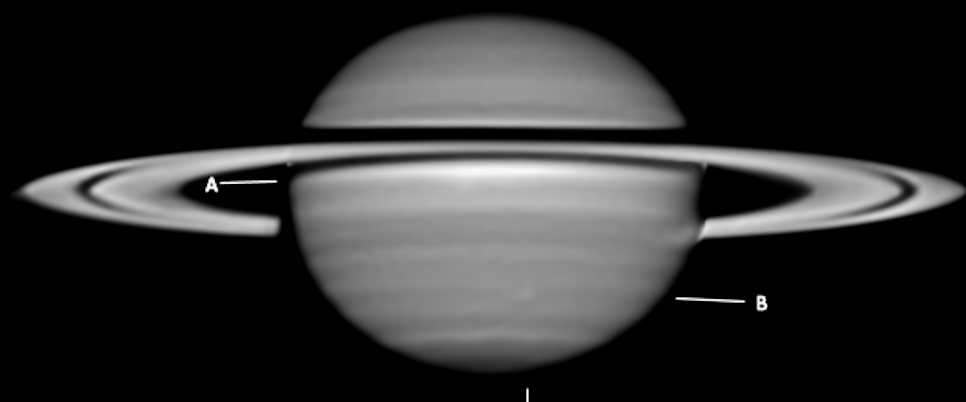
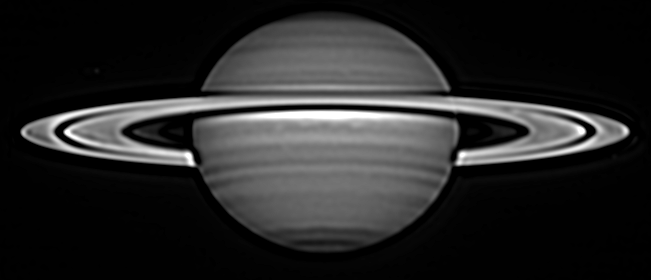
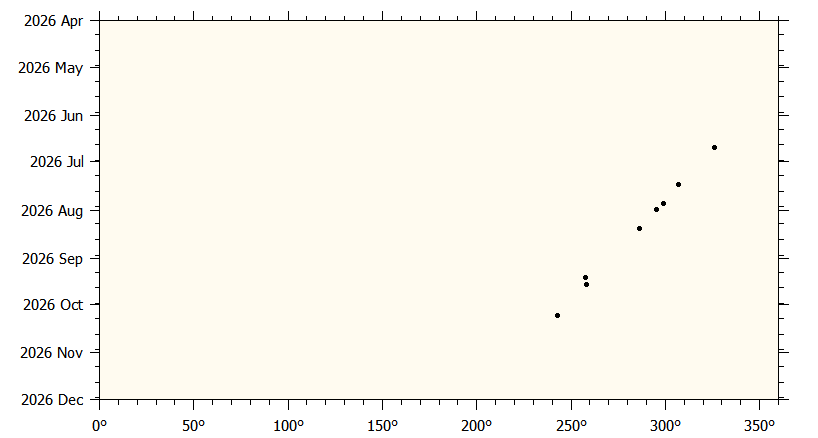
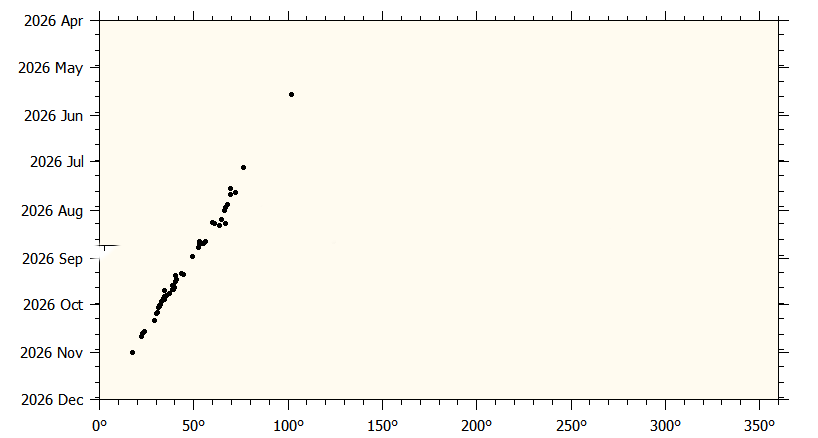
The decagon was again detected particularly by Anthony and Trevor with some images showing some darker areas on the belt with a northern edge at approximately 63 deg south which may be the vertices.
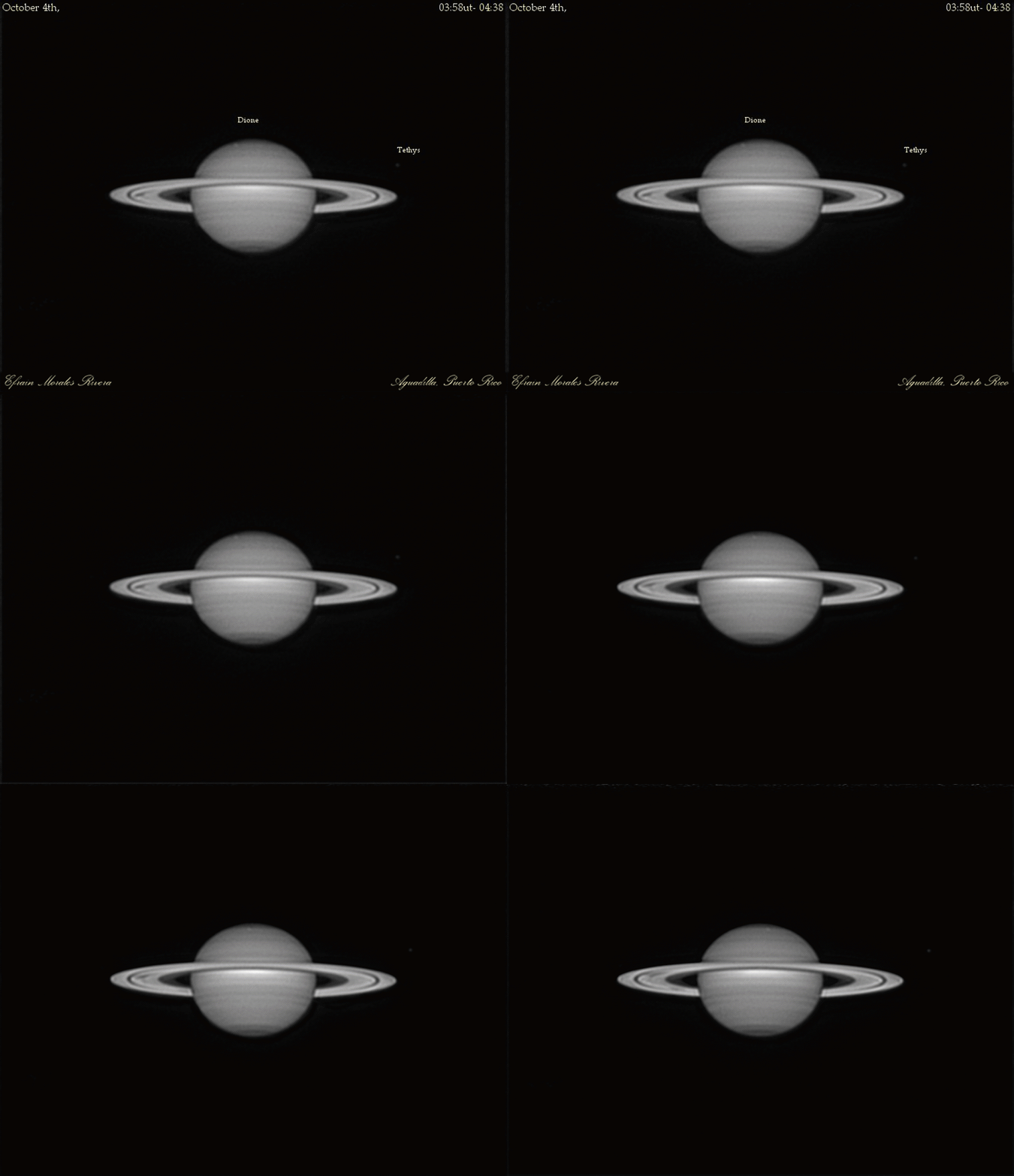
Opposition was on Oct 4, and several observers noted the brightening of the rings around this date.
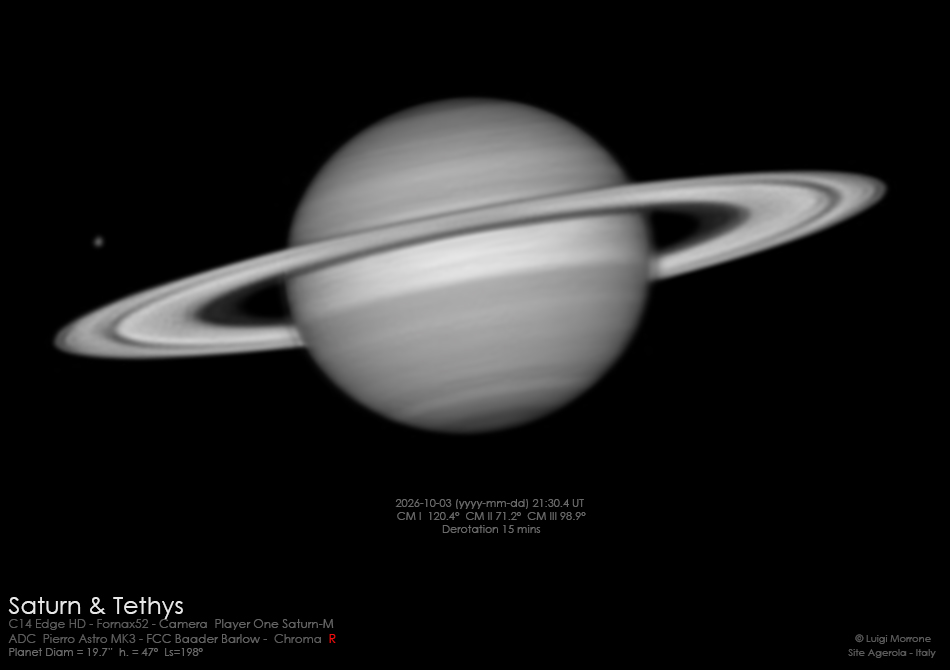
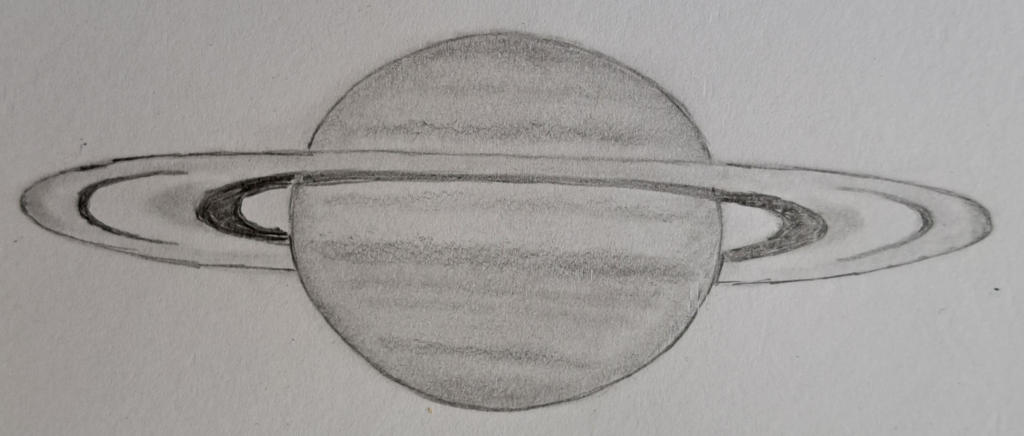
Ring spokes on Ring B continued to be detected throughout this month by a number of observers as noted below, They were generally detected on the f. side except were noted.
Oct 1 (Anthony, Paul and Peter), Oct 2 (Peter), Oct 3 (Damian plus on p. side), Oct 4 ( Damian, Efrain, Frank, Greg and Guy), Oct 5 (Damian, Geof, Martin, Paul and Peter), Oct 9 (Geof), Oct 10 (Manos), Oct 13 (Peter), Oct 15 (Mike H), Oct 20 (Mike H), Oct 25( Peter), Oct 28 (Darryl & Pat and Mike H), Oct 28 (Trevor), and Oct 29 (Kevin).
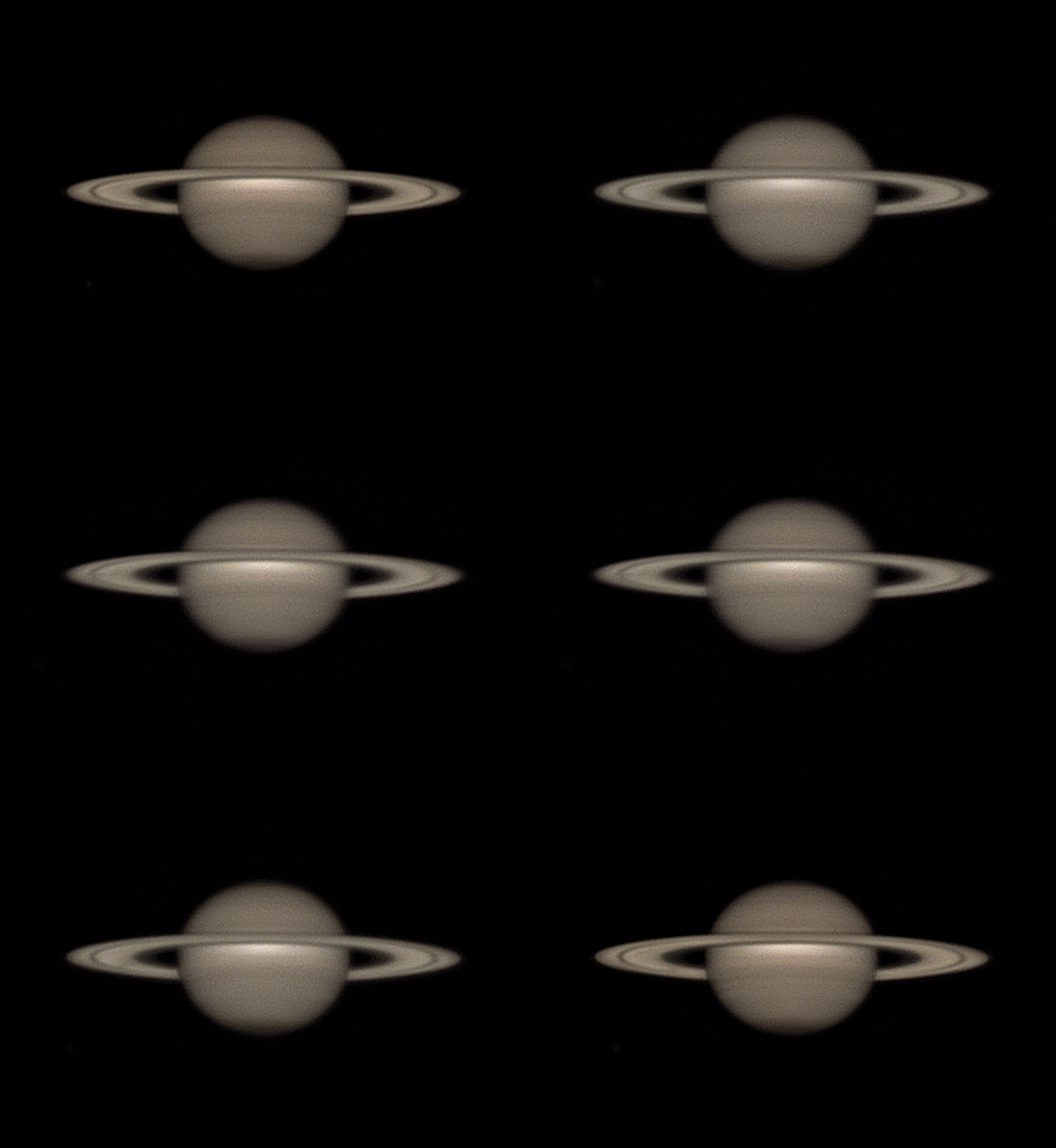
Several observers captured Enceladus and Mimas.
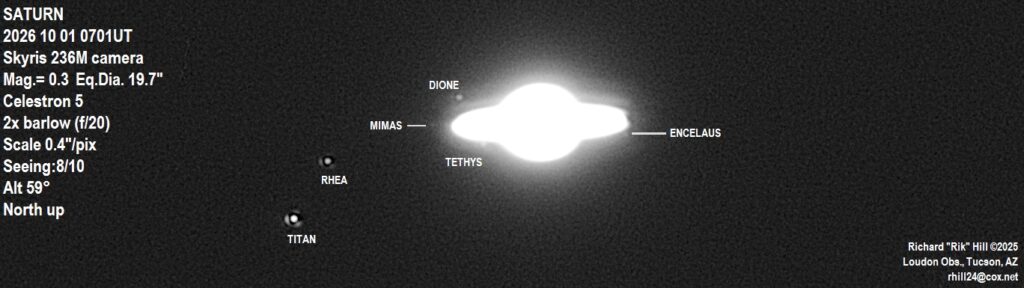
A number of transits of Dione and Tethys plus their shadows were observed.
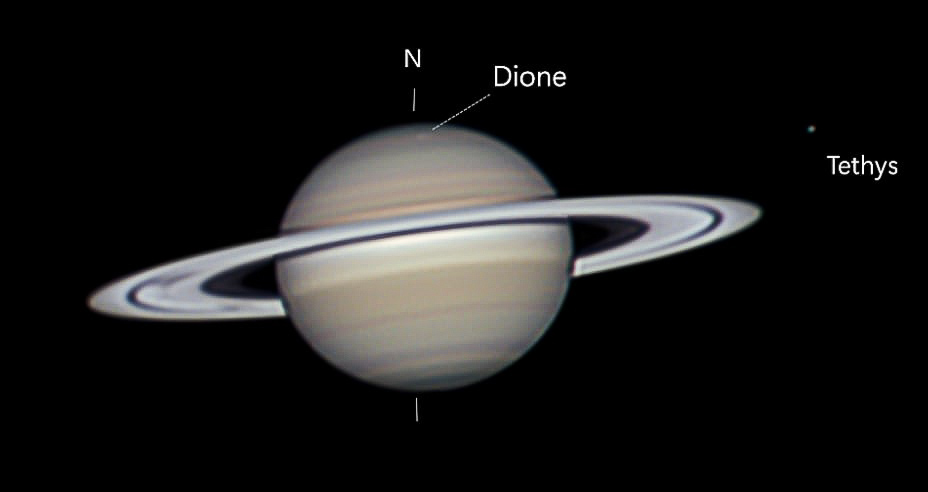
Efrain and Guy imaged Dione and its shadow in transit close to the planet’s northern limb on Oct 4.
Transits of Tethys and its shadow were imaged on Oct 4 by Damian and on Oct 5 by Chris and Damian. As these observations were made around the time of opposition, the shadow appeared very close to Tethys. Further observations of Tethys and its shadow in transit were made on Oct 24 (Manos) and on Oct 28 (Darryl & Pat and Trevor).
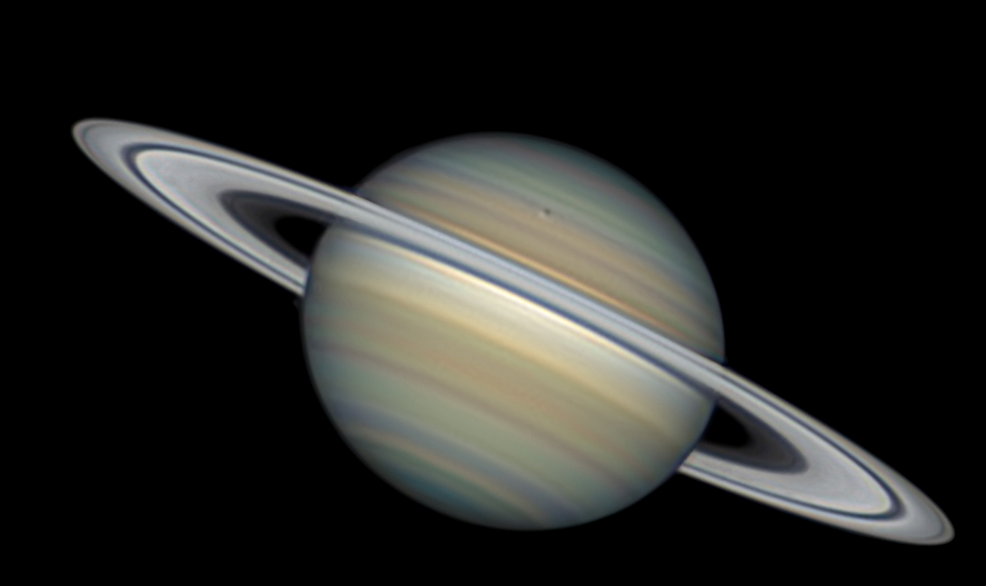
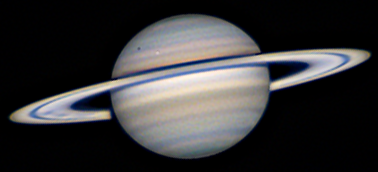
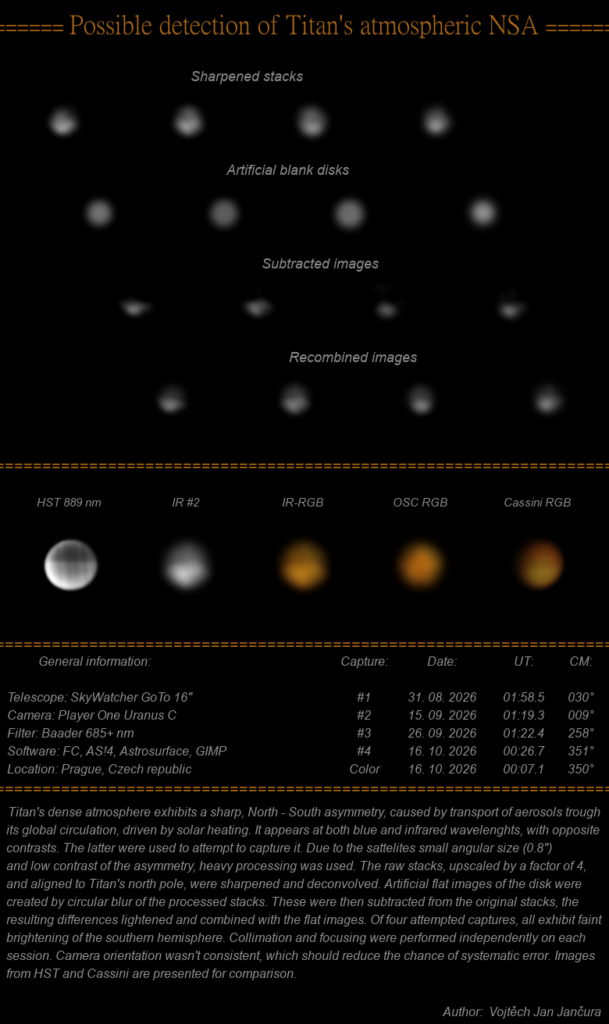
Over the last few months, Vojtěch Jančura has imaged Titan and undertaken careful processing and taken various precautions to produce images of Titan’s disk. These show brightening towards the southern limb. Details are given below. It would be interesting if other observers could confirm these observations.
UNDER CONSTRUCTION
2026 November
UNDER CONSTRUCTION
https://britastro.org/wp-content/uploads/2026/11/High-Southern-Latitude-S1.bmp
https://britastro.org/wp-content/uploads/2026/11/C-DAV.bmp
https://britastro.org/wp-content/uploads/2026/09/High-Southern-Latitude-S1.bmp
https://britastro.org/wp-content/uploads/2026/09/C-DAV.bmp
| The British Astronomical Association supports amateur astronomers around the UK and the rest of the world. Find out more about the BAA or join us. |