
› Forums › General Discussion › JPEG or NEF format?
- This topic has 3 replies, 3 voices, and was last updated 32 minutes ago by
 Steve Brown.
-
AuthorPosts
-
22 September 2026 at 10:45 am #643024
Mr Giovanni Di Giovanni
ParticipantGood morning everyone,
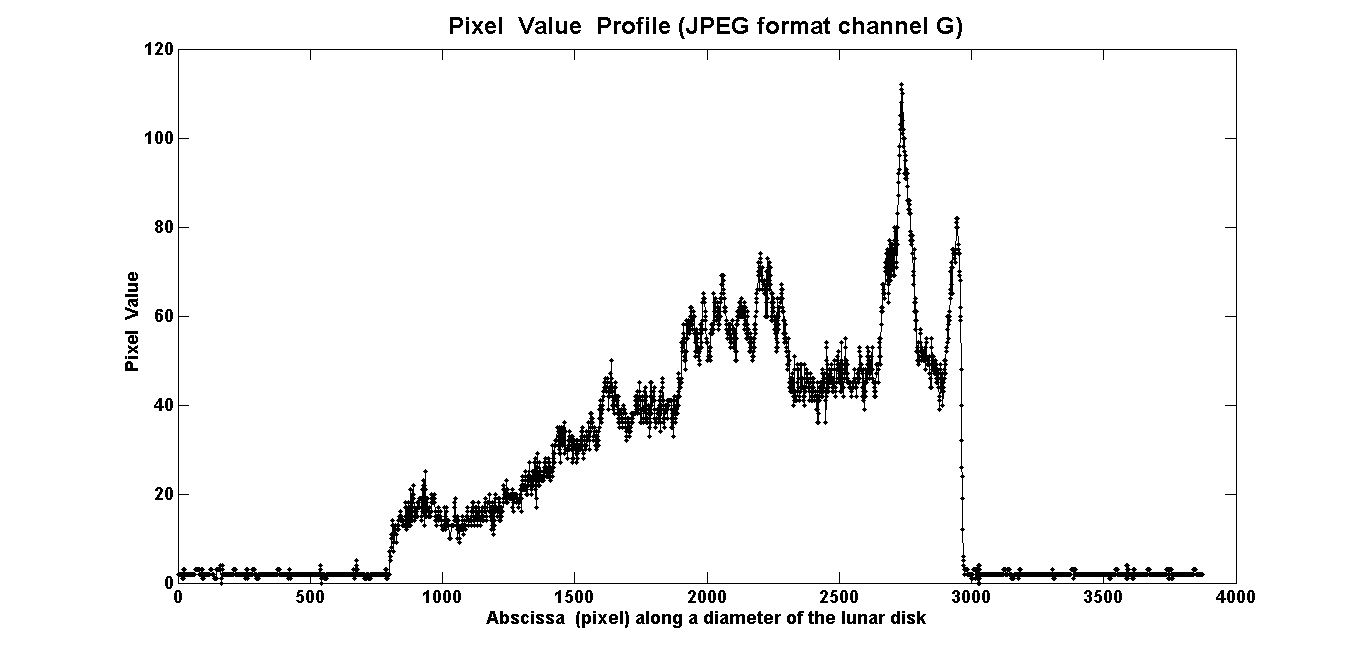
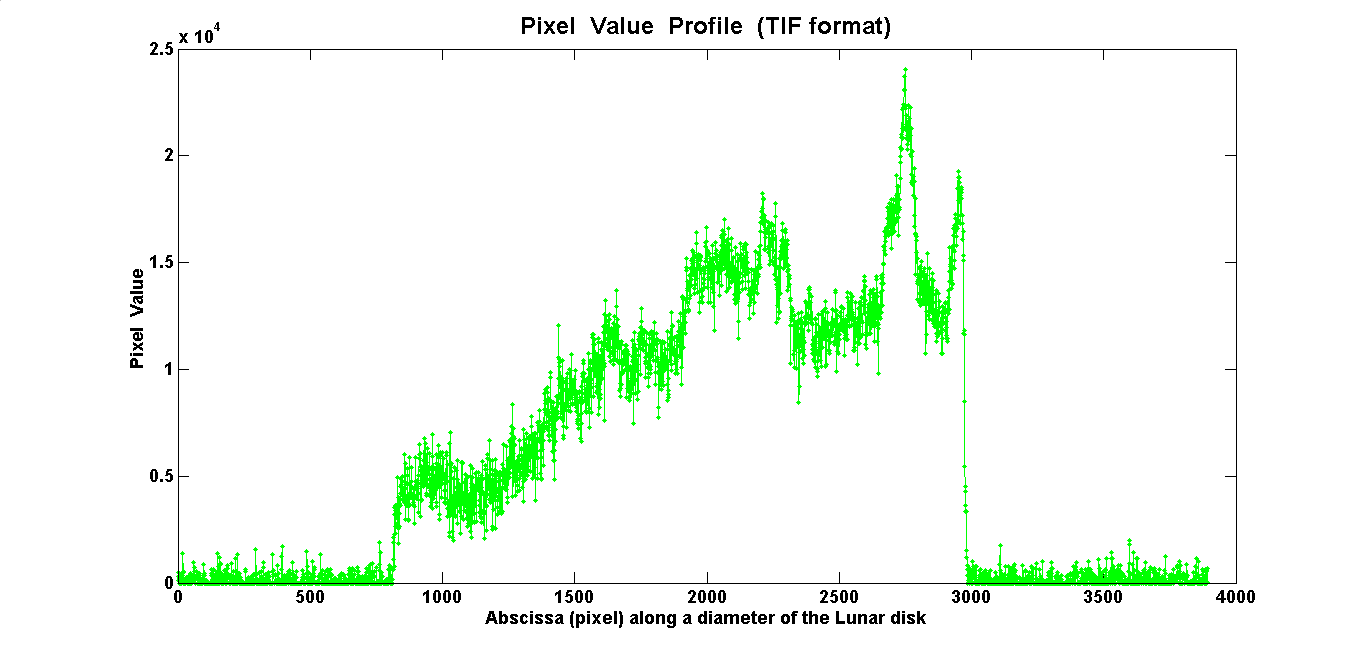
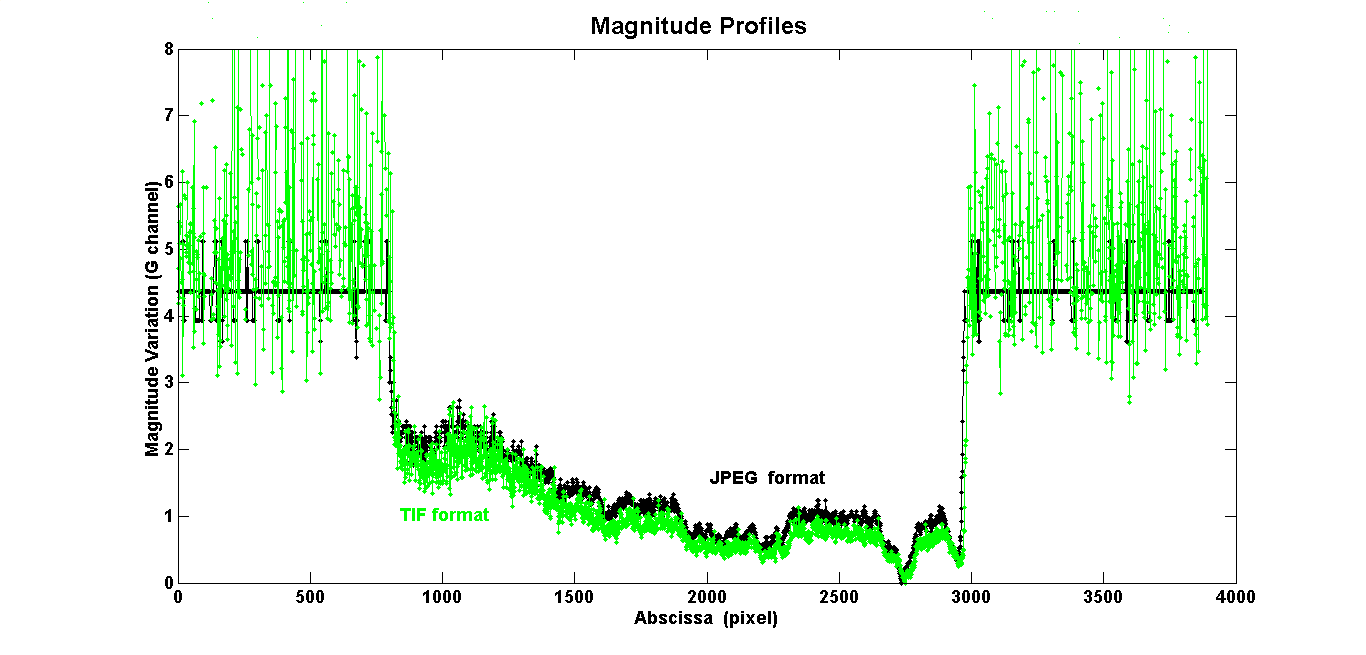
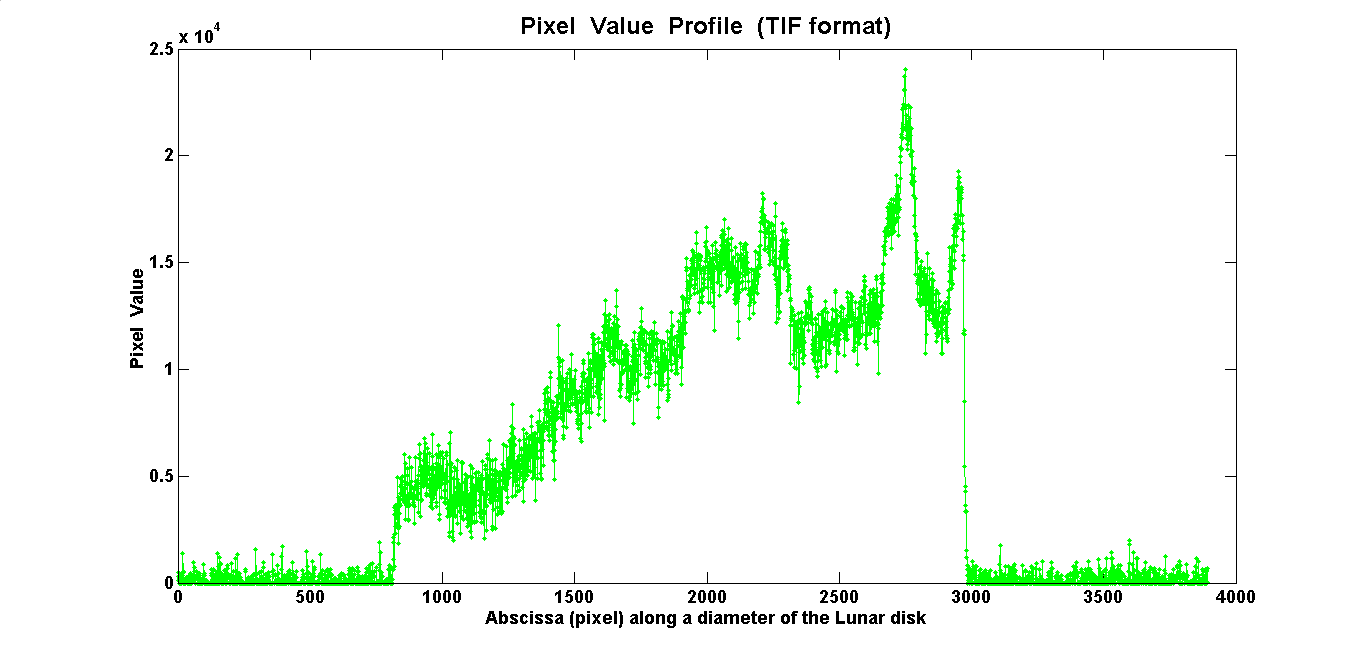
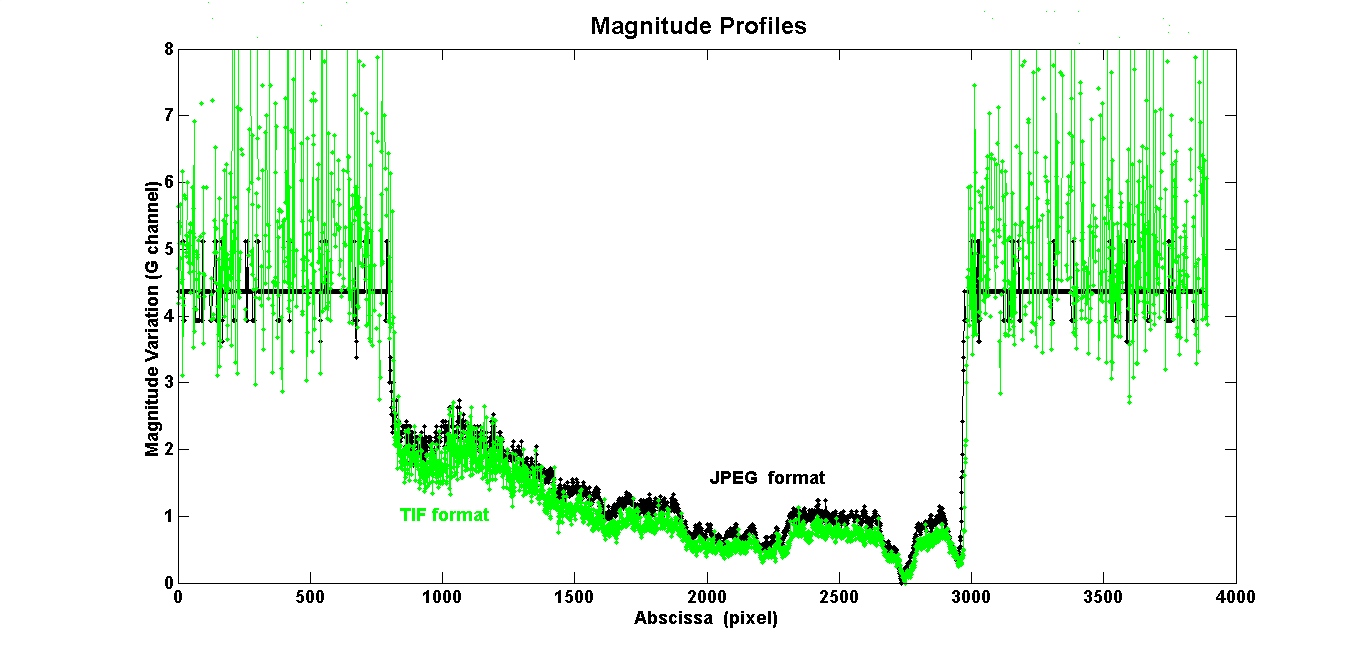
I would kindly ask you to clarify a doubt I have after performing the following test: 1- I simultaneously captured two frames of the lunar disk, in JPEG and NEF format (Nikon RAW); 2- I converted the NEF to TIF (using the RAW-Therapee software); 3- In MATLAB, I separated the RGB&B channels of both frames; 4- I read the Pixel Values of the same row on each frame (JPEG and TIF) and constructed the two attached diagrams; 5- I calculated the magnitude variations (Pogson’s formula) along each profile and compared them (attached).
The PV profiles appear different both in terms of dispersion and the numerical values of the PVs themselves. However, their shape and general trend are very similar. Furthermore, the magnitude variations of each lunar point compared to a reference point (maximum PV) are almost equal. Finally, each graph (from TIF format) shows the enormous dispersion of the experimental values. This is not the case for the JPEG format.
All this would suggest that JPEG and NEF (or RAW) shots are approximately equivalent, and indeed it doesn’t seem entirely convenient to shoot in RAW to avoid taking up too much memory.
NOTE: a) The frames were taken from the island of Elba during the eclipse of May 16, 2022; b) my MATLAB version (R12) doesn’t read the RAW format.
I confess to being quite ignorant about computer science and CCD photometry. Could someone please consider what I’ve explained and help me understand better?
Thank you and best regards.
JPEG or NEF format?-
This topic was modified 12 hours, 28 minutes ago by
Mr Giovanni Di Giovanni.
-
This topic was modified 8 hours, 59 minutes ago by
-
This topic was modified 8 hours, 59 minutes ago by
22 September 2026 at 7:08 pm #643036 Dr Paul LeylandParticipant
I am not really competent to comment on the majority of your material above.
What I would advocate, however, is that you use RAW exclusively if you wish to produce high quality photometry which is compatible with that produced by others. JPEG, TIF, PNG, et al. can do very weird things to the data over and above what the camera itself may do in the area of noise reduction, white balancing and so on.
You likely know all this; I make it clear for the benefit of those readers who may not have come across this concern.
What is the source of your “to avoid taking up too much memory” concern? Not disk space, surely, as multi-terabyte hard disks are dirt cheap these days. Let’s be generous and say a single image uses 100MB. That means a single terabyte will hold ten thousand images. How many images do you take each year?
Paul
22 September 2026 at 8:45 pm #643037ParticipantDr. Paul, it’s certainly not exactly disk space that’s troubling me. I was too incomplete in what I said. More specifically, I have a version of MATLAB that doesn’t accept RAW format frames. Therefore, I have no way of processing in that format; I easily process (i.e., perform photometry) on JPEGs. Since I read everywhere that JPEGs aren’t suitable, that JPEGs compress images (I don’t know exactly what and how), etc., I tried to compare a numerical calculation from JPEGs with one from TIFs that MATLAB reads. I’m surprised that the results are very similar and, above all, that the noise from the simple JPEG format appears much lower than from TIFs (obtained by transforming the NEF).
I’d appreciate any further information.
Thank22 September 2026 at 10:49 pm #643038 Steve BrownParticipant
I’m not particularly qualified to comment on the science or technical aspect of the original post but I would say that for some the size of image files could be a factor. Personally, I don’t take a lot of RAW images as a lot of my photography is of meteors, noctilucent clouds and night sky time lapses. As such, memory space is very much a concern. For example, I’ve taken well over 30,000 images since July.
-
This topic was modified 12 hours, 28 minutes ago by
-
AuthorPosts
- You must be logged in to reply to this topic.