
Tagged: Meteor alpha Capricornid
- This topic has 6 replies, 5 voices, and was last updated 2 months, 2 weeks ago by
 Alex Pratt.
-
AuthorPosts
-
16 July 2026 at 12:17 pm #642029
 Alex PrattParticipant
While we await the arrival of the first Perseids this year there’s activity from some minor showers such as the July Pegasids (JPE). Also look out for some alpha Capricornids (CAP), they are usually active from now until mid-August with a maximum at the end of July and a peak ZHR of a meagre 5/hr which coincides with a Full Moon at about 20 degrees elevation in the south.
CAPs are particularly slow with a Vg of 23 km/s, even more ‘pedestrian’ than the Taurids. A redeeming feature is that they can occasionally produce fireballs which appear to trundle across the sky.
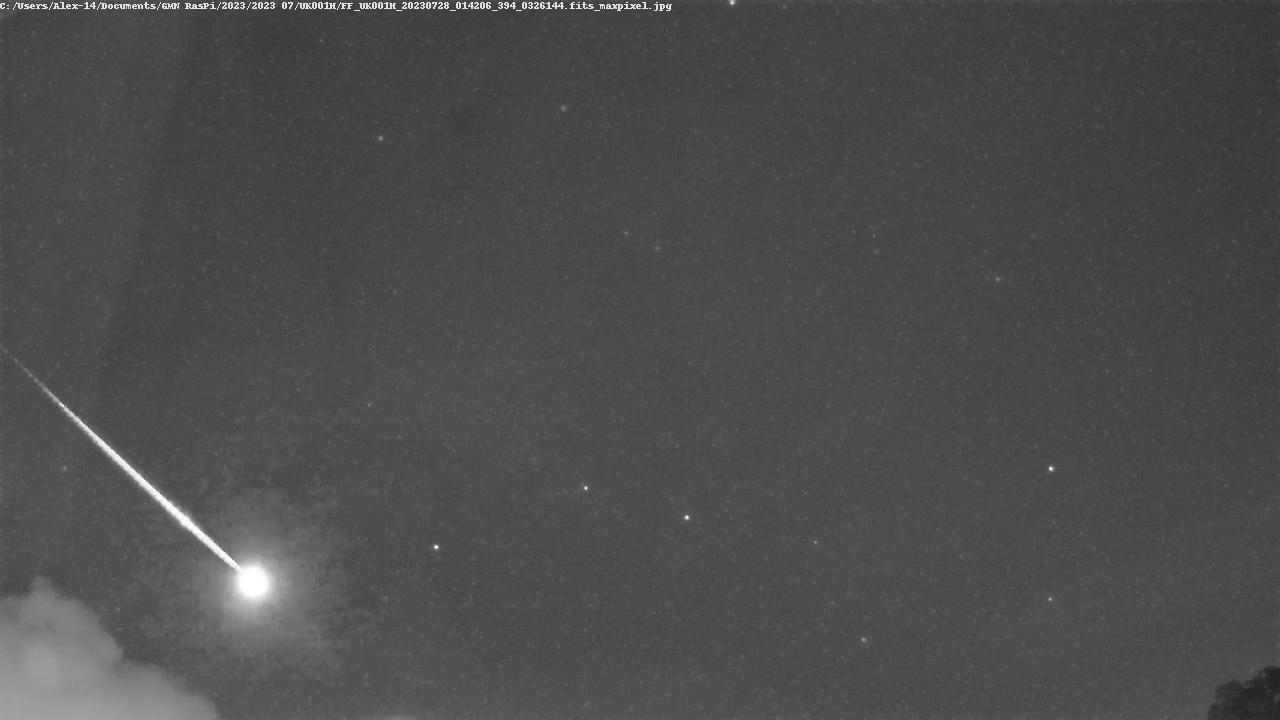
The attached composite image is of a bright CAP in 2023 which maintained a fairly steady brightness level then produced a mag -1.5 terminal flash.
Alex.
Attachments:
18 July 2026 at 6:03 pm #642050 Bill WardParticipant
Hi,
For the past two weeks I have been conducting my usual (attempted) observations of NLC. Despite the exceptional weather there have only been a few suitably clear night that have had any NLC.
However what I have been seeing is quite a few meteors! Along with my observing companion Tom McEwan, we’ve both seen several bright meteors over the past few nights. I don’t think there have been any Capricornids but some have been slow with distinct flickering/flaring. Certainly adds extra interest to the nights observing.
During the past week we’ve also been joined by the ISS, seeing multiple very high passes.
Been a very enjoyable holiday at home this year.
Cheers,
Bill.18 July 2026 at 7:24 pm #642051Alex PrattParticipantHi Bill,
Currently attending a Zoom meeting across the “Big Beautiful Ocean” – they’ve now gone to lunch.
We’re seeing activity from a few minor meteor showers, including the anthelion source and the first Perseids are on their way. Meteor cameras are recording many satellites during these brief summer nights.
NLC have been few and feeble for me, apart from a very nice display on June 27.
Cheers,
Alex.
18 July 2026 at 7:43 pm #642052 Nick JamesParticipant
Not many CAPs on my cameras (only 19 so far this month, first one on the 12th). Rather more 49 Andromedids (33 this month from July 14).
NLC have indeed been a bit thin on the ground from Chelmsford. My cameras have picked them up on around 30% on mornings in July but most were faint. The two good displays were on June 29 and July 8:
https://nickdjames.com/NLC/2026/nlc_20260629_0200_ndj.mp4
https://nickdjames.com/NLC/2026/nlc_20260708_0100_ndj.mp422 July 2026 at 10:58 am #642119 Steve BrownParticipant
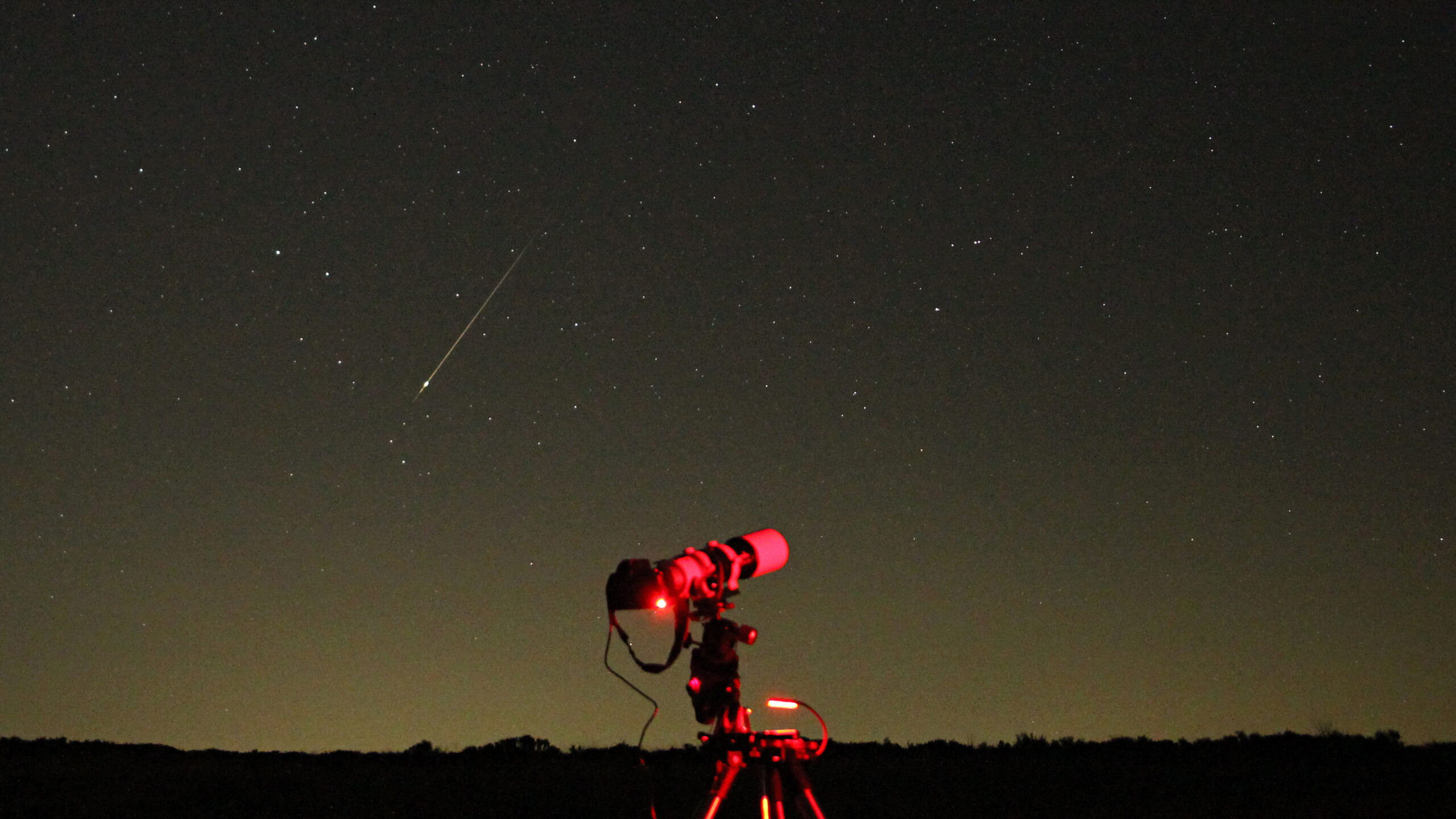
I’ve not seen many Alpha Capricornids visually. I usually catch them while doing Perseid observing. The earliest I’ve caught one is 27 July and the latest is 11 August. They are interesting to see though, as their slow speed makes them easier to follow. I’ve only captured a single image of an Alpha Capricornid, but it was quite a nice one, on 7 August 2025 at 01:19 UT from the North York Moors.
22 July 2026 at 11:32 am #642121 Mike GermanParticipant
I keep tabs on UKMon video Network for my radio meteor studies. So far for July they have had matched trajectories for 31 CAPs out of a total of 5884 matched events. The first CAP was identified on the 12th.
-
This reply was modified 2 months, 2 weeks ago by
 Mike German.
-
This reply was modified 2 months, 2 weeks ago by Mike German.
22 July 2026 at 9:21 pm #642124Alex PrattParticipantI’ve only detected a few CAPs this season, mostly faint. My best so far was a mag 0 in UMa
https://britastro.org/observations/observation.php?id=20260722_193539_200ad479d0fe0b09
Alex.
-
AuthorPosts
- You must be logged in to reply to this topic.