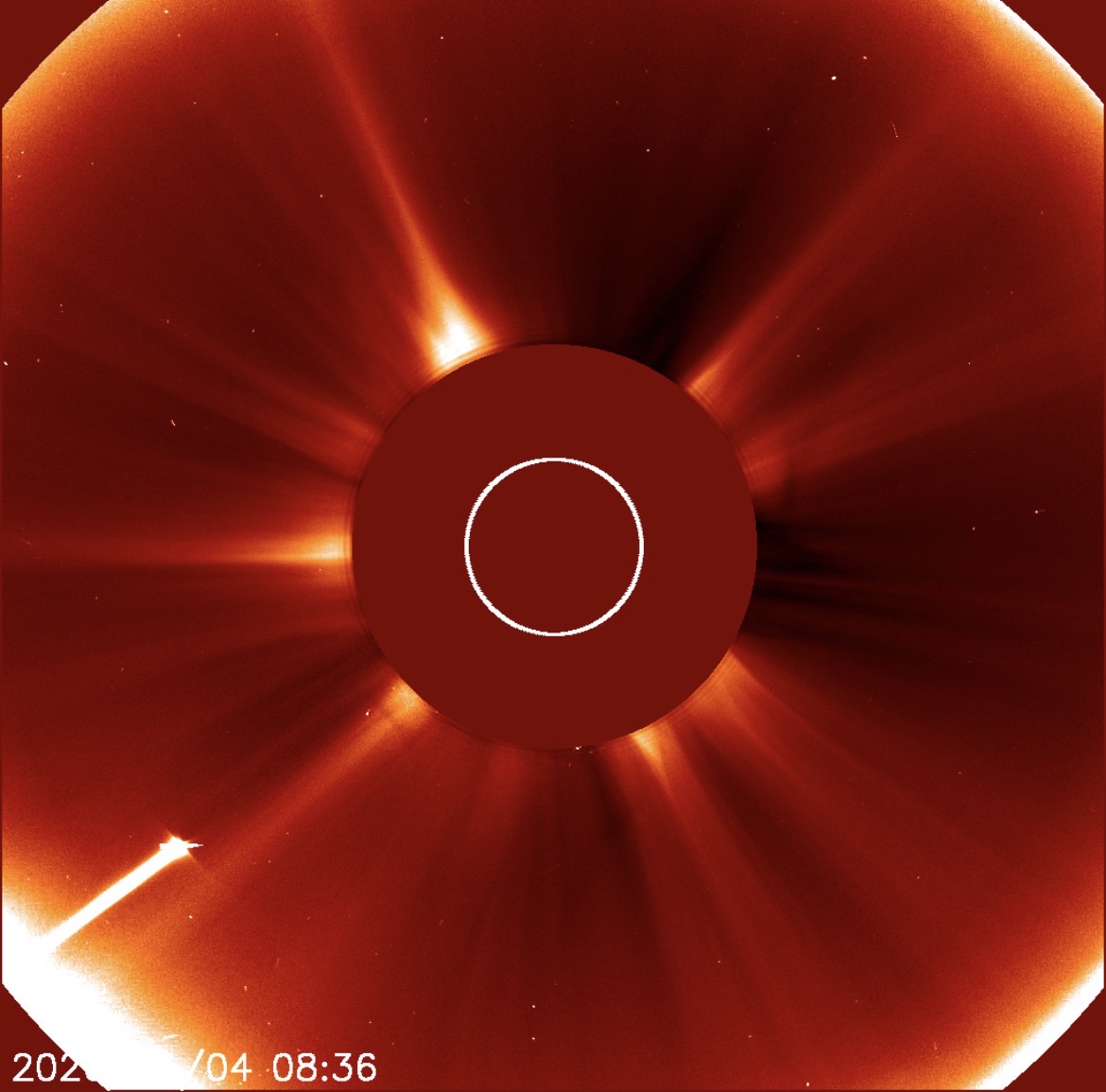
Yes, it broke up prior to perihelion and nothing came out at the expected position so there will be no headless wonder in the evening sky. That’s a shame but it was always a significant possibility given the small size of the nucleus.
Some of the dust released ahead of the breakup did appear to survive, and is visible in the coronagraph images, as a dust cloud on the “wrong” side of the Sun. This could possibly be detectable as a very low surface brightness feature in the morning sky. Highly unlikely, particularly since the Moon will interfere, but imagers are a resourceful bunch.
We’ll see.
https://ccor.nrl.navy.mil/realtime-movie
 .
.