› Forums › Asteroids › Interstellar asteroid A11pl3Z › Reply To: Interstellar asteroid A11pl3Z
 Denis Buczynski
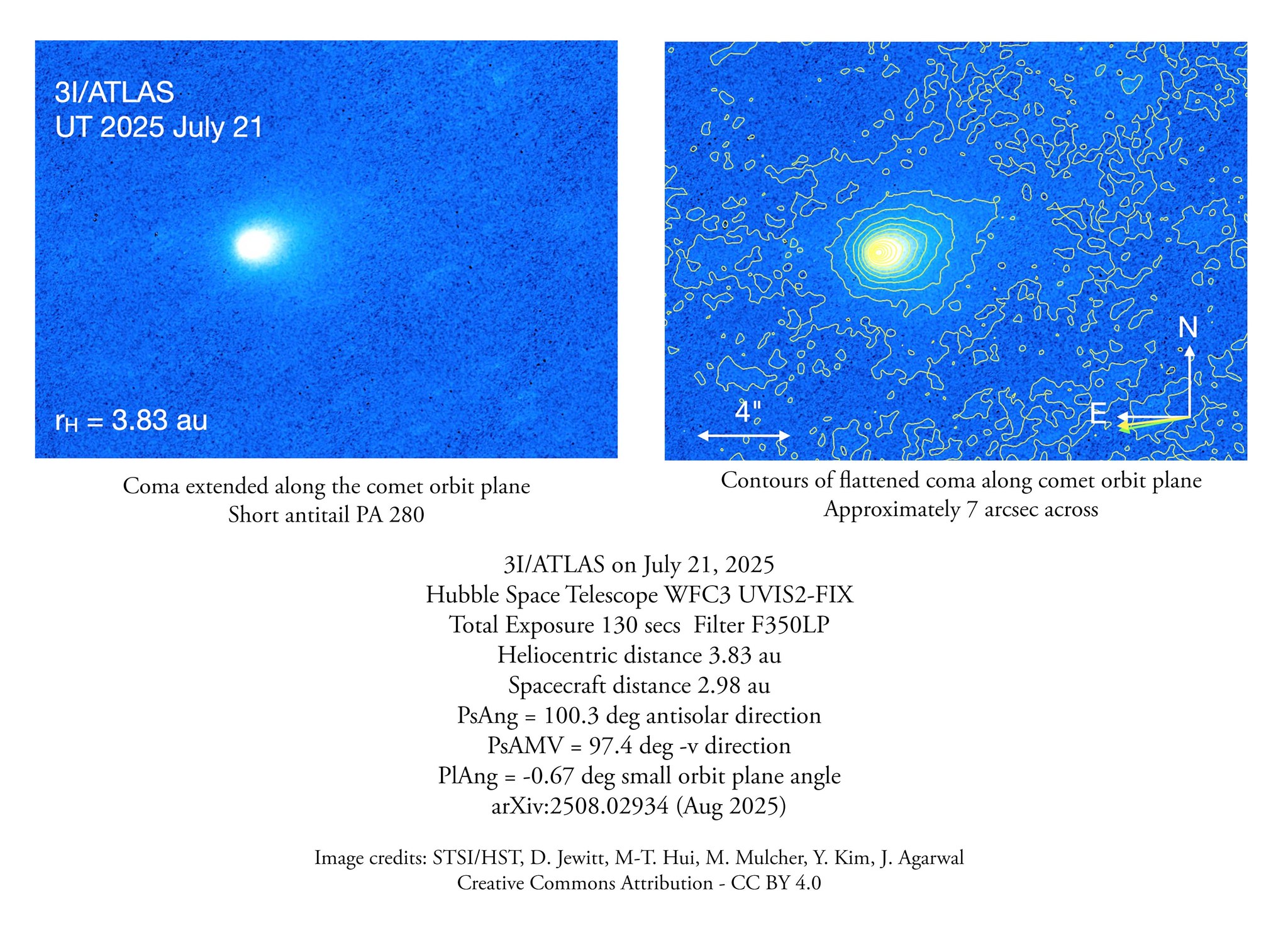
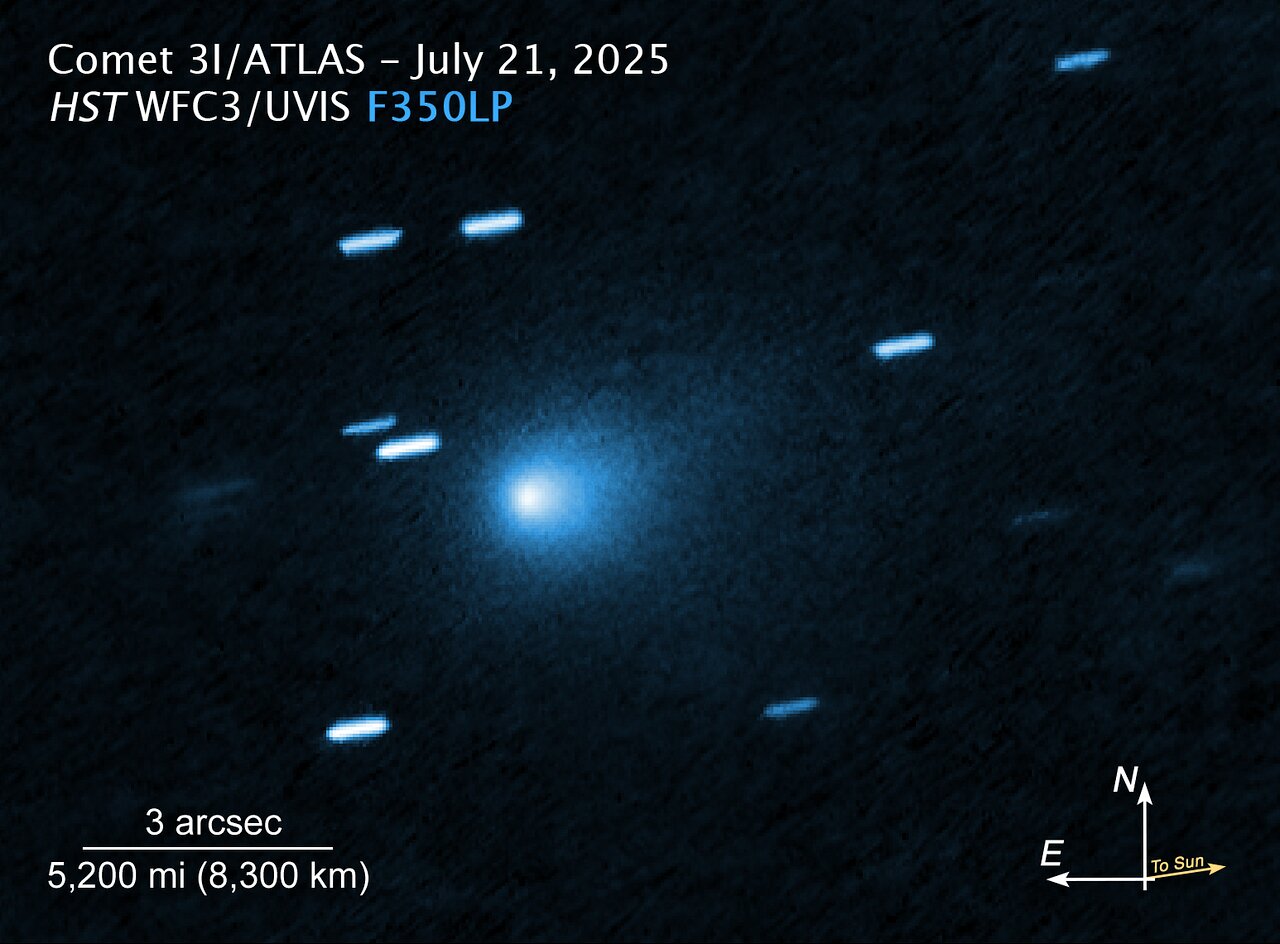
Hi Nick It seems that the coma elongation you have seen in your image is also recorded by HST, they comment that the extension is a plume ejected from the sunward side of the comet.
HST observed this comet and gave the following report.
Hubble’s observations are allowing astronomers to more accurately estimate the size of the comet’s solid icy nucleus. The upper limit on the diameter of the nucleus is 5.6 kilometers, though it could be as small as 320 metres across, researchers report. Though the Hubble images put tighter constraints on the nucleus size compared to previous ground-based estimates, the solid heart of the comet presently cannot be directly seen, even by Hubble. Observations from other observatories, including the NASA/ESA/CSA James Webb Space Telescope, will help refine our knowledge about the comet, including its chemical makeup.
Hubble also captured a dust plume ejected from the Sun-warmed side of the comet, and the hint of a dust tail streaming away from the nucleus. Hubble’s data yields a dust-loss rate consistent with comets that are first detected around 480 million kilometres from the Sun. This behaviour is much like the signature of previously seen Sun-bound comets originating within our Solar System.
The big difference is that this interstellar visitor originated in some other Solar System elsewhere in our Milky Way galaxy.
-
This reply was modified 11 months, 3 weeks ago by
 Denis Buczynski.
-
This reply was modified 11 months, 3 weeks ago by Denis Buczynski.