Forum Replies Created
-
AuthorPosts
-
 Mike HarlowParticipant
Thanks Hugh,
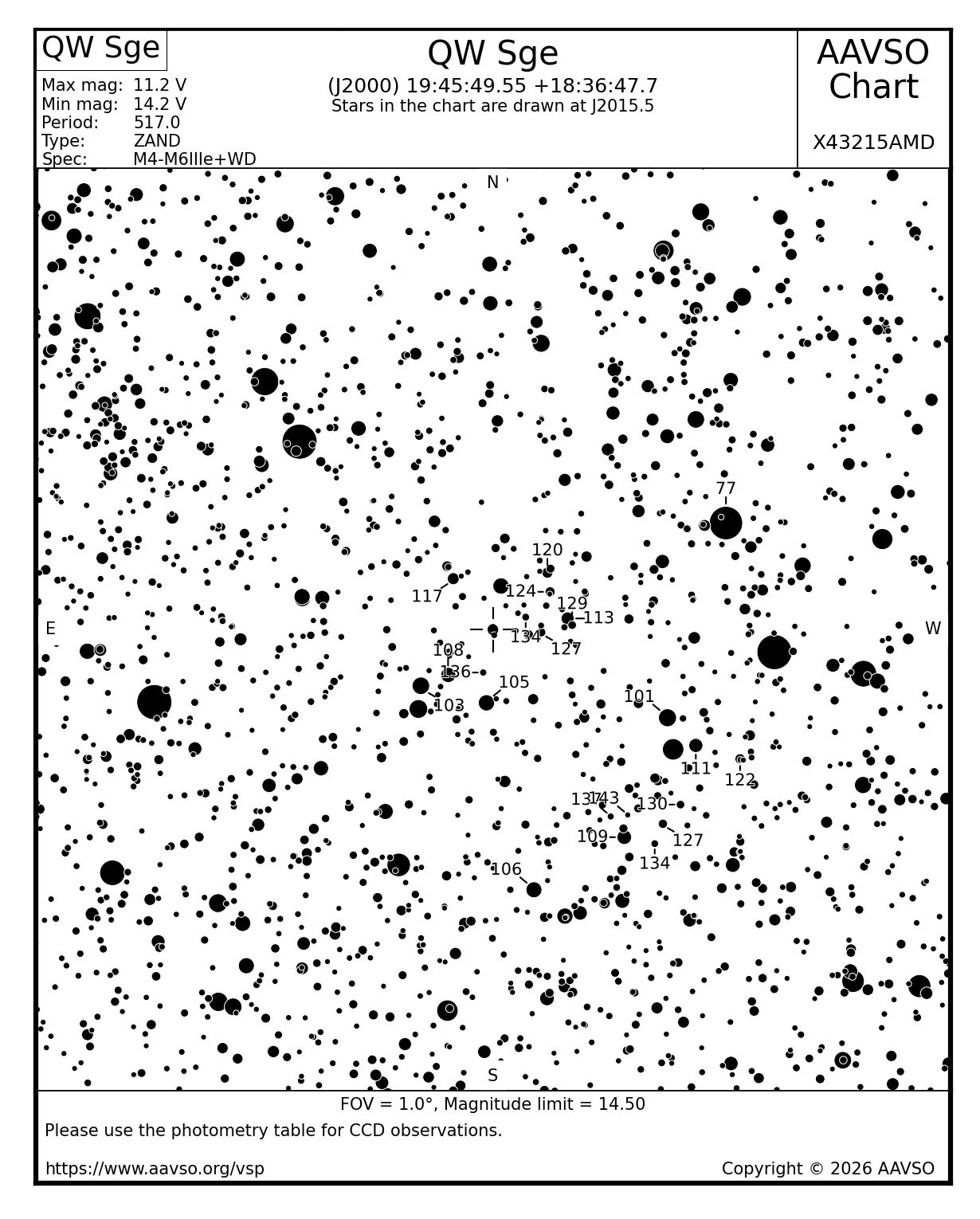
I think the star is QW Sge which had an ATel notification in 2024. Clearly strong H alpha and a hint of H beta and HeII (468nm) in some of my spectra so worth follow up at higher resolution.
There have been a lot of AAVSO observations since 26th August so I guess other people noticed it in the same field as the nova!!!
Just checked, the last spectrum in the BAA database was by J Foster in October 2024…
Mike.Attachments:
Mike HarlowParticipantYes, [OIII] clearly seen in my spectrum on 1st October.
Mike.Mike HarlowParticipantThanks for the update Jeremy. Pity they didn’t share the actual spectra
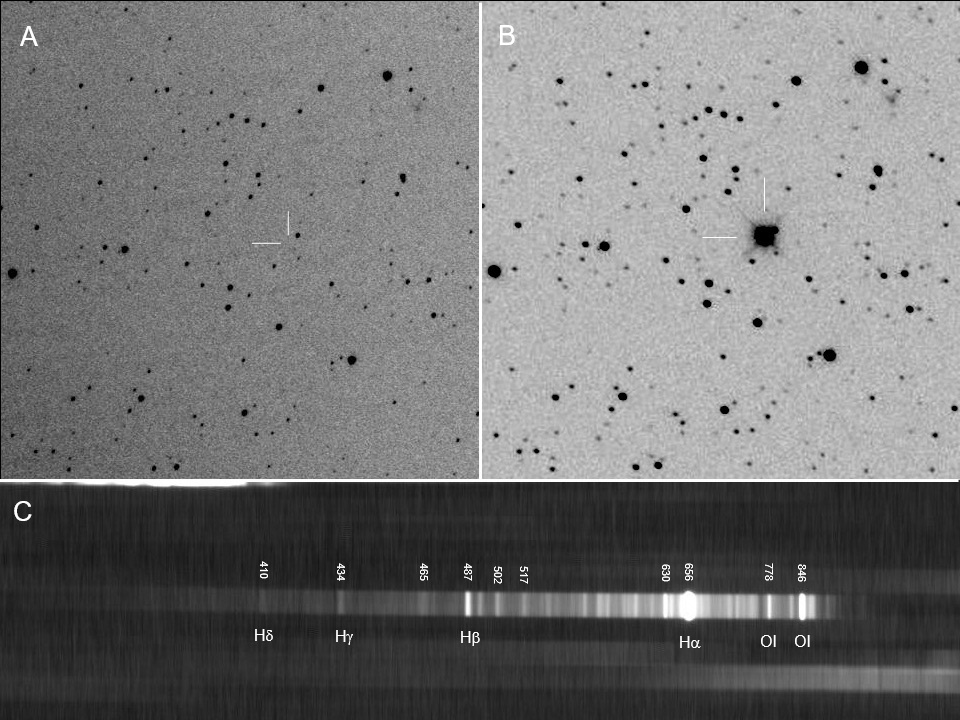
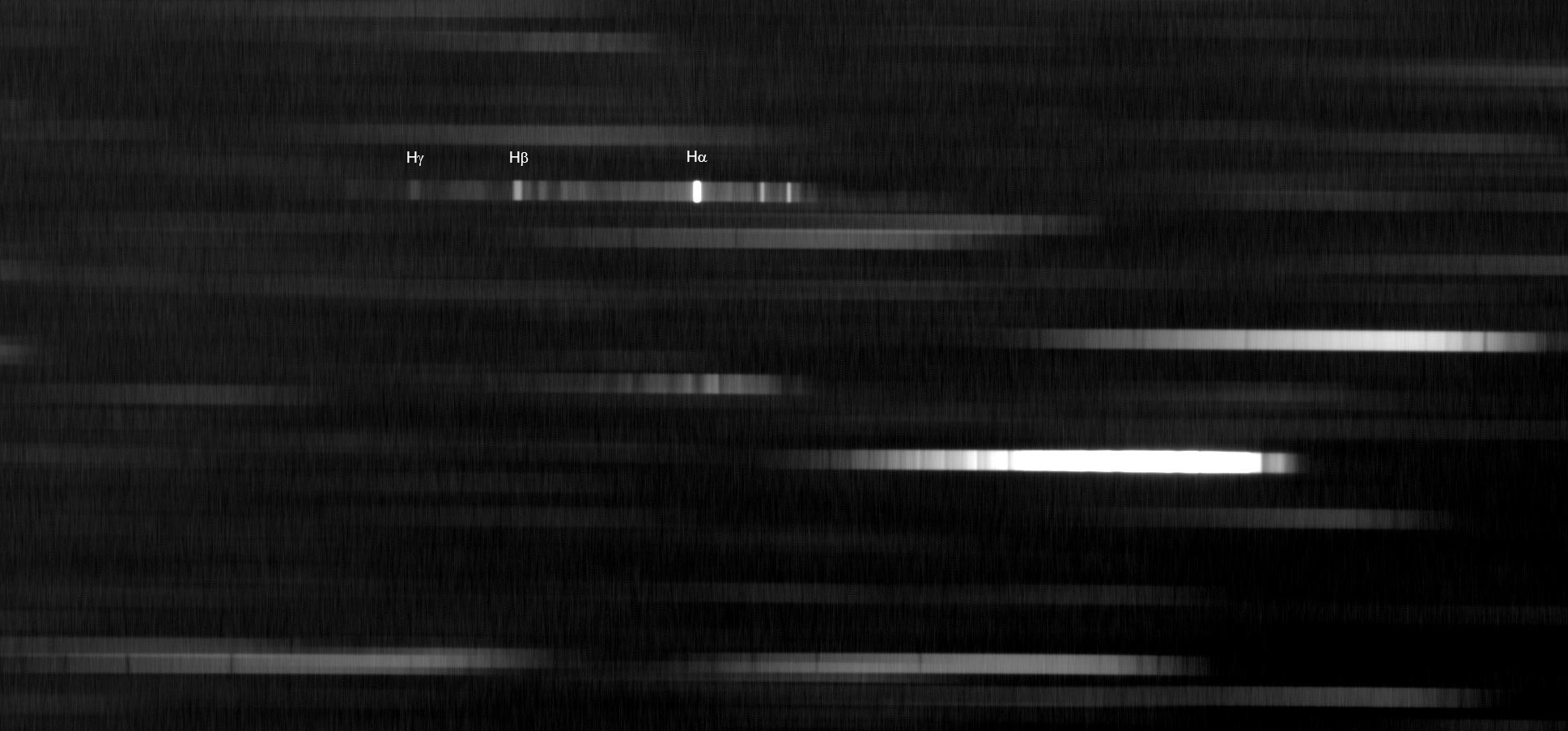
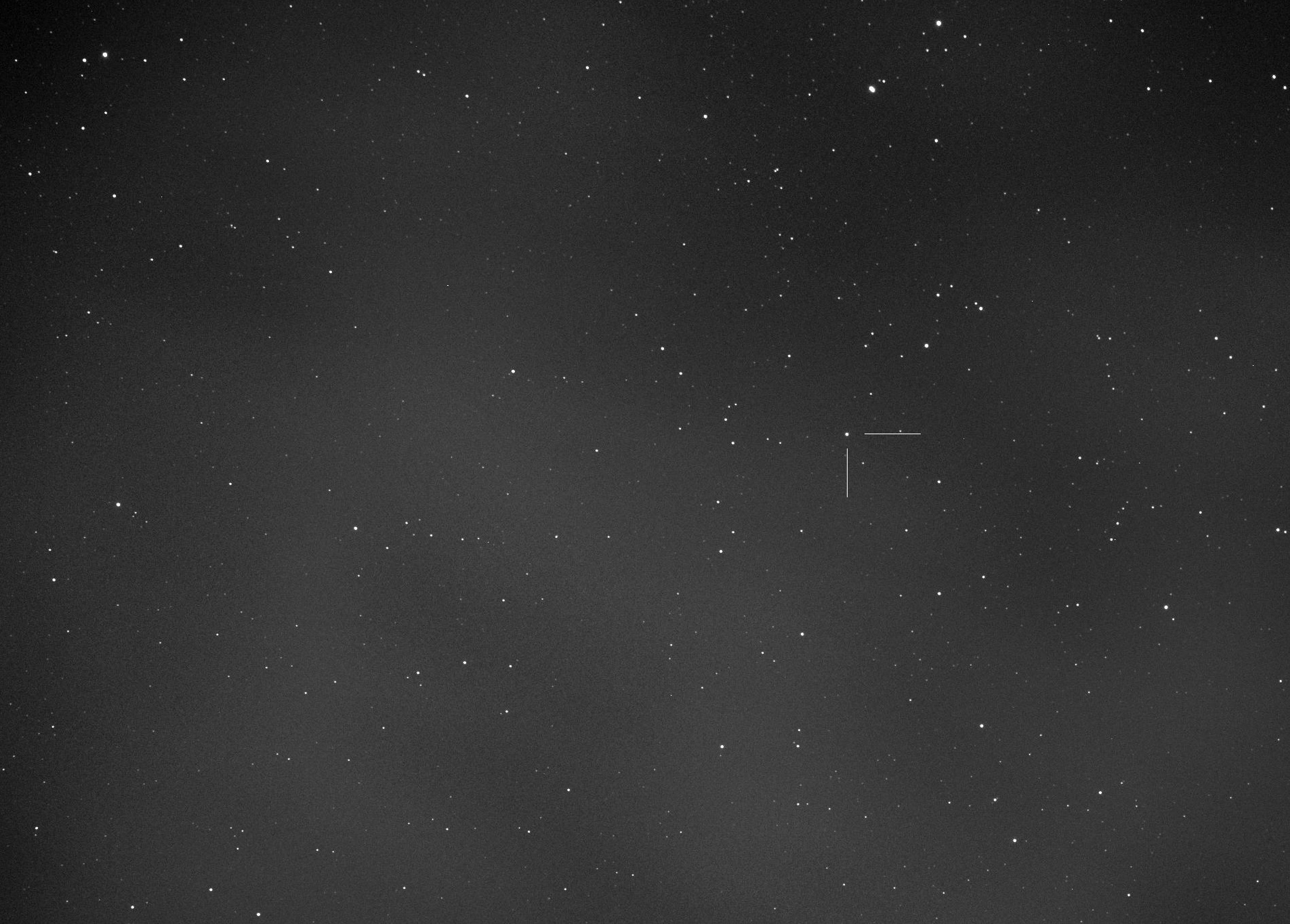
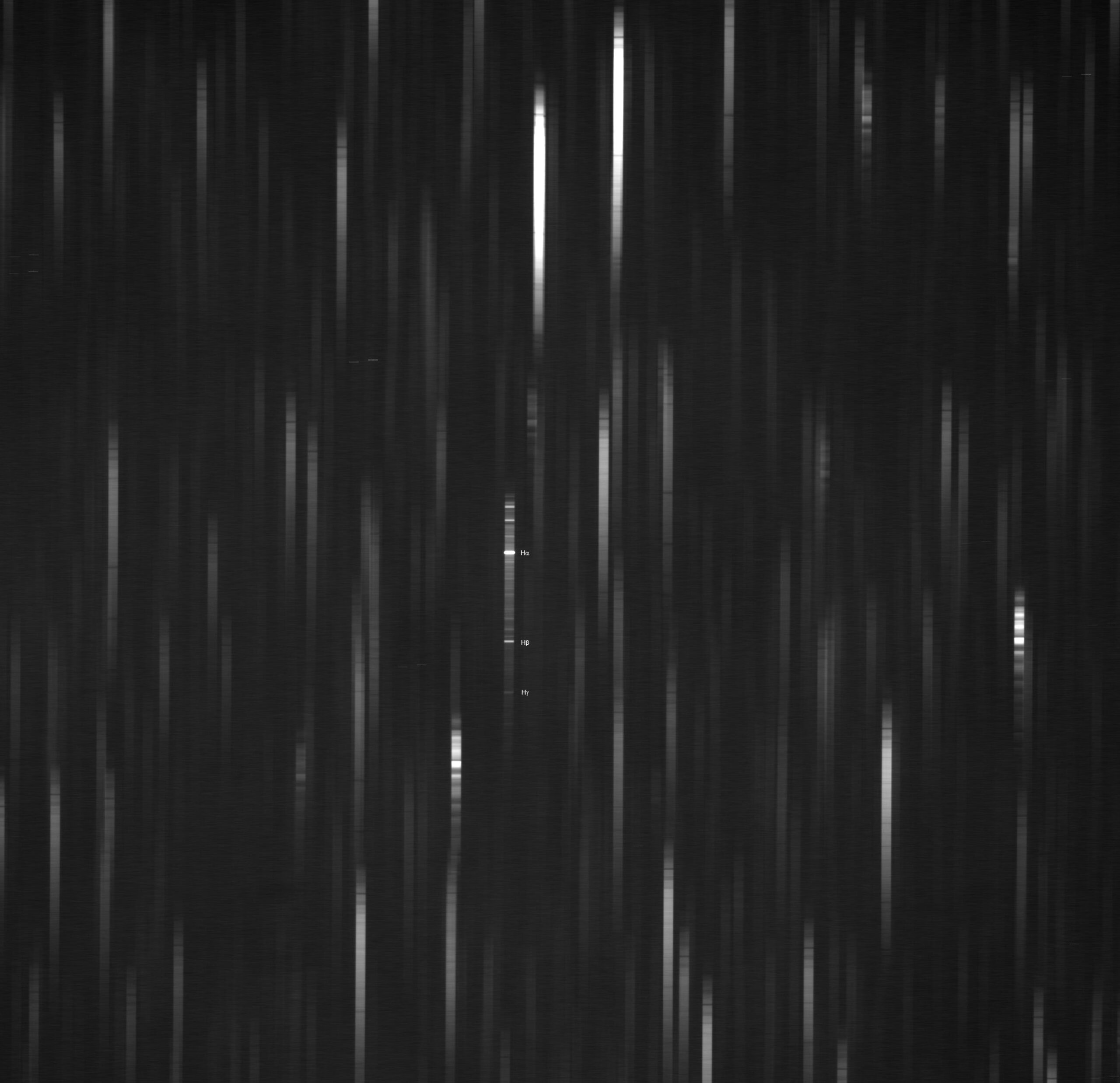
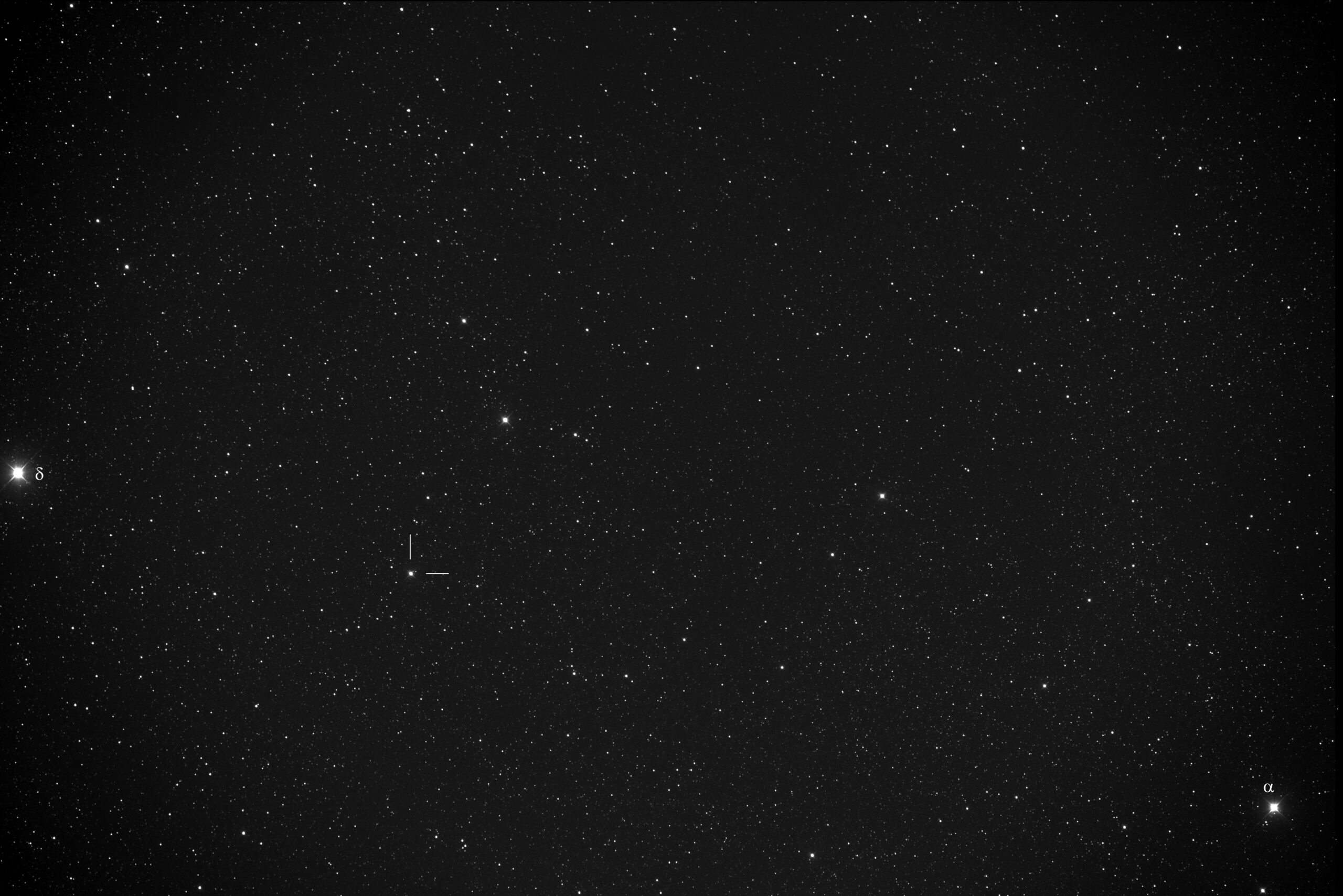
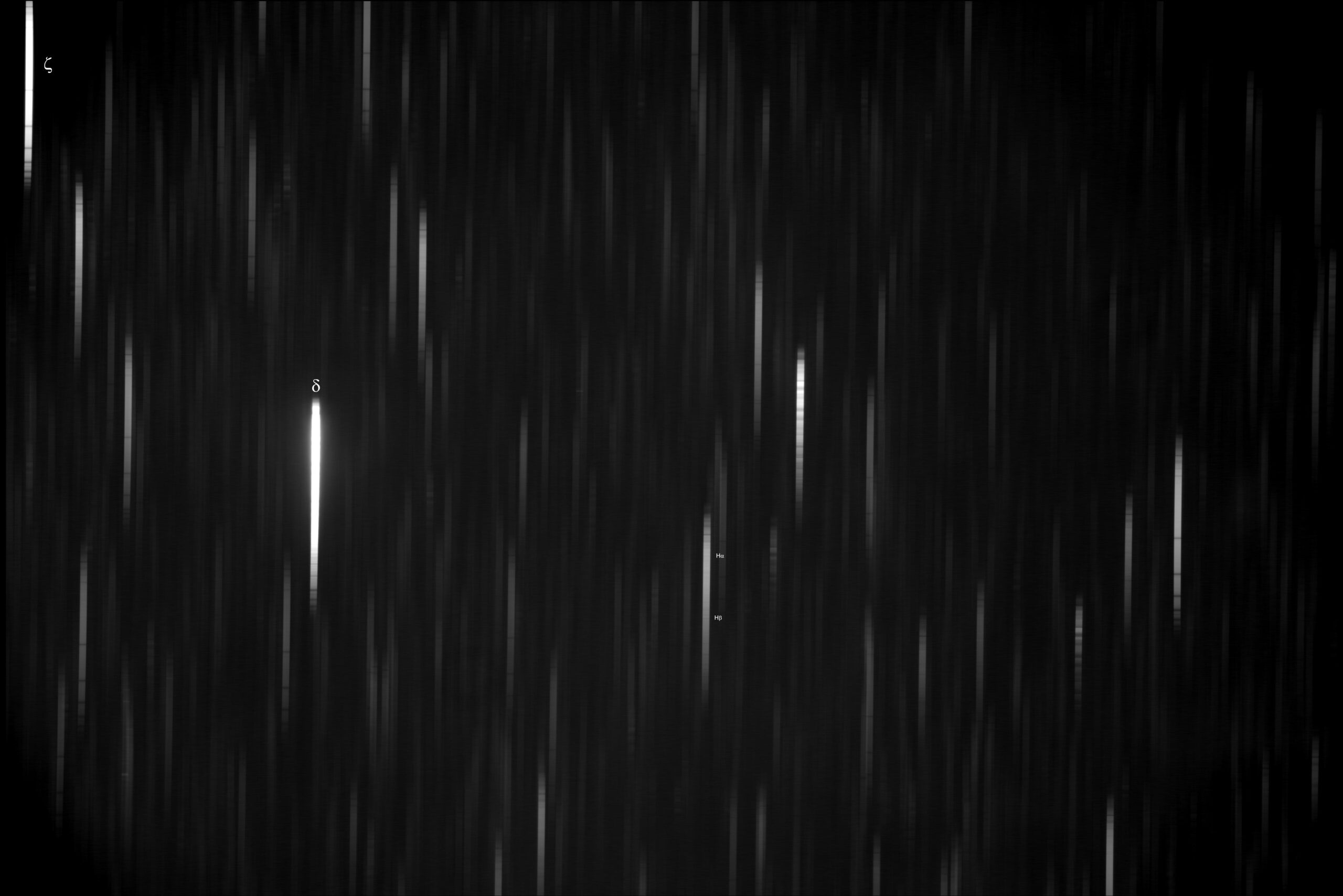
I’m still taking spectra most clear mornings…when they get the forecast right! This morning’s effort attached along with a Zwicky Transient Facility image, A, from July showing nothing at the position of the nova and my image, B, of the same 10 x 10 arc minute field today.
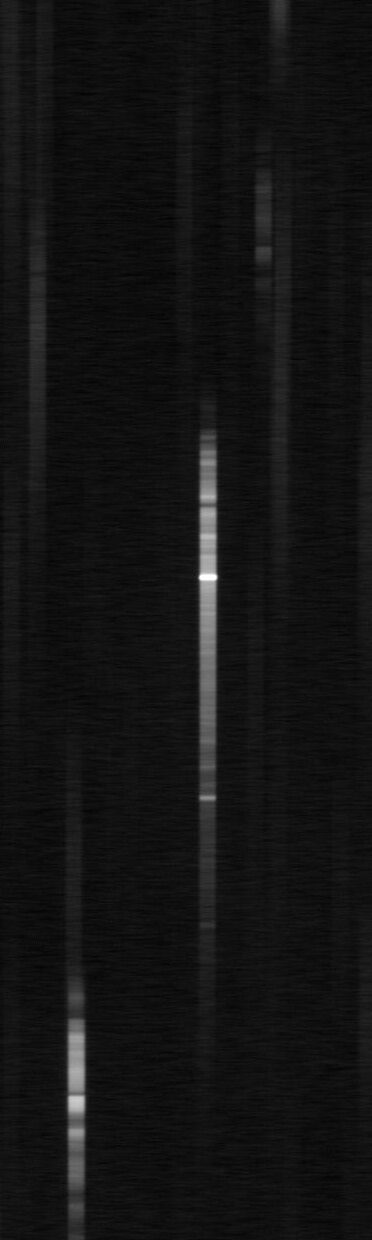
The objective prism spectrum has had some wavelengths (in nanometers) added for reference calculated from the dispersion equation for the system. Interesting that the feature at ~465nm has brightened again at the same phase in the light-curve (from AAVSO) as the previous appearance on 25th August. This followed a flare up of the nova and appeared as it faded. (V-mag ~11.0 today).
The nova has had three mini-outbursts since it first appeared…how many more before it finally fades? And are these like the ‘echo’ outbursts seen in some CV’s, for example EG Cancri?Attachments:
Mike HarlowParticipantPrompted by Jeremy’s post I thought it was about time to take another look at the nova and attempt a low resolution spectrum.
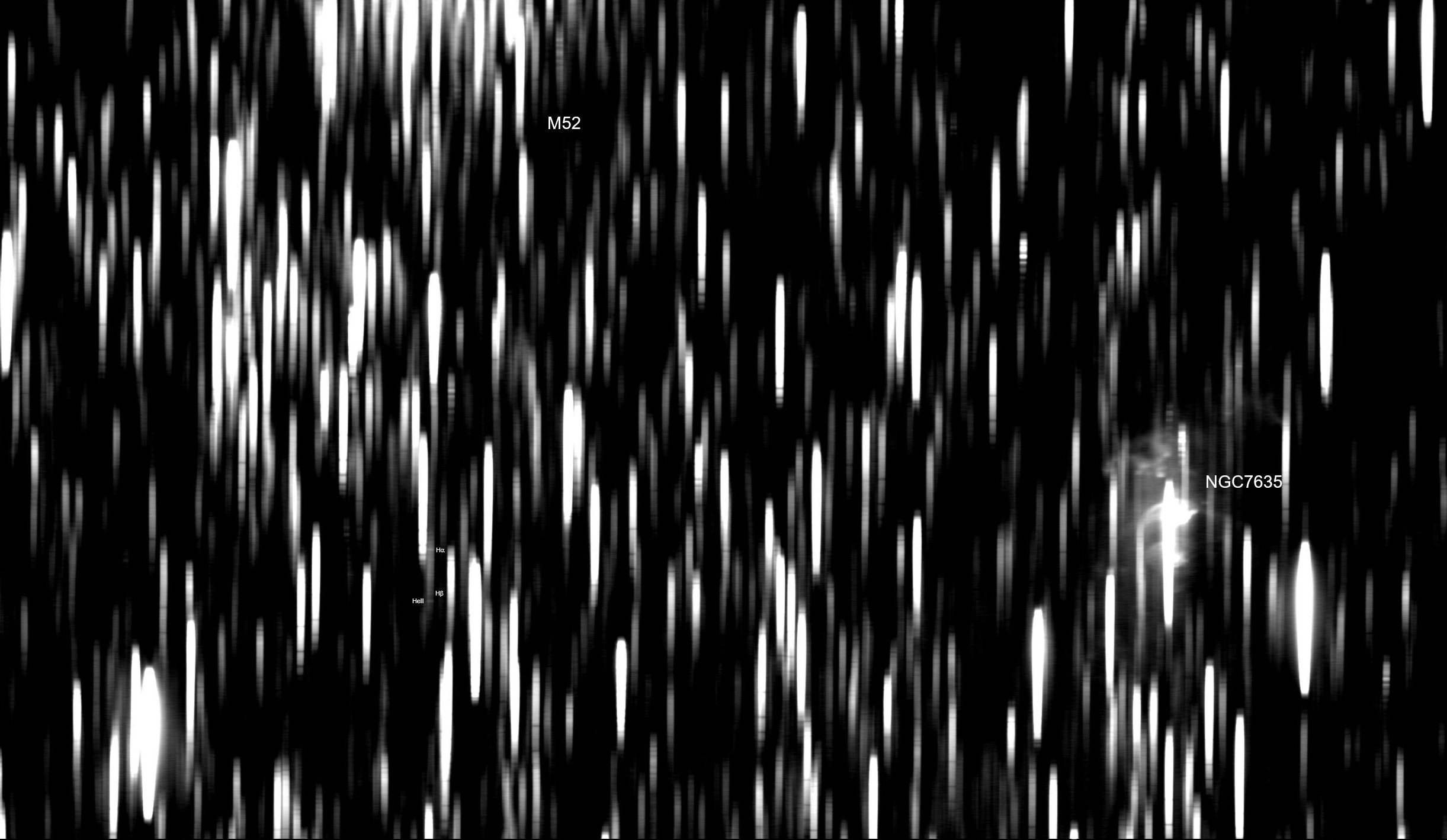
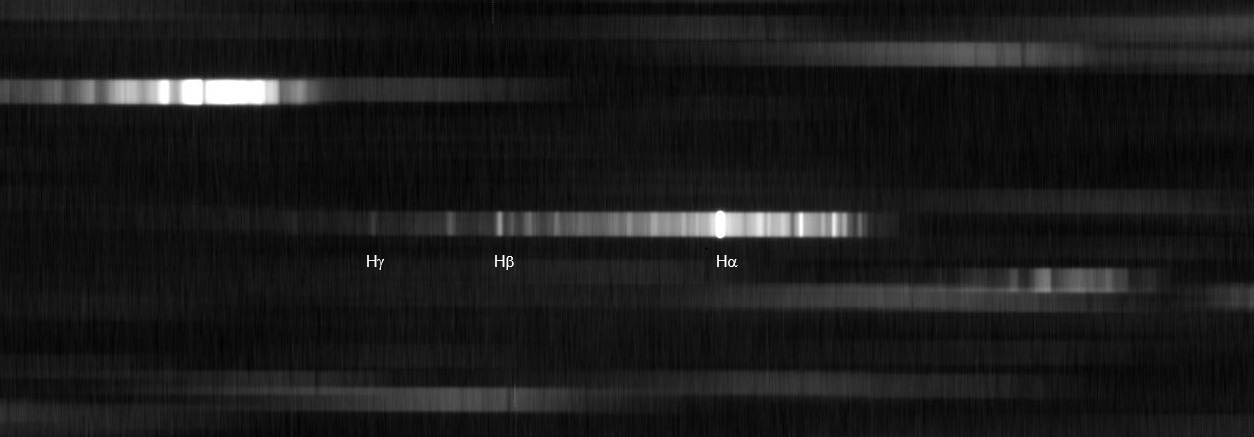
Well it just about worked but at mag 13 in a very crowded star field it’s not ideal for an objective prism. However it does show H alpha and H beta, the bright HeII line at 468nm and the close pair of lines at 529 and 541nm. The last spectrum in the BAA database, which shows the same features, was from December 2025…so I guess mine is better than nothing nine months on…?
The nova is directly below M52 and left of NGC7635 (Bubble nebula) forming a right angle triangle.
Mike.Attachments:
Mike HarlowParticipantA recent Astronomer’s Telegram, ATel#18033, gives details of the latest photometry and spectroscopy of the nova in early September.
Mike.
(This is also a test to see how the Forum is performing…still seems unpredictable to me).4 September 2026 at 7:33 am in reply to: Variable Star Section Circular for September 2026 (number 209) #642774Mike HarlowParticipantI did post to this forum on 2nd September, which prompted Gary’s reply, but my post disappeared!
Anyway, thanks for all your replies/comments, I will work towards calibrating my spectra so they are suitable for the database.
My one question is: What is the best software to use? I have used VisualSpec in the past but is there a better option.
And one final comment, Nigel Evans has derived the dispersion equation for my system so I can calculate the wavelength for any pixel value in the spectrum. Very useful, especially for planetary nebulae where there is an image rather than a line.2 September 2026 at 9:28 am in reply to: Variable Star Section Circular for September 2026 (number 209) #642716Mike HarlowParticipantVery nice article by Hugh Allen on U Cephei. It was on my list for the winter but no point now!!! (Only joking).
Yes, three very interesting novae, but no mention of my objective prism spectra. I’m obviously not famous enough?
It is noted that there are few spectra of Nova Tauri (David Cejudo has now made lots more). I’ve made one on every clear morning starting on 12th August. Not calibrated but still spectra. See the Gallery and Forum posts for details.
Mike.Mike HarlowParticipantTwo images of the spectrum of the nova tonight in very difficult conditions. Just a handful of images possible through gaps in the cloud so not great.
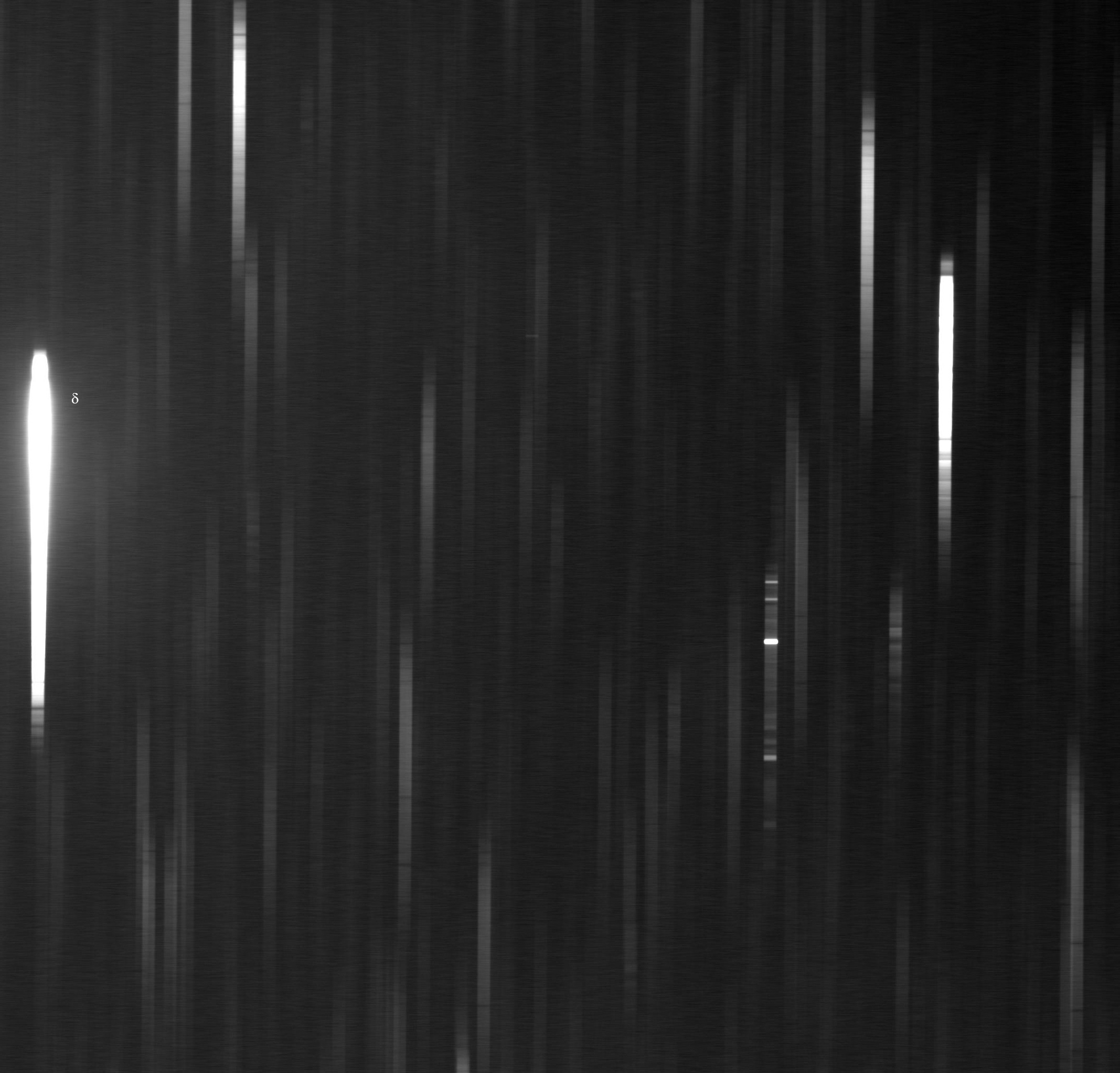
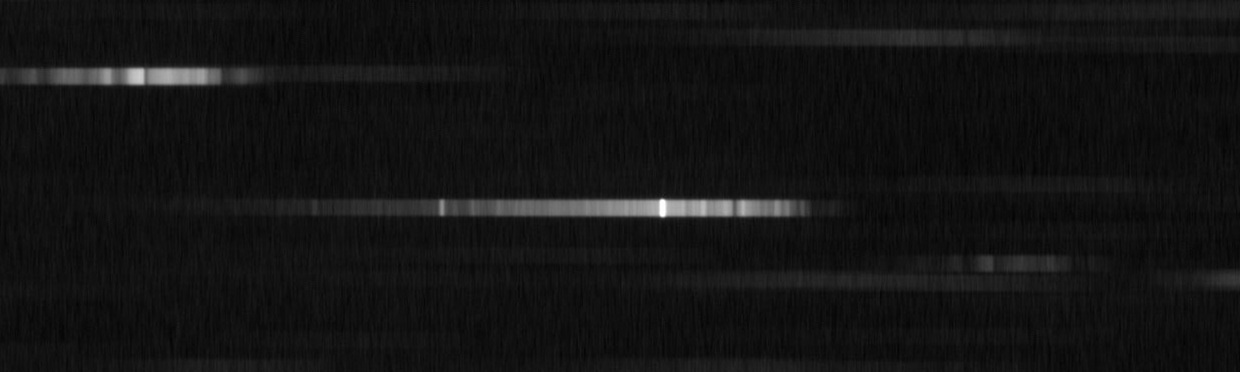
But wow!…what a change in just a few days. A very boring continuum on 26th and now really wide and bright emission lines. [They get wider towards the blue end (H gamma) due to the non-linear dispersion of the prism].
Mike.
(20cm diameter, 9 degree prism on the 12 inch F/3.6 telescope. 15 x 10 second exposures).Mike HarlowParticipantWeb site looks normal now except that images in the Gallery aren’t visible. If it is AI looking at the site it might actually learn something interesting…!
Mike.
Update 2.40pm: Also, I can only see updates I’ve posted to the forum if I’m logged in. They aren’t visible once I log out…!!!.Mike HarlowParticipantHi Nigella,
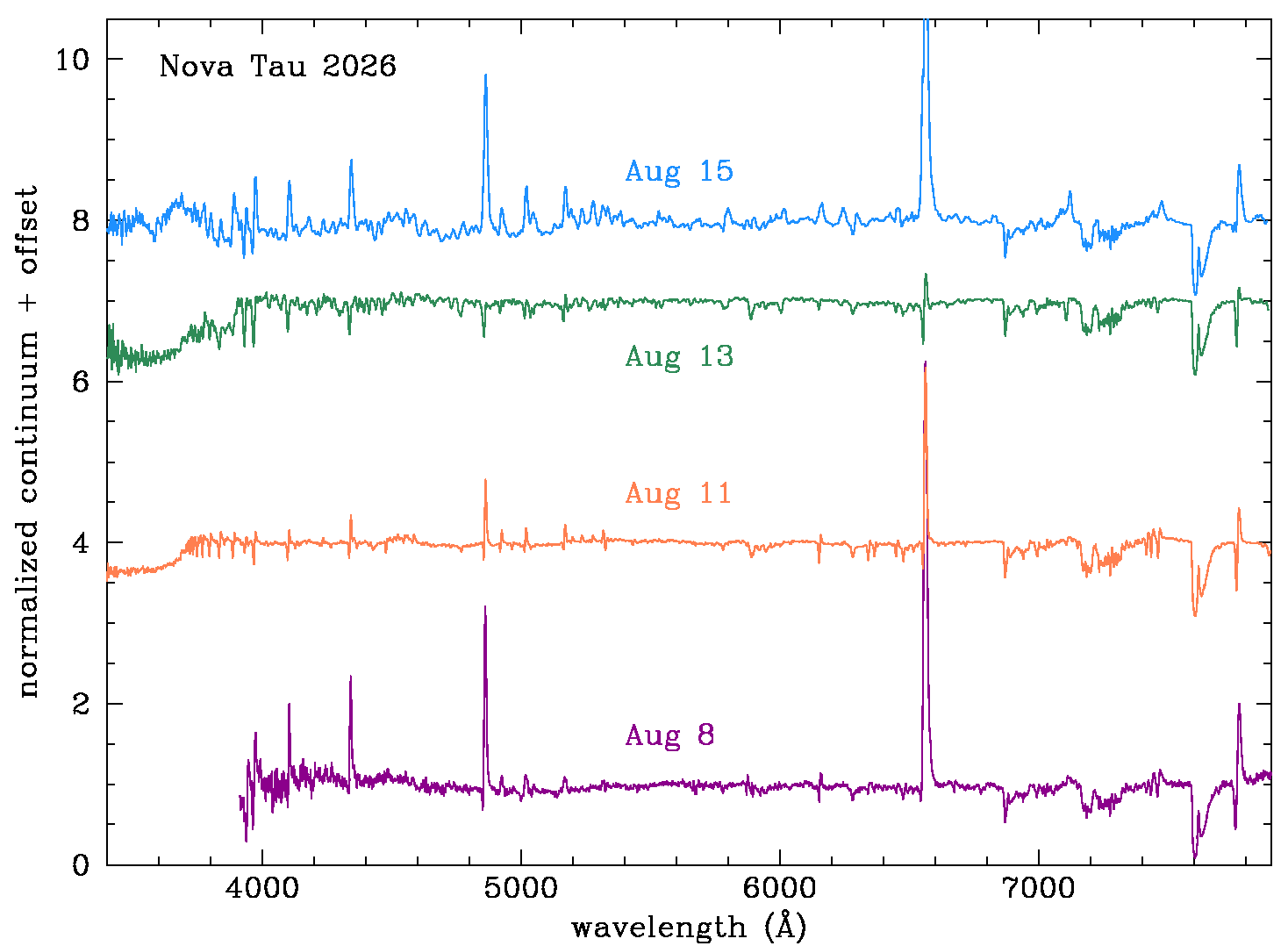
Looks good to me, you’ve got the strong H alpha emission along with H beta and some iron lines (I think). Also the atmospheric absorption bands in the red/IR. If you are new to spectroscopy that’s a great start!The latest Astronomer’s Telegram, ATel#18021 reports the rapid evolution of the spectrum over just a few days and the fact that this is a “Fast” nova. So take a look at every opportunity before it gets too faint.
Mike.Mike HarlowParticipantThe sky cleared just in time this morning for another spectrum. Interesting to note that the feature between H beta and H gamma seen on 25th August has now faded.
The image (taken through cloud!) and spectrum shown below are also in the Gallery.Mike HarlowParticipantA quick image of the nova this morning before moving on to Nova Tauri. No chance for a spectrum as it was too low.
The latest ATel#18014 suggests that the spectrum is changing rapidly.Mike HarlowParticipantHi David,
Very nice image. It will be interesting to see the colour change over the next few weeks.
Before I saw your post here I noticed that your image (in the Gallery) was mirrored so I flipped it round to give the correct view. Hope you don’t mind?!
Sometimes happens with some combinations of iTel telescopes and image processing software.
Mike.Mike HarlowParticipantDominic,
Another great idea…change the title of this forum to “Nova Sge 2026“…
And another thing…is it possible to delete an image from a forum post? Not obvious to me but I’m no expert.
Thanks,
Mike.
Update 20260827: Thanks Dominic!Mike HarlowParticipantChecked my email just after packing up for the night…so I got everything out again!!!
Using the 30cm F/3.6 astrograph a wide field shot of the nova first followed by a quick look spectrum with the 20cm, 9 degree objective prism taken at 20260825.916. Both fields ~112 x 75 arc minutes with north up but slightly offset from each other. The spectrum just about shows the P-Cygni profile, which is easiest to see in H beta, but not as clearly as Robin’s result. All features relatively weak at this stage as noted in the follow up ATel#18009.Mike HarlowParticipantSpectrum from this morning confirming the ‘new’ feature suspected yesterday.
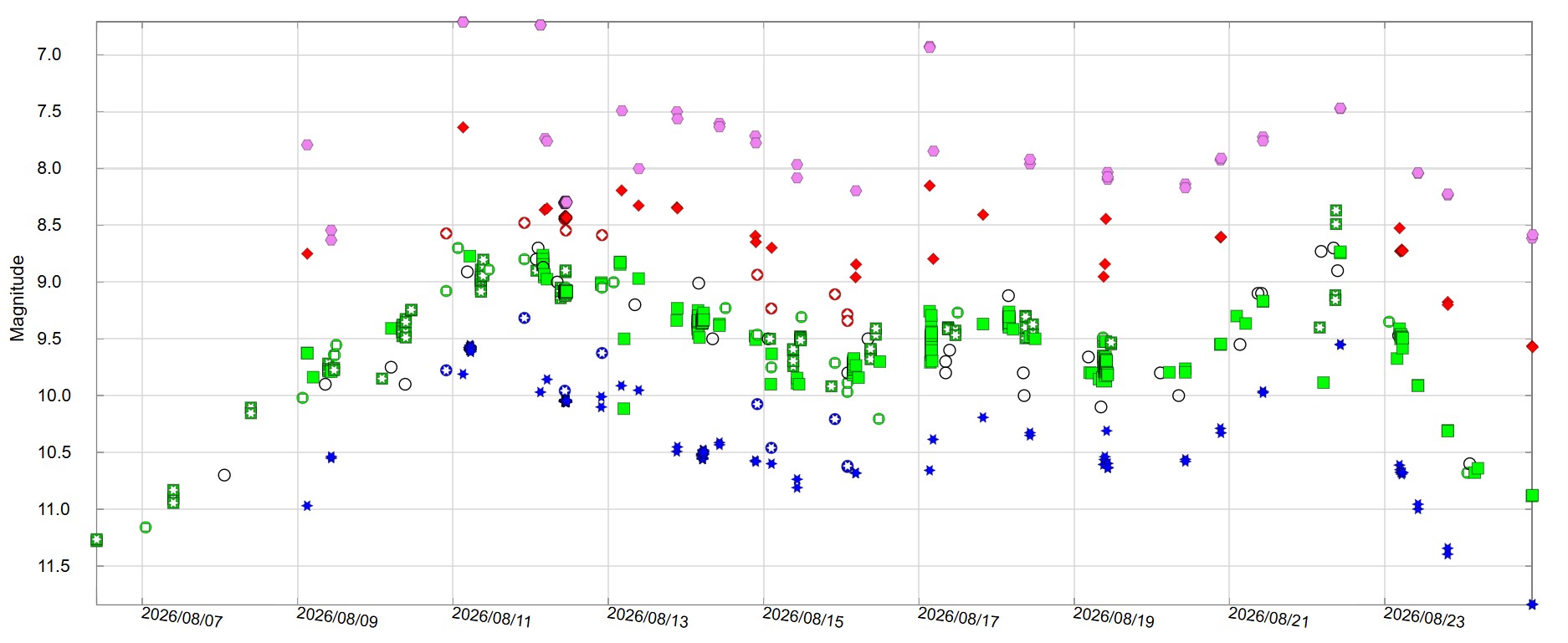
And the AAVSO light curve to illustrate Robin’s comment about the magnitude dropping as the spectrum changed.Mike HarlowParticipantLatest spectrum of the nova taken this morning is shown below. Seeing conditions didn’t seem as good as previous days so that may have degraded the spectrum a bit.
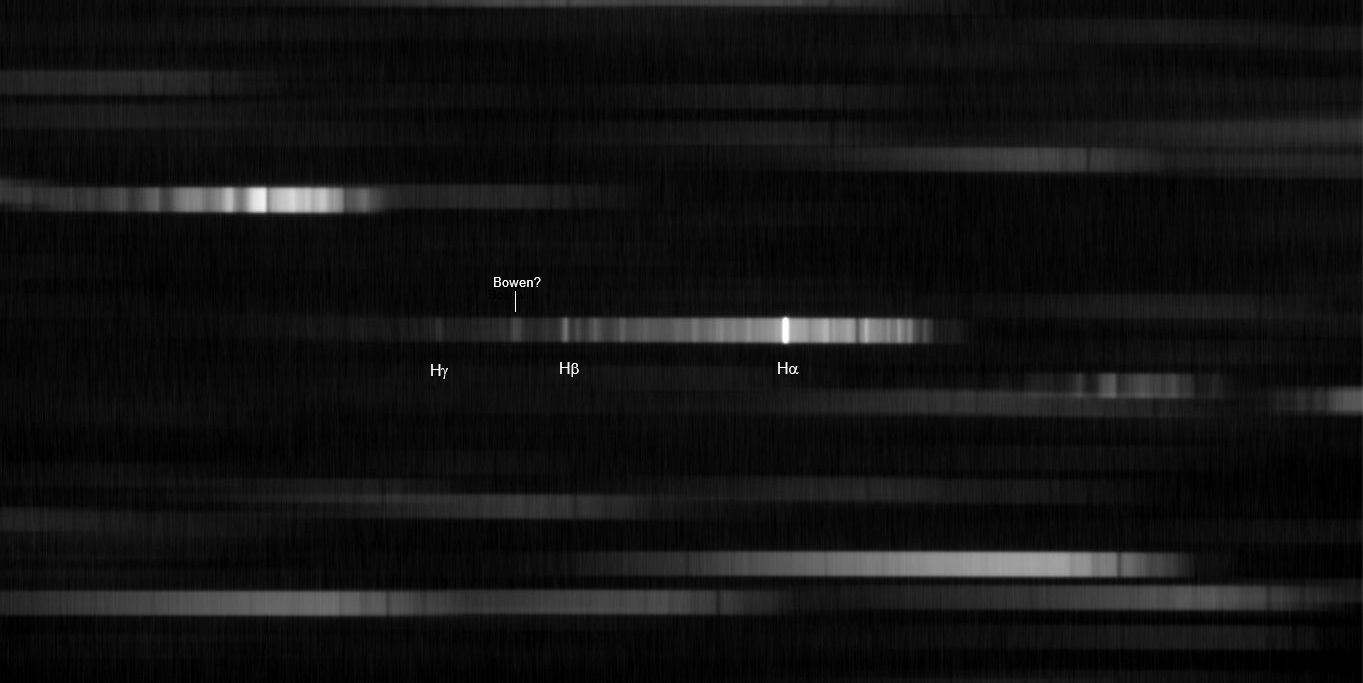
A new feature has appeared between H beta and H gamma. It looks very much like the ‘Bowen fluorescence’ feature seen in cataclysmic variables (plus some He II ?) as it is much broader than the other lines. Unfortunately, David Cejudo’s spectrum from 23rd cuts off just above this region(!). Difficult to tell from this uncalibrated spectrum but worth checking over the next few days. Fe lines seem to have changed slightly as well.
H alpha is now dominating the emission so I guess colour images would show it getting redder…
AAVSO data suggest it is now near V-mag 10.5 and falling…
Mike.Attachments:
Mike HarlowParticipantNew spectrum this morning after several days of cloud. Posted in the gallery: Spectrum 20260822.
Mike.Mike HarlowParticipantTwo more Astronomer’s Telegrams give updates on Nova Tau 2026 observations, see ATel#17970 and ATel#17972.
One gives details of the spectral evolution and confirms Robin’s results very nicely. Robin’s spectrum on 13th August coincided exactly with the almost featureless spectrum shown!!! Bad luck or what…
I was lucky to get spectra on 12th, 14th and 16th as the emission lines started to develop.
By the way…whatever happened to 2SPOT???. Some remote spectroscopy would be very useful given it’s cloudy here for the next few days.
Mike.Mike HarlowParticipantYes, it looks like the spectrum is changing rapidly. The spectrum this morning shows stronger emission lines and weaker continuum in line with the decreasing magnitude. Still processing the images to get a nicer picture but first look attached.
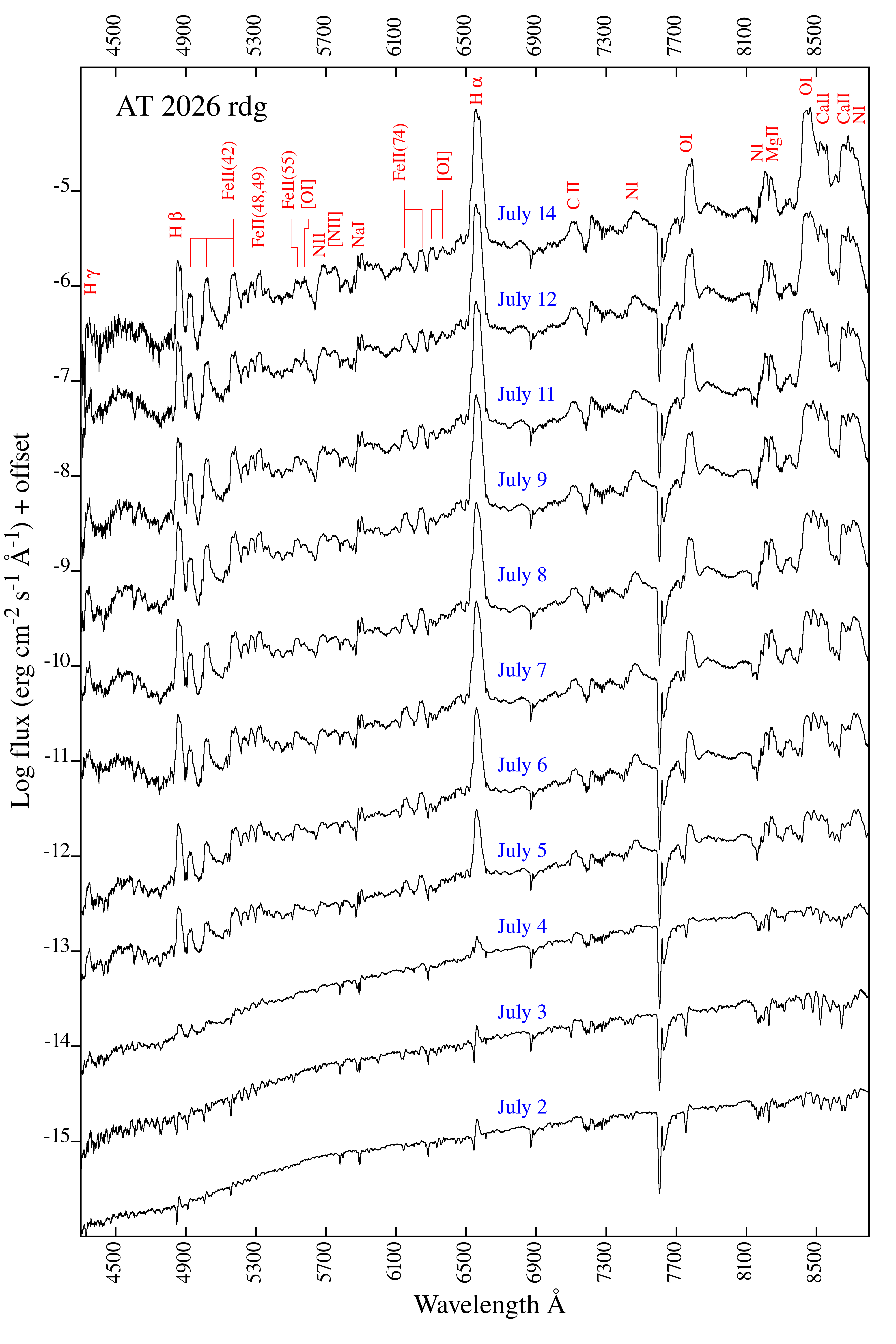
Given how the spectrum of Nova Aql 2026 changed so quickly it is well worth observing Nova Tau 2026 at every opportunity.
Weather here not looking too good for the next few days so it could be the end of the week before I get anything else.
Mike.
Update: Slightly better image now in the Gallery-
This reply was modified 2 months ago by
 Mike Harlow.
-
This reply was modified 2 months ago by Mike Harlow.
-
AuthorPosts