
Forum Replies Created
-
AuthorPosts
-
Mr Giovanni Di Giovanni
ParticipantDear fellow amateur astronomers, I take your observations very seriously, and for this reason I carefully read everything you’ve written in your comments: highlighting details in underexposed shots; the importance of the exposure triangle; sRGB and RGB profiles; dark frame subtraction; noise reduction in JPEGs and RAW files.
After this, I feel a proper study of the topics is necessary, and a good book that covers them with a certain rigor.
Thank you.
(P.S. It’s true that “you never stop learning.”)ParticipantDr. Paul, it’s certainly not exactly disk space that’s troubling me. I was too incomplete in what I said. More specifically, I have a version of MATLAB that doesn’t accept RAW format frames. Therefore, I have no way of processing in that format; I easily process (i.e., perform photometry) on JPEGs. Since I read everywhere that JPEGs aren’t suitable, that JPEGs compress images (I don’t know exactly what and how), etc., I tried to compare a numerical calculation from JPEGs with one from TIFs that MATLAB reads. I’m surprised that the results are very similar and, above all, that the noise from the simple JPEG format appears much lower than from TIFs (obtained by transforming the NEF).
I’d appreciate any further information.
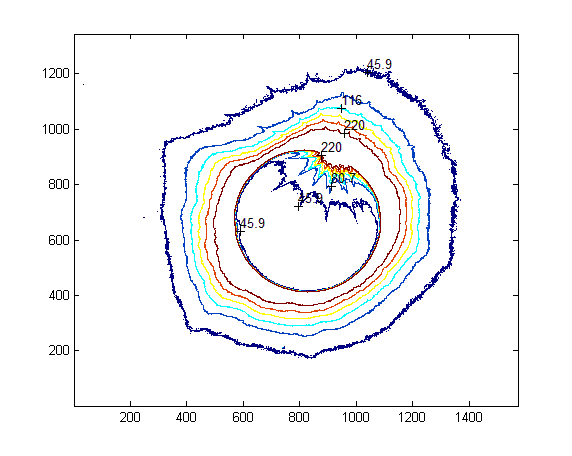
ThankParticipantI thank everyone who responded and thus resolved my doubt. I’m attaching the isophote system extracted from the R channel of a frame. The numbers are pixel values.
I had intended to do a purely educational work, a numerical computation of the coronal photometric density; however, now I believe this is almost a waste of time.
Thank you again.Attachments:
ParticipantAlex, you’ve included an excellent bibliography. I actually wasn’t familiar with it all. Thank you for your interest. However, my intention is to collect any images that may become available to complete a previous study of mine. These are numerical calculations aimed at determining the times of contacts and the maximum phase. This is in reference to the article published in our JBAA.
https://britastro.org/journal/baa-journal-volume-126-number-2-april-2016
Regarding variations in sky brightness, I specifically considered surveying and studying the anti-twilight sky. This is to expand on my previous study,
https://britastro.org/journal/baa-journal-volume-135-number-01-february-2025.
Already from a first examination, I saw that this would be a significant undertaking from the perspective of atmospheric physics. To go beyond that outline requires significant and time-consuming theoretical elaborations. Furthermore, at least here in central Italy, after a sunny day, the sky is always covered in low clouds and haze, which greatly attenuates even the few stars still visible. The twilight and anti-twilight colors are noticeably distorted compared to the past. And this has been happening for over a month, and it seems to be a summer condition.
Taking images of just the solar disk is what I would ask of those who intend to take a complete image of the eclipse.Paul, I’ll contact you when I get back. I’ll be away from home for a few days from today
Thanks Alex, and thanks Paul
Regards
GiovanniParticipantI truly owe you so much for considering my questions in such detail and for helping me resolve my doubts. Besides thanking you, I now also need to study the content of your answers, which were exhaustive.
Just one thing I’d like to add. I’m a longtime amateur astronomer, one of those who has always practiced (and still does) DIY. There’s no way around it; what you have in your head must be made by hand. I have a small, well-equipped workshop in the garage and have always built both frames and optical mirrors by hand. For me, DIY is a hobby within the broader hobby of astronomy. And the very pleasure of DIY has always kept me away, or rather, behind, the latest techniques. However, now, with the advent of intelligent telescopes, I have to use objects built by others. It’s a bit like a marathon runner sprinting from the back of the pack to catch up.
Once again, a heartfelt thank you to you.ParticipantThanks, Paul. I had a tooth pulled. I struggle to believe all the possibilities attributed to it, but if you confirm it, I’ll begin to dispel my doubts.
I’m referring here to the cheapest telescope AP 50/250 Seestar S50.
I’ll tell you, it’s a little hard to imagine having Pluto within reach. It seems that on M13, M31, M42, the Pleiades, etc., it’s truly miraculous. For “beautiful” photography, I think it’s a good instrument, even if the resolution leaves something to be desired. I wonder: what does it provide on Epsilon Lyrae?
Given its light weight, I’d take it to high mountains, to the Gran Sasso, even at altitudes above 2,800 meters, to photograph lunar eclipses, which I study seriously. At F=250mm, the lunar and solar disks have a diameter of about 2.5 mm. So I wonder what the quality of lunar photography is, taken for photometric purposes? No description provides information about the actual resolution on the Moon and Sun.
I would like to see some photographs of the Moon and the photosphere, taken without any post-production or retouching with various soft-focus techniques.
ThankP.S. Sorry for my poor English, I don’t know much and I have to use a translator.
1 February 2026 at 7:55 pm in reply to: Musk’s SpaceX applies to launch 1m satellites into orbit #634422ParticipantI immediately read this news with interest, and I was delighted by it because I glimpsed in it a sort of great new discovery, somewhat similar to what the discovery of America must have been four centuries ago. Driven by strong enthusiasm for it, I wanted to do some calculations, done, so to speak, with a child’s abacus.
Data: Satellites N=10^6, orbiting at d=1000km above the ground and R=7350km from the center of the Earth.
Here are the results: surface area of the sphere centered on S = 4 * 3.14 * R^2 = 6.8 * 10^8 km2. Each satellite would have approximately S/N = 680 km2. The area is roughly square, with side L = 26 km. The hypothetical future tourist who will be on holiday in orbit approximately 1000 km above the surface will pass near a satellite every 2.5 seconds. This is a very short interval, similar to the frequency with which a driver encounters streetlights along a route in a city like Rome.
The worst is yet to come for us amateur astronomers. The angular distance between two nearby satellites is: 26km/1000km = 0.026 rad = approximately 1.5°. That is, between one false star (satellite) and the other closest to it, there would be only 3 lunar diameters. At 50x, we will see at least two satellites in the eyepiece field at the same time. Let’s hope they are invisible to the naked eye. If only each one had a magnitude of 1, it would be like having an almost full moon every night: goodbye to nebulae, clusters, and deep sky in general. This would lead to the bankruptcy of all telescope and accessory manufacturers. Thus, humanity will definitively lose a huge cultural heritage; no one will ever again look up at the starless sky; it will be pointless. Everyone, heads down, miserable, sad, and afflicted, will crawl on the ground almost like reptiles. In this state, I see no light, but black, the symbol of the famine emerging from the underworld: I see the apocalyptic Black Knight. A famine of natural stars, a famine of beautiful things. One side of his scale leans toward artificial light pollution, toward illusions, toward the falsehood that pushes everyone into the deepest corner of a Dantean Inferno.I wonder if that “brilliant” idea is a sign of pure madness, a carnival joke, or something truly serious.
ParticipantUnfortunately, auroras do not appear in Italy, or at least they are very rare; I have never seen one myself.
David, thank you for the video you shared and for mentioning the detected magnetic signal. Regarding this, I would like to ask for some additional information: Have you also observed a Solar Flare Effect (SFE)? If possible, could you please share a graph showing how one component of the geomagnetic field (e.g., the total field component) evolved over the course of a few days, starting shortly before the SFE? A graph like that would be very interesting, as it would allow us to distinguish between the effect (SFE) of the increased solar X-ray and UV emission and the effect (auroras) caused by the particle radiation.
Thank you very much
GiovanniP.S. Sorry if my English is not perfect, I’m using a translator.
ParticipantYour notes are beautiful. They remind me of my enthusiasm and excitement when I built my first telescope half a century ago. A Newtonian D200 f1400, worked on in my garage, the mount entirely homemade using mechanisms from old cars being scrapped and gears from a rotisserie, with manual tracking. The photometer was a photodiode at the focus of a microscope used to examine photographic plates. Reading your notes, memories emerge unchallenged and presumptuous.
Happy New Year 2026 (and following) to all of you.ParticipantYes, this is a test I haven’t done, but it absolutely must be done. On the first clear evening, I will carefully carry out this procedure. Then I will update the post.
Thanks, Bill.ParticipantThank you, Paul. I was not familiar with the topic discussed in the link you provided. To be honest, I was thinking about some defect in the corrective plate. I had not considered the effect of atmospheric refraction. So, I understand that I probably never get a good focus precisely because of atmospheric dispersion.
I took that image with the Moon about 30° above the (astronomical) horizon and about 20° above the profile of the mountains surrounding my location. The table and graph in the link are very interesting. As for the atmospheric dispersion corrector, I don’t think my little one deserves it.
CiaoParticipantI thought that in the advanced field of information technology, where remote observation reigns supreme, I was the only DIY enthusiast still using manual tools such as lead melting (melted in the garden!), tuna cans, hand drills, etc.
This discussion excites me because it takes me back in time to the distant 1960s, when I was still a teenager and made mirrors from scrap glass from the glazier and frames from materials salvaged from scrap yards and scrap metal dealers in my town.
Once again, thank you to everyone who participated in this conversation.
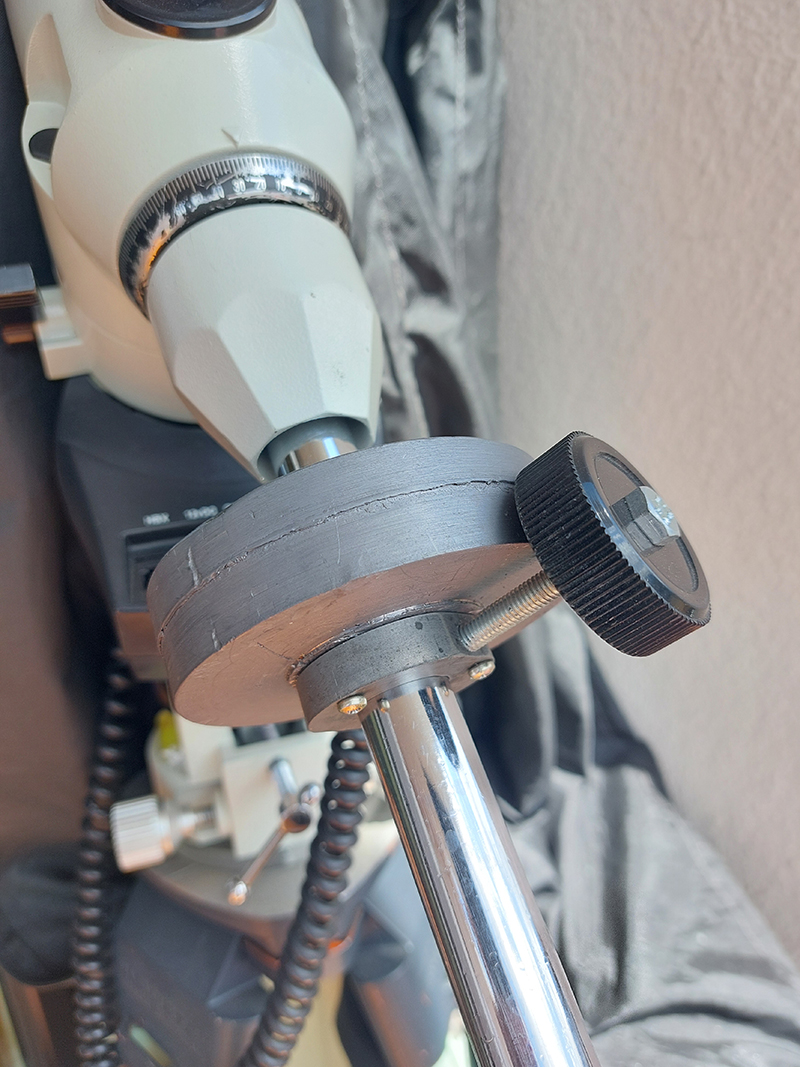
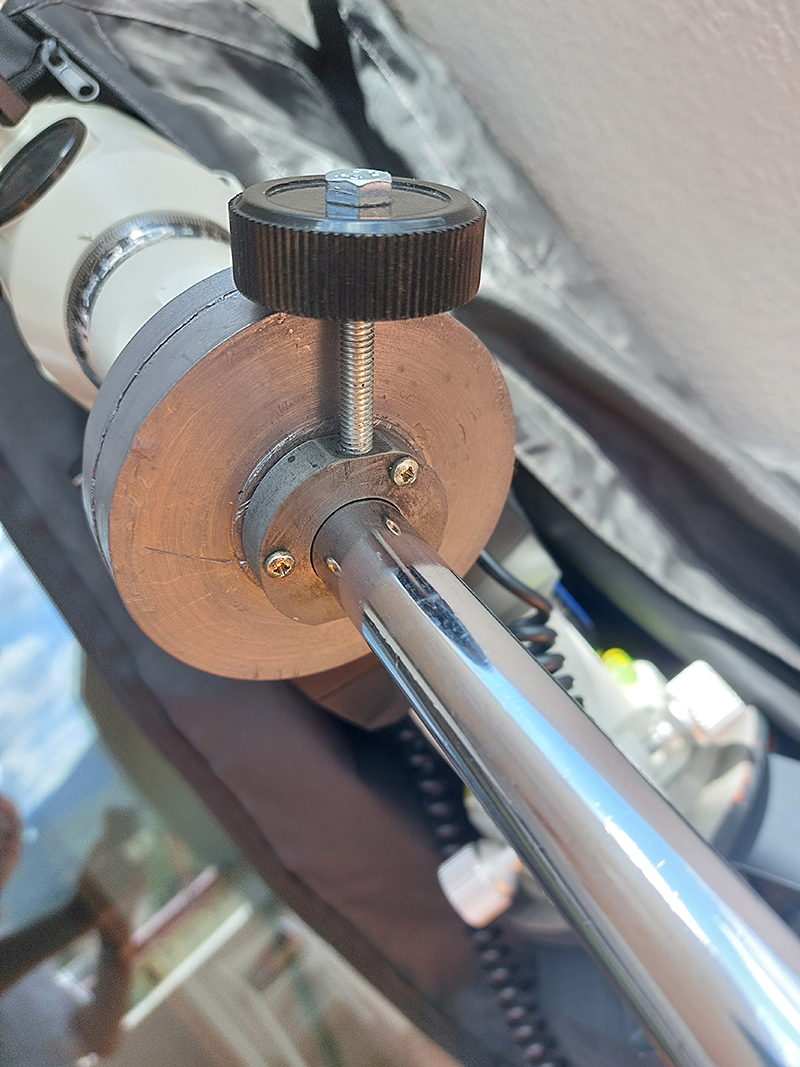
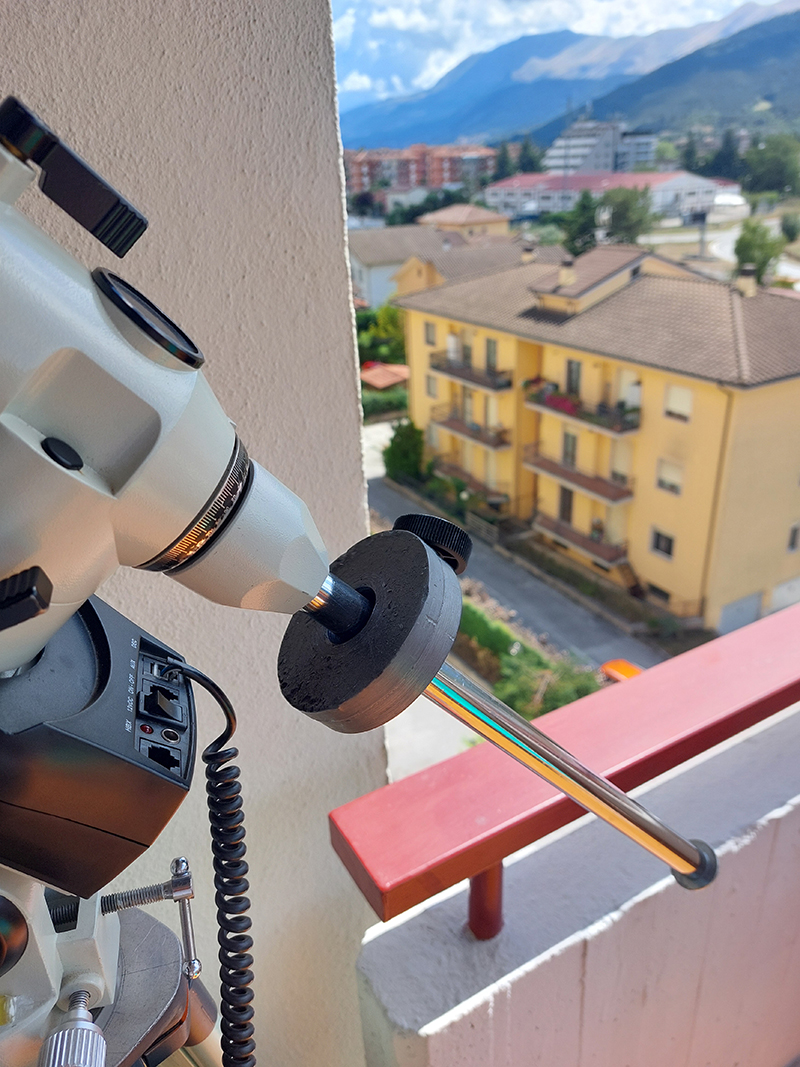
ParticipantFinally! After so long, I’ve found someone who knows about astronomy. Well done, Dr Paul! A true astronomy enthusiast solves minor problems with his own hands. I also needed a counterweight. I got some pieces of lead pipe from a plumber and then melted them in a tuna tin. The result is shown in the pictures. Minimal space required, zero cost. With 400 cucuzze, it’s worth inviting a beautiful lady to dinner!
Melting should be done outdoors, away from flammable materials. Be careful not to boil the lead, it explodes! I didn’t know the trick of using a wet stick to make the hole; I struggled quite a bit to do it gradually with my drill. Gym weights or concrete casting are also excellent solutions.
Congratulations to everyone.Ciao
Translated with DeepL.com (free version)
ParticipantHello James
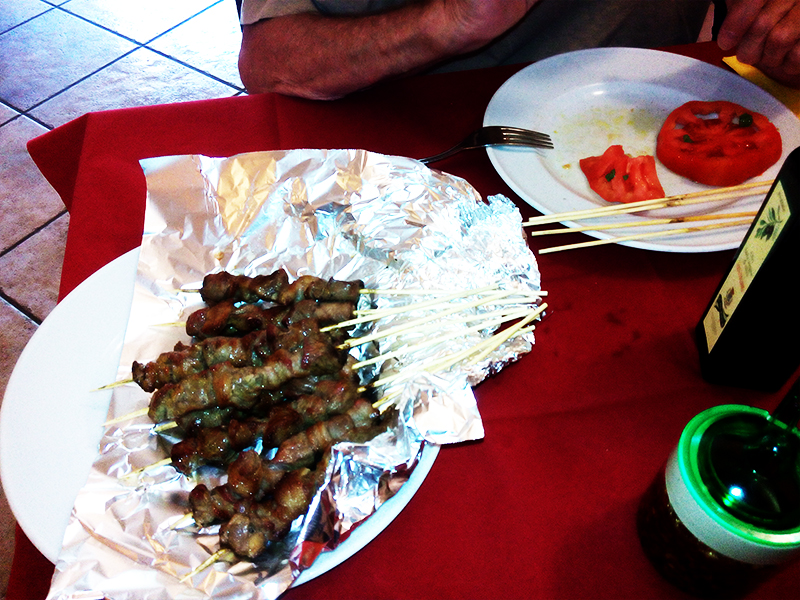
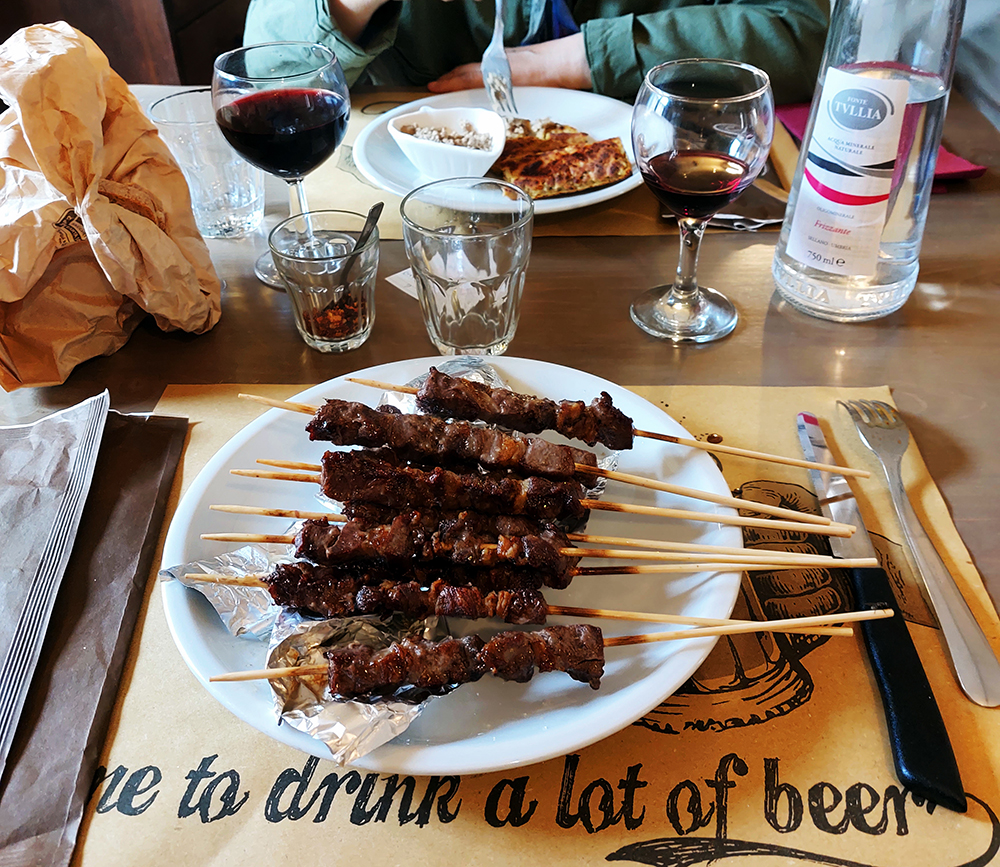
I am very pleased that there are still people in the world who appreciate a glass of wine! I usually drink two glasses with spaghetti alla carbonara (an excellent dish from Rome), or spaghetti aglio olio e peperoncino (garlic, oil and chilli); three glasses with ‘arrosticini’ (sheep meat) from my village Civitella Casanova (I live at the foot of Gran Sasso). I would like to recommend Montepulciano d’Abruzzo wine, red or cerasuolo. Just think, one snowy winter evening, after gorging myself on about 30 arrosticini + brown bread and oil + tomato + well-aged pecorino cheese, all washed down with red Montepulciano (13°) and finally your excellent Johnnie Walker Black Label 12 years old, I didn’t feel cold all night as I spent it observing the Moon, Saturn and various nebulae. What a wonderful memory.
Cheers to everyone!!
Attachments:
ParticipantOk, Robin. Yes, of course, the relationship between spectra has its significance, as does the simple comparison. With soft matlab, it is also straightforward to have them graphically. The problem arises when one wants to establish the relative weight between the pixel values (or relative intensities) of different bands or rather spectral frequencies.
Fortunately, polarisation is not detected. In that case I would abandon the study, I have no desire to tackle more advanced mathematical problems as well.
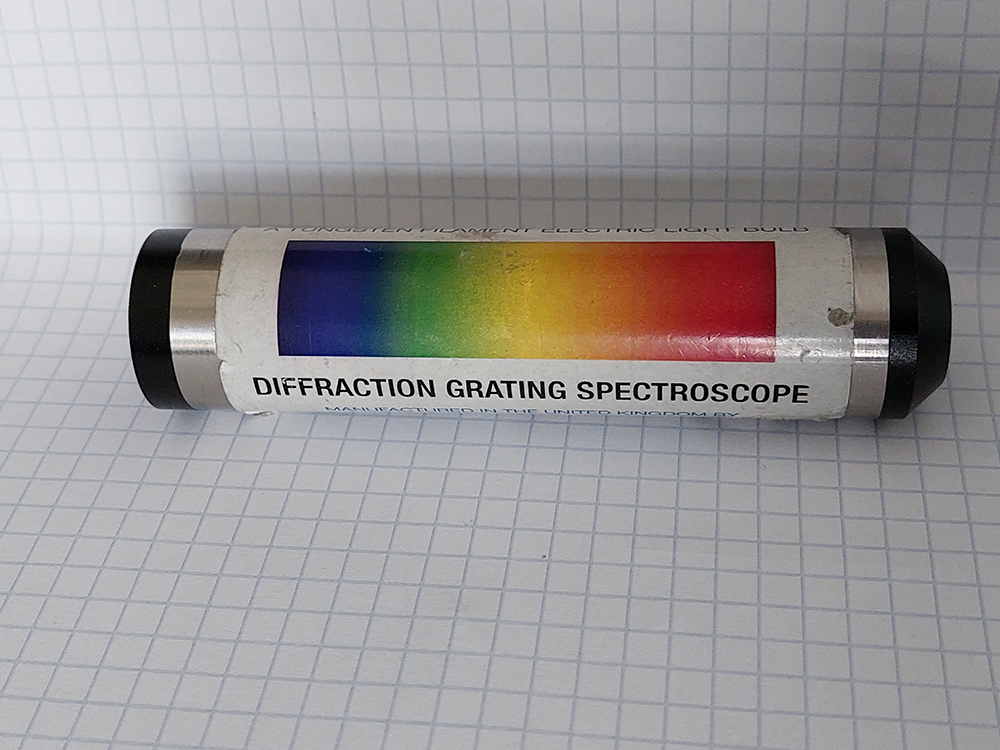
I spent the afternoon today in front of two spectra, zenith and 30° anti-solar. Tomorrow I will climb a peak of the Gran Sasso (2700 m) to take some spectra above the vapours of the valley floor.ParticipantJames, Paul and Robin thank you for responding to my request. I must say that I am a little challenged by what I intend to start studying. In fact, the sun is not my goal. In addition to my study of the Earth’s Shadow, i.e. the Antitwilight sky, I would like to combine the observation of its spectrum. At least initially, for this I think a low resolution is sufficient. The spectrum I obtain is given by an instrument that is little more than a toy. However, it is necessary to be able to compare the pixel values of one channel (e.g. of a frequency on the Red) with those of another channel.
The fact is that I tried them all a bit: As a sample source, I tried a tungsten bulb. I obtained very uncertain results; the spectral energy distribution is too uncertain. There are QE curves of the nikon D70 and a canon on the web, which nobody owns yet, not even in the second-hand market.
Unfortunately, I do not own a telescope and therefore cannot take spectra of stars. Mind you, with the reconstruction of the city after the earthquake of 6 April 2009, floodlights are shooting light everywhere, so from my site the stars have all but disappeared. Robin, you have given me a lot of work to do, I will study your article thoroughly.
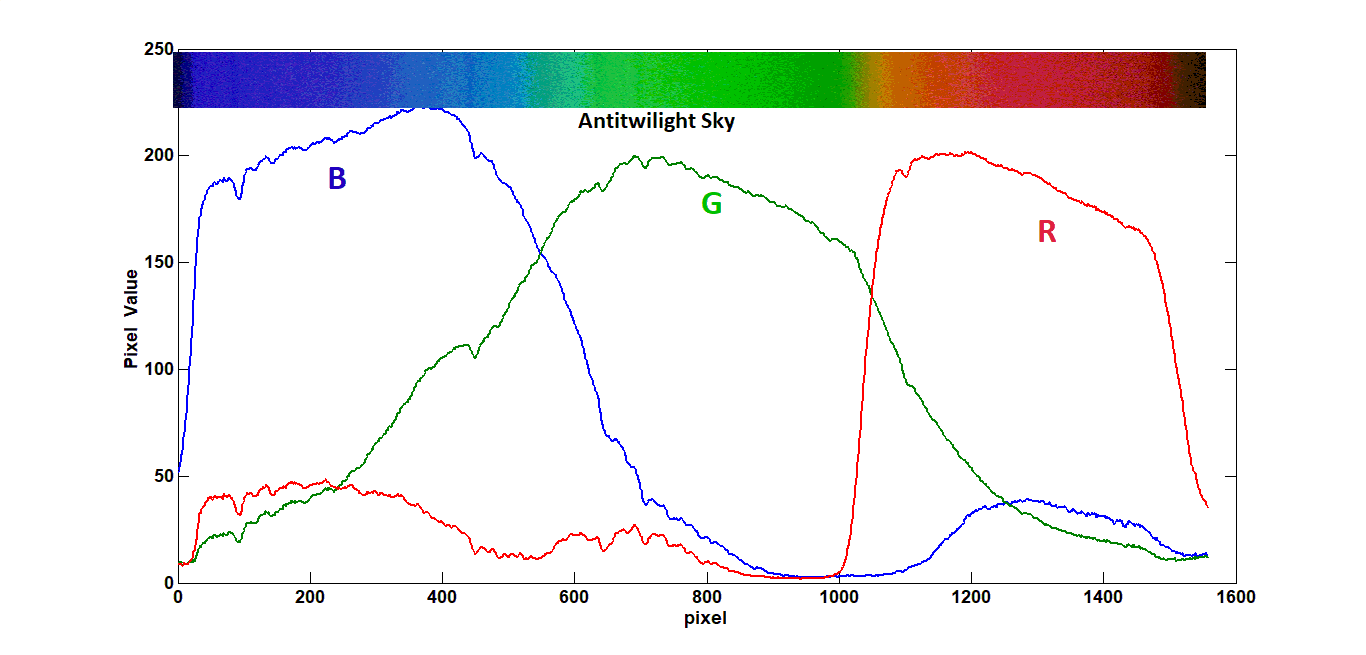
Includo un’immagine dello spettroscopio che uso e un diagramma dei PV di uno spettro costruito usando il soft matlab. The spectrum is bad, but for a broadband study it should be fine.
Again, many thanks to everyone.Attachments:
ParticipantThanks to you Grant, I opened the link you point me to and found the explanation of what I saw. I knew neither that there were so many satellites nor that they can sometimes orbit in the way I saw them.
The observation of satellites and how to observe them was indicated in an old astronomy booklet that I managed to buy when I was still a little boy: The Sky Observer’s Guide, Western Publishing S. A., Genève (1966). The subject never interested me. Now, however, I do have an interest, to know whether they are actually necessary and to hope that none of these numerous objects fall on anyone’s head.
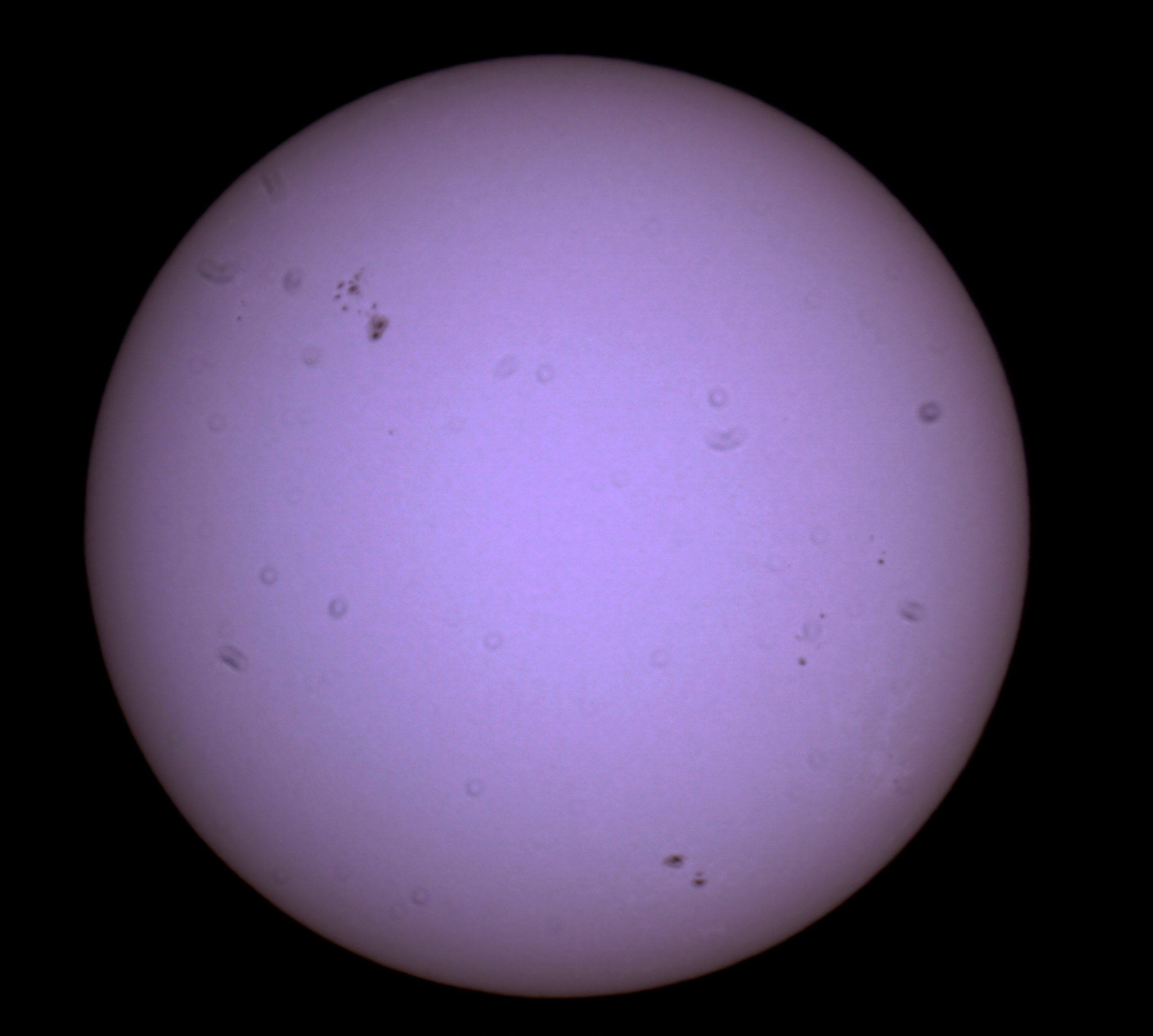
Greetings and thanks againParticipantDear fellow astrophiles, you are right. I let my impatience betray me. I did not evaluate the other frames well. In the frame attached here (and also in the others) the solar disc is shifted but the spots remain on the same points of the frame.
I thank all of you for your attention and apologise for my carelessness.
The great Napoleon was right when he told his servants: dress me calmly because I am in a great hurry.Attachments:
ParticipantYes, I have thought about that. However, the question arises from the fact that those spots are also on other frames with the sun disc shifted inside the frame. The enlargements DSC02817A B, are from a different frame from the attached DSC02819.
14 February 2025 at 8:09 am in reply to: The British Solar Eclipse Expedition to Vavau, Tonga Islands in 1911 #628069ParticipantIt is a fascinating document, one could say it evokes something mysterious today. Did you appreciate the beauty of those women who participated in the scientific expedition? Censui, et in eam ivi sententiam: Elegant, slender, with hips as narrow as wasps, I would even say athletic, of a princely grace, of an ancient, indeed timeless, imperishable beauty.
-
AuthorPosts