Skip to content
British Astronomical Association

British Astronomical Association

Supporting amateur astronomers since 1890
  • Community
    • Community
    • Observer’s Challenges
    • Tutorials
    • Dark Skies Commission
    • BAA Alerts
    • Observing Calendar
    • Forum
    • Archives
    • BAA Apparel
    • Affiliated Societies
    • Outreach
    • Useful Links
  • News
    • Latest News
    • BAA Business
    • Sky Notes
  • Events
    • Events
    • Future Events
    • Previous Events
  • Publications
    • Journal
    • Book Reviews
    • Documents
      • Latest Documents
    • Handbooks
    • Buy
  • Sections
    • All Sections
    • Asteroids & Remote Planets
    • Aurora & NLC
    • Comet
    • Computing
    • Dark Skies
    • Deep Sky
    • Education & Outreach
    • Equipment & Techniques
    • Exoplanets
    • Historical
    • Jupiter
    • Lunar
    • Mars
    • Mercury and Venus
    • Meteor
    • Radio Astronomy
    • Saturn, Uranus & Neptune
    • Solar
    • Variable Stars
  • Videos
    • Videos
    • Meetings
    • Dark Skies
    • Deep Space
      • Deep Sky
      • Exoplanets
      • Variable Stars
    • Hardware
      • Equipment
      • Radio Astronomy
      • Robotic Exploration
    • Solar System
      • Asteroids
      • Comets
      • Jupiter
      • Mercury & Venus
      • Outer Planets
      • The Sun
    • Terrestrial
      • Aurorae
      • Historical
      • Meteors
      • The Moon
  • Observations
    • Gallery
    • Spectroscopy database
    • Photometry database
    • Comet Section Archive
    • Solar Section Archive
    • Observing Calendar
  • About Us
    • About us
    • Join
    • Contact Us
    • Grants
    • Who’s Who
    • Awards
    • Shop
    • BAA Apparel
    • Donate
    • Privacy Notice
    • Terms of Use
    • Dark Skies Commission
  • Login
    • Login
    • Renew membership
    • Join the BAA

Archives

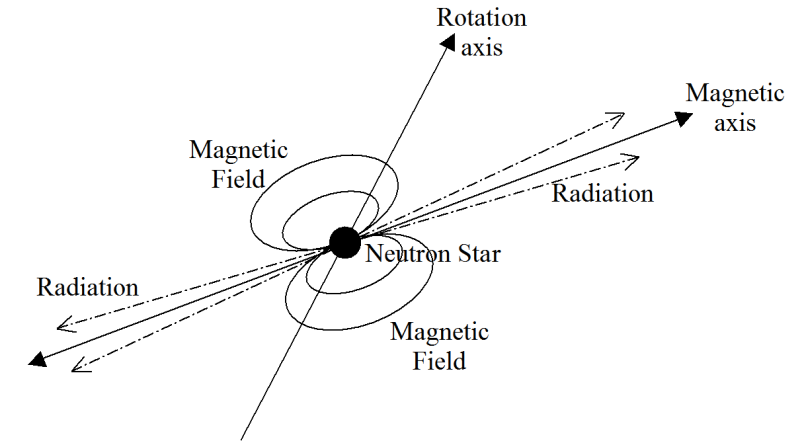
Diagram showing neutron star as black spot in centre, with rotation axis oriented from bottom left to upper right. The magnetic axis is offset to this, and radiation is emitted (denoted by black arrows) from both magnetic poles.

Pulsar detection & verification with small-aperture antennas

Following a brief introduction to pulsars and how to intercept radio-frequency transmissions from them, this article describes the design and

Read more
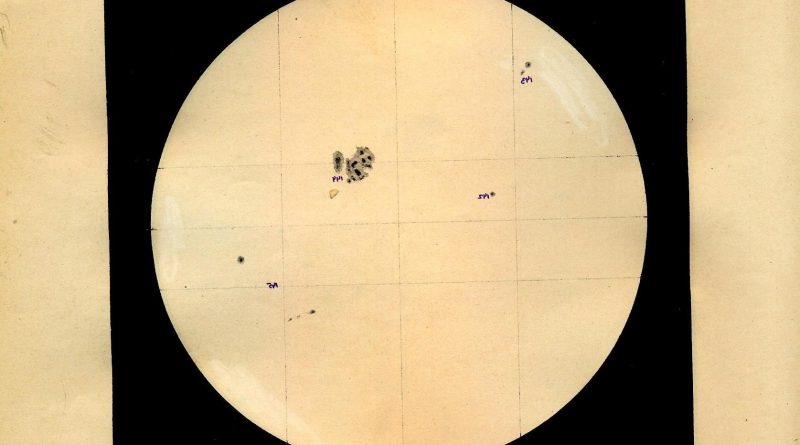
Sunspots noticed accidentally – a preliminary survey

A survey of British newspapers has uncovered 41 sightings of sunspots made by untrained people with no optical aid and

Read more

Early members of the New South Wales Branch of the British Astronomical Association

In 1894, three Sydney members of the British Astronomical Association – John Tebbutt, Walter Gale and Robert Innes, all well-known

Read more
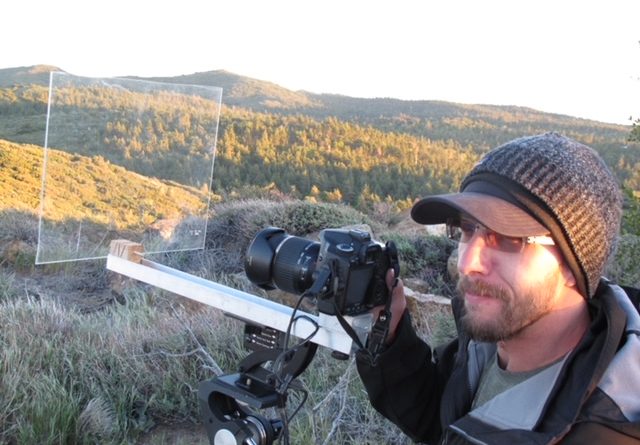
Selenehelion: imaging the Sun & full Moon at the same time with one camera

Direct, simultaneous imaging of the full Moon rising as the Sun was setting proves that both objects can be seen

Read more
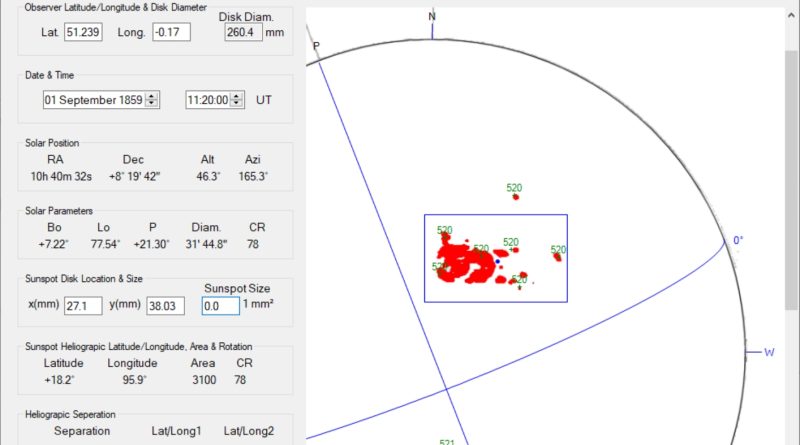
A screenshot, with area given on the left (this is repeated in Table 1, given in the PDF of the paper), and including a diagram of the group's area on the solar disc, with the extent of the group highlighted in red on a white background with equator and north-south axis shown in black lines.

The size of the Carrington Event sunspot group

The size of the sunspot group that produced the white-light solar flare observed by Carrington and Hodgson in 1859 is

Read more
The opposition of Jupiter, 1954 – 1955

A report of the Jupiter Section (Director: J. H. Rogers) After having been invisible during the previous opposition, late in

Read more

Harry Thornton, Leslie Rae, & the rise & fall of The Moon

Harry Thornton and Leslie Rae were the Editors of the BAA Lunar Section publication The Moon from 1953 to 1967,

Read more
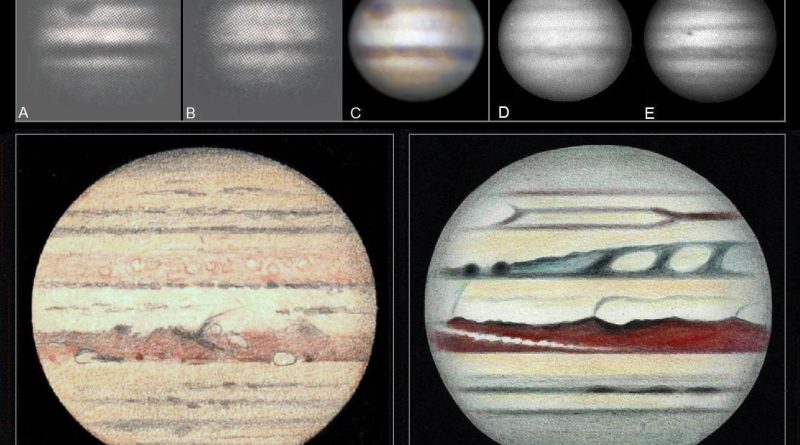
Four views of Jupiter, labelled A to D. A and D are colour photographs, while B and C are black and white sketches.

The opposition of Jupiter, 1953–’54

No BAA report for Jupiter in 1953–’54 has previously appeared. The apparition of 1952–’53 had been one of great activity,

Read more
A light curve, for illustrative purposes (labels not legible)

A 6.65-day pseudo-periodicity in OJ 287’s flaring in 2023 Mark Kidger

Since they were discovered in the early 1960s, quasars have posed many problems for astrophysics. It is now generally accepted

Read more

Photometry of low-amplitude slow rotators: the Hilda-group asteroid (1269) Rollandia

Photometry of images of asteroid (1269) Rollandia taken by seven observers at its 2018–’19 apparition has been performed using Astrometrica

Read more
  • ← Previous
  • Next →

© The British Astronomical Association 2022 Registered charity no. 210769 Registered company no. 117572 For more information including contact details, click here.

  • Home
  • About us
  • Community
  • Documents
  • Events
  • Journal
  • News
  • Sections
  • Tutorials
  • Videos
  • Forum
  • Archives
  • About us
  • Contact Us
  • Grants
  • Privacy Notice
  • Events
  • Who’s Who
  • BAA Alerts
  • BAA Business
  • Observer’s Challenges
  • Sky Notes
  • Terms of Use
Copyright © 2026 British Astronomical Association. All rights reserved.
Theme: ColorMag by ThemeGrill. Powered by WordPress.