
› Forums › Eclipses and Transits › Color of the Solar Corona
- This topic has 6 replies, 6 voices, and was last updated 2 months ago by
Mr Giovanni Di Giovanni.
-
AuthorPosts
-
19 August 2026 at 2:00 pm #642529
Mr Giovanni Di Giovanni
ParticipantGreetings to all of you.
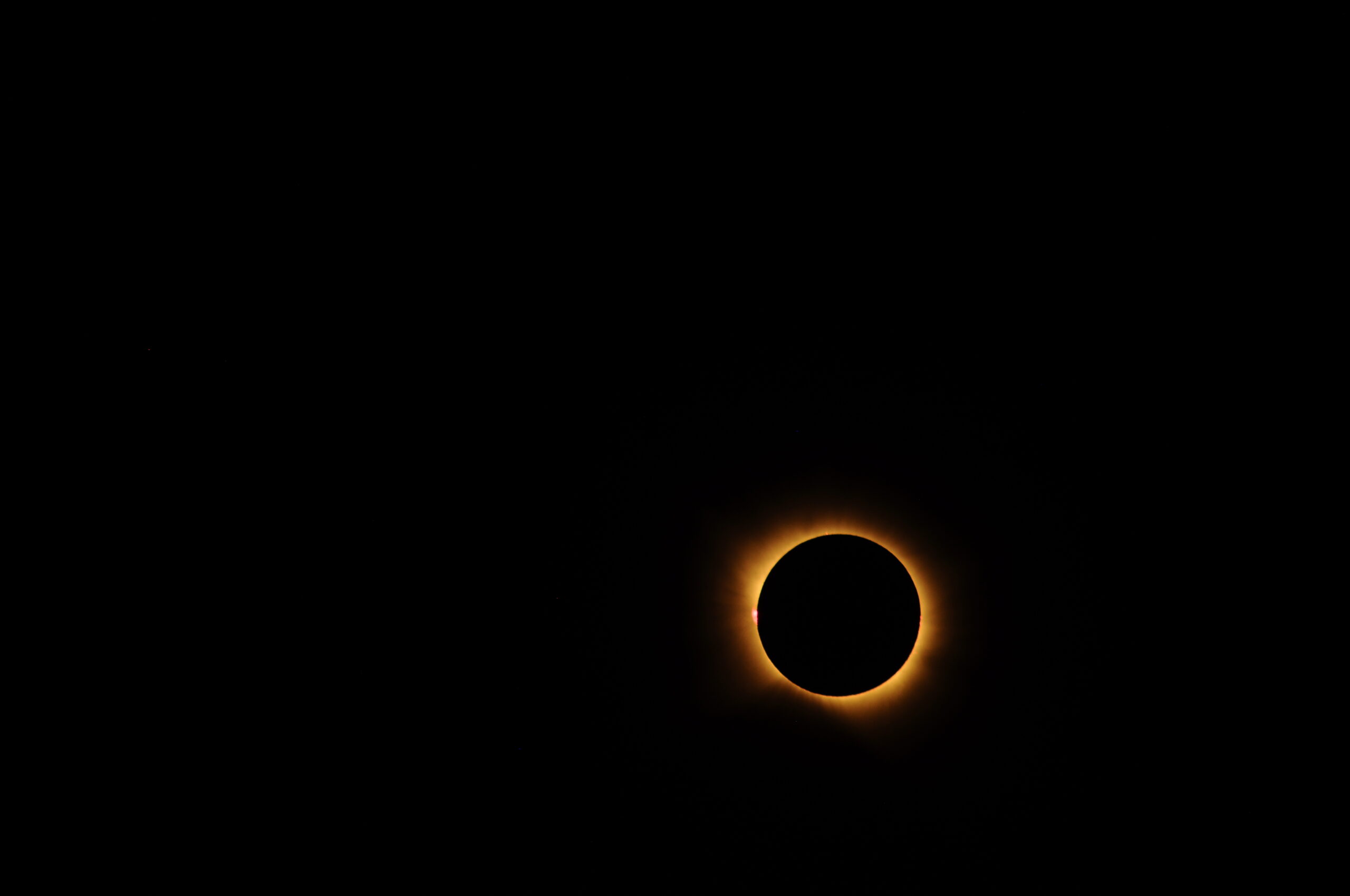
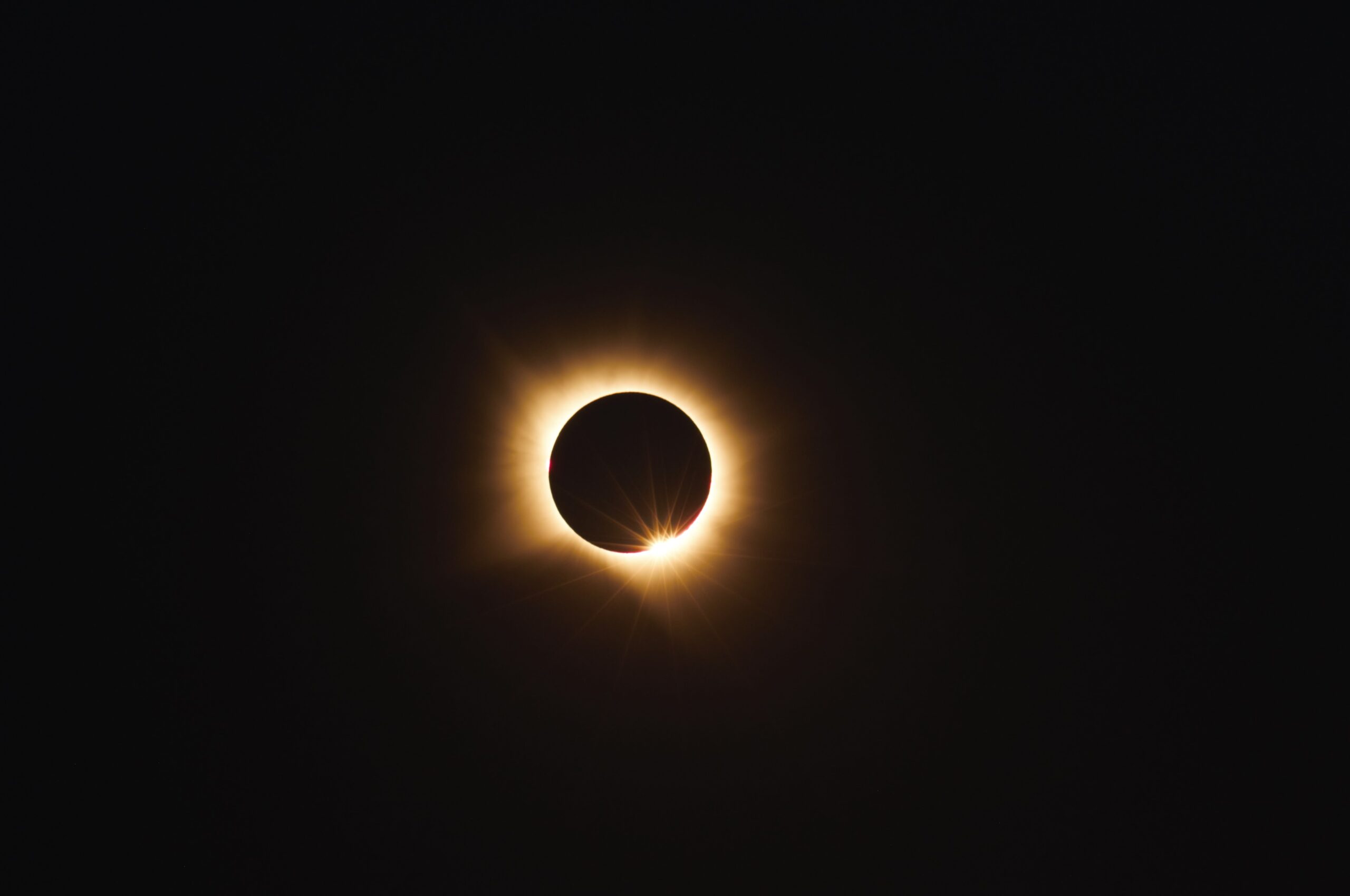
I’m attaching two frames from the total phase of the last eclipse, taken from Ponferrada Castle, northern Spain. My brother (Enzo) shot them with a simple F300 telephoto lens on a Nikon D5000 and without any filters. I’ve never seen images of the corona so red. I don’t know what causes this redness. Therefore, I’d kindly ask a fellow amateur astronomer for an explanation.
Thank you.Attachments:
19 August 2026 at 3:15 pm #642532 Bill WardParticipant
Hi Giovanni,
After many years I finally got to see a totality! I was in Zaragoza, Spain watching at over 40C! The eclipse was nothing like I was expecting from all the pictures and video’s one can see online.
I was struck by the very same fact, the eclipse was not as dark as I had imagined and everything was bathed in a remarkable yellow light. Being interested in atmospheric effects I had hoped to take some all sky images to look at this kind of thing but my camera failed due to the heat. (I’m glad I wasn’t trying to actually record the eclipse!)
I had tried to observe the Perseids on the night before and after the eclipse but it was impossible from my location as the sky was dreadful. In exposures it appeared bright yellow with absolutely no stars! I think this was from a large amount of dust and smoke from the huge wild fires around the country (combined with a lot of light pollution where I was…). The dust/smoke was also variable time wise. On one day I had an extremely clear blue sky, the following day the sky was cloud free but towards the sun there was a lot of scattered light and it looked almost white.
I don’t know how widespread this was over the track but compounded with the relatively low altitude of the eclipse it had a remarkable impact on the view to be sure!
I believe this made this eclipse a particularly unique one indeed.
Cheers,
Bill.-
This reply was modified 2 months ago by
 Bill Ward. Reason: spelling
19 August 2026 at 4:46 pm #642534 Denis BuczynskiParticipant
Hi Giovanni,
Would the fact that the eclipse image that you show was taken at a low altitude not mean that the image would look redder due to atmospheric extinction that if the image had been taken with the Sun higher in the sky?
Denis Buczynski
Disclaimer: comment from an inexperienced TSE observer of only one TSE, that of Cornwall in 1999.19 August 2026 at 6:07 pm #642535 Grant PrivettParticipant
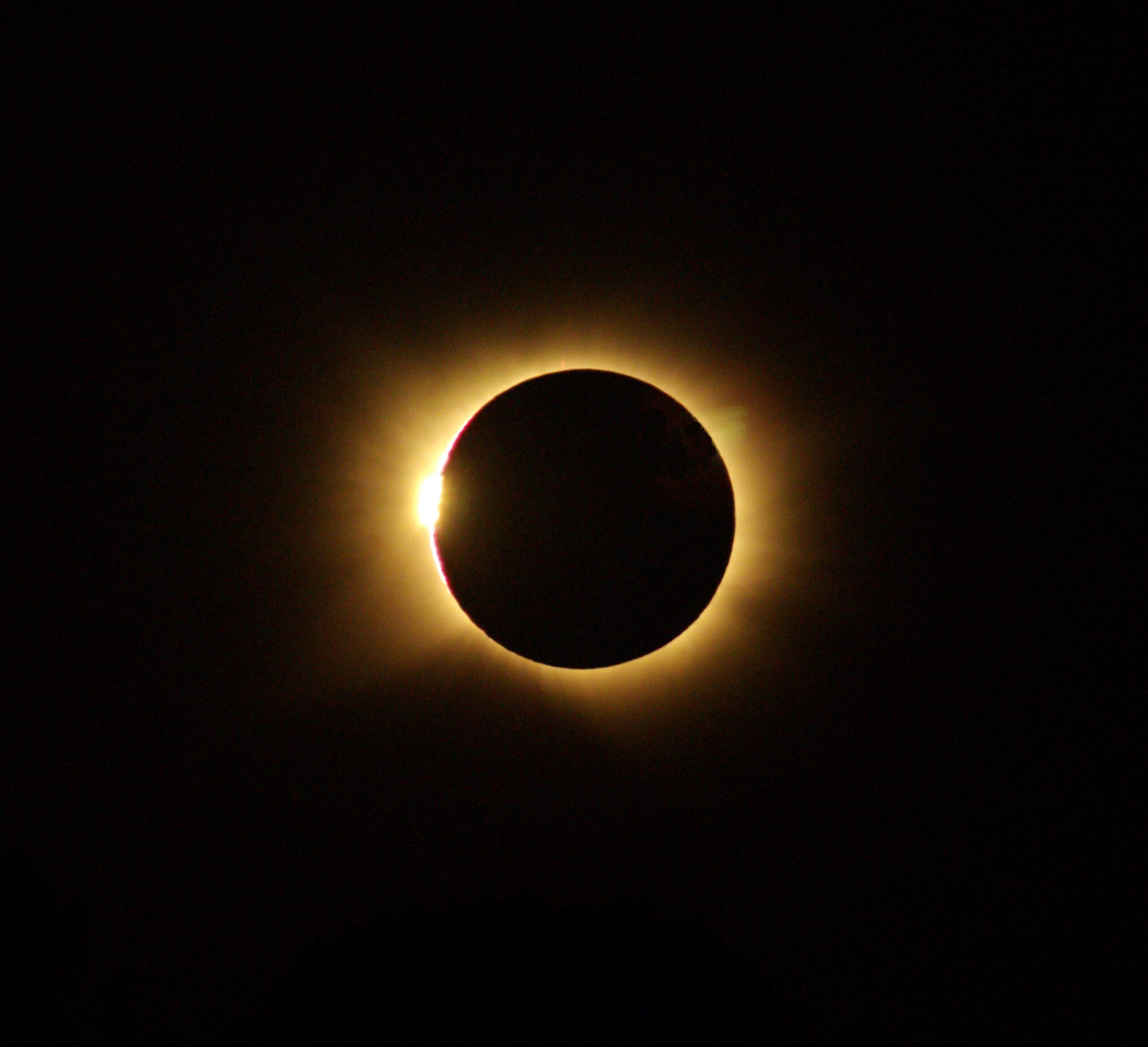
I got a very similar result at Lebrancon near Molinas de Aragon.
I assumed the cause was 3 fold:
Extinction due to the low solar elevatio at totality
Dust suspended in the atmosphere – Spain was bone dry (our car was covered with it)
Smoke particles arising from the wildfiresCertainly on a cloud free day in Madrid the day before, the sky was not blue but whitish – I would swear when we left the hotel we could faintly smell burning one day.
Attachments:
19 August 2026 at 8:27 pm #642537 Nick JamesParticipant
Indeed. The low altitude (7.5 deg where I was) and dust/smoke gave the corona a particularly golden colour with the naked eye. I have not seen this so prominently before. My video, a frame of which is here
https://britastro.org/observations/observation.php?id=20260817_060752_985cc9a5b50ad5a6
is pretty representative of the colour I saw with the naked eye.
20 August 2026 at 10:29 am #642542 Dr Paul LeylandParticipant
My site was at Albarracín. To the naked eye the corona looked golden, which I ascribed to the low altitude.
Through a 100mm spotting scope at 60x, the corona was a very pale yellow. An enormous prominence on the left (east) limb was a brilliant red. The line on the other limb didn’t extend as far out but was much longer; it was the same colour. As soon as the first Bailley’s beads appeared I stopped watching through the telescope.
We were incredibly lucky at that site. As the sun set it went behind a bank of clouds at about 40% phase. It reappeared a minute or so before totality and remained in clear sky until sunset. A few kilometres away in Teruel they had the opposite experience: clear for the majority of the partial phase and totality completely obscured.
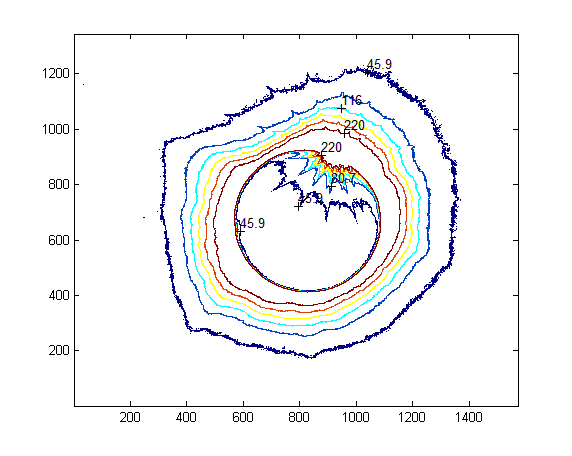
21 August 2026 at 8:11 am #642545ParticipantI thank everyone who responded and thus resolved my doubt. I’m attaching the isophote system extracted from the R channel of a frame. The numbers are pixel values.
I had intended to do a purely educational work, a numerical computation of the coronal photometric density; however, now I believe this is almost a waste of time.
Thank you again.Attachments:
-
AuthorPosts
- You must be logged in to reply to this topic.