
Forum Replies Created
-
AuthorPosts
-
 Bill BartonParticipant
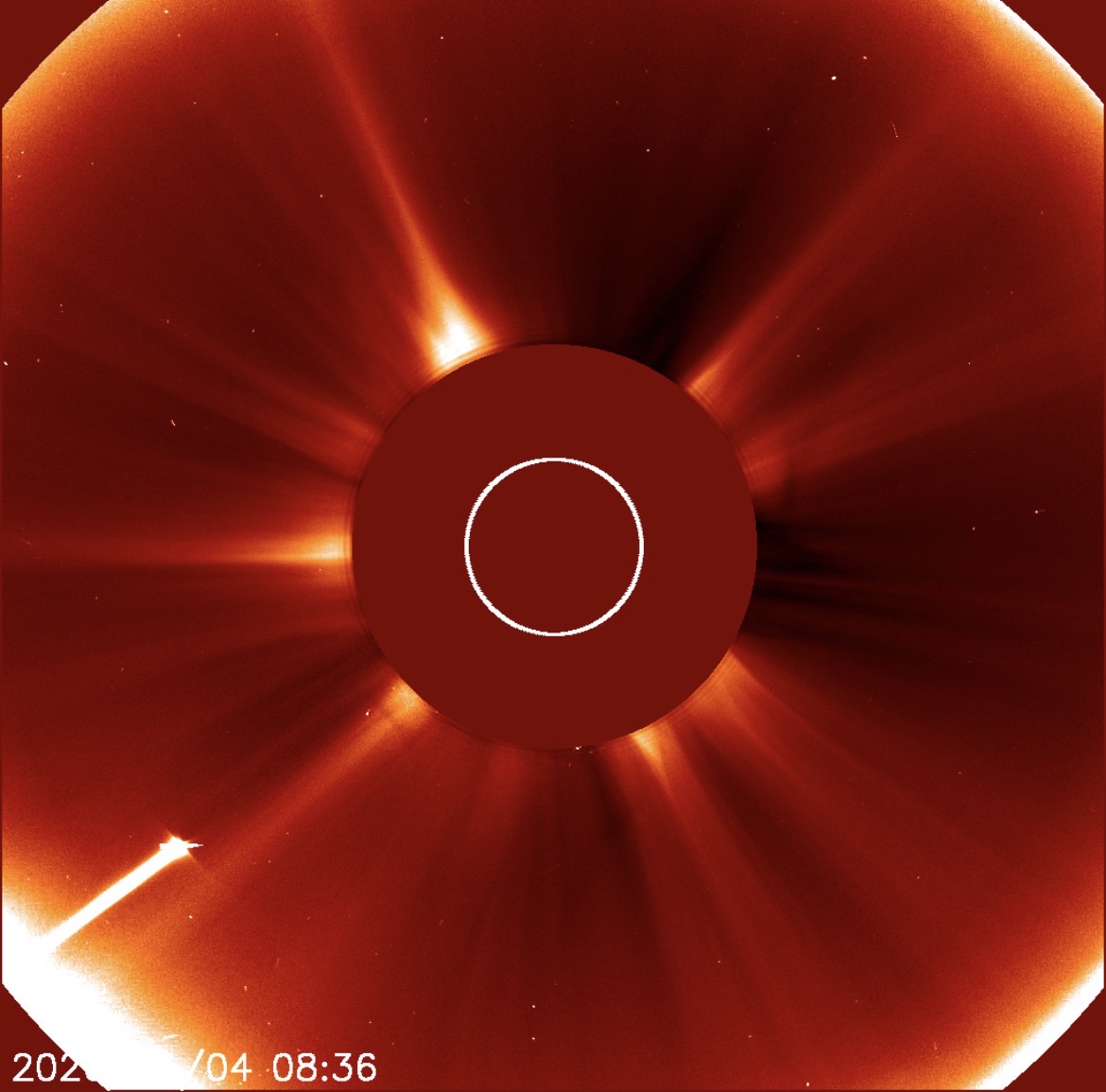
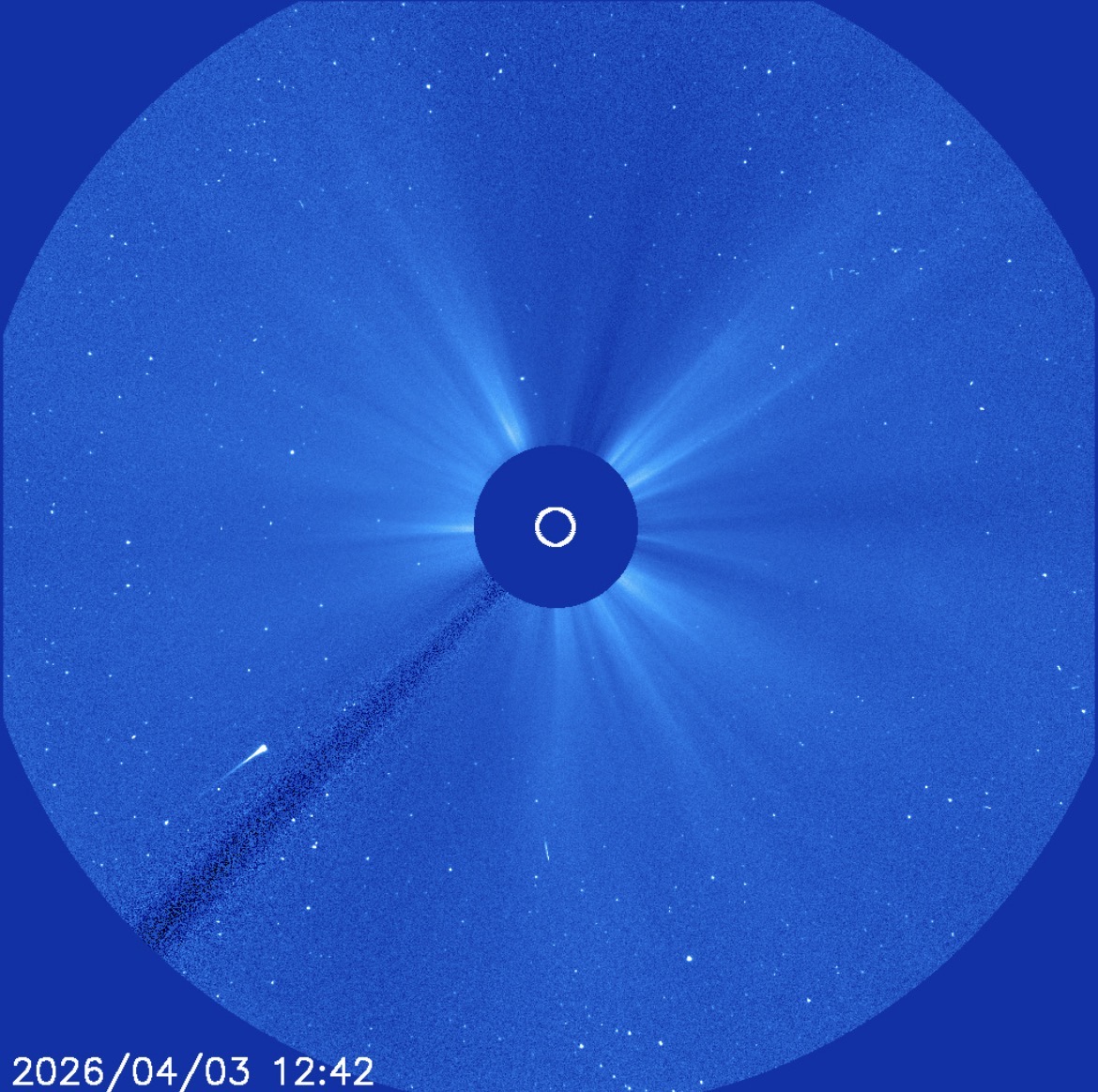
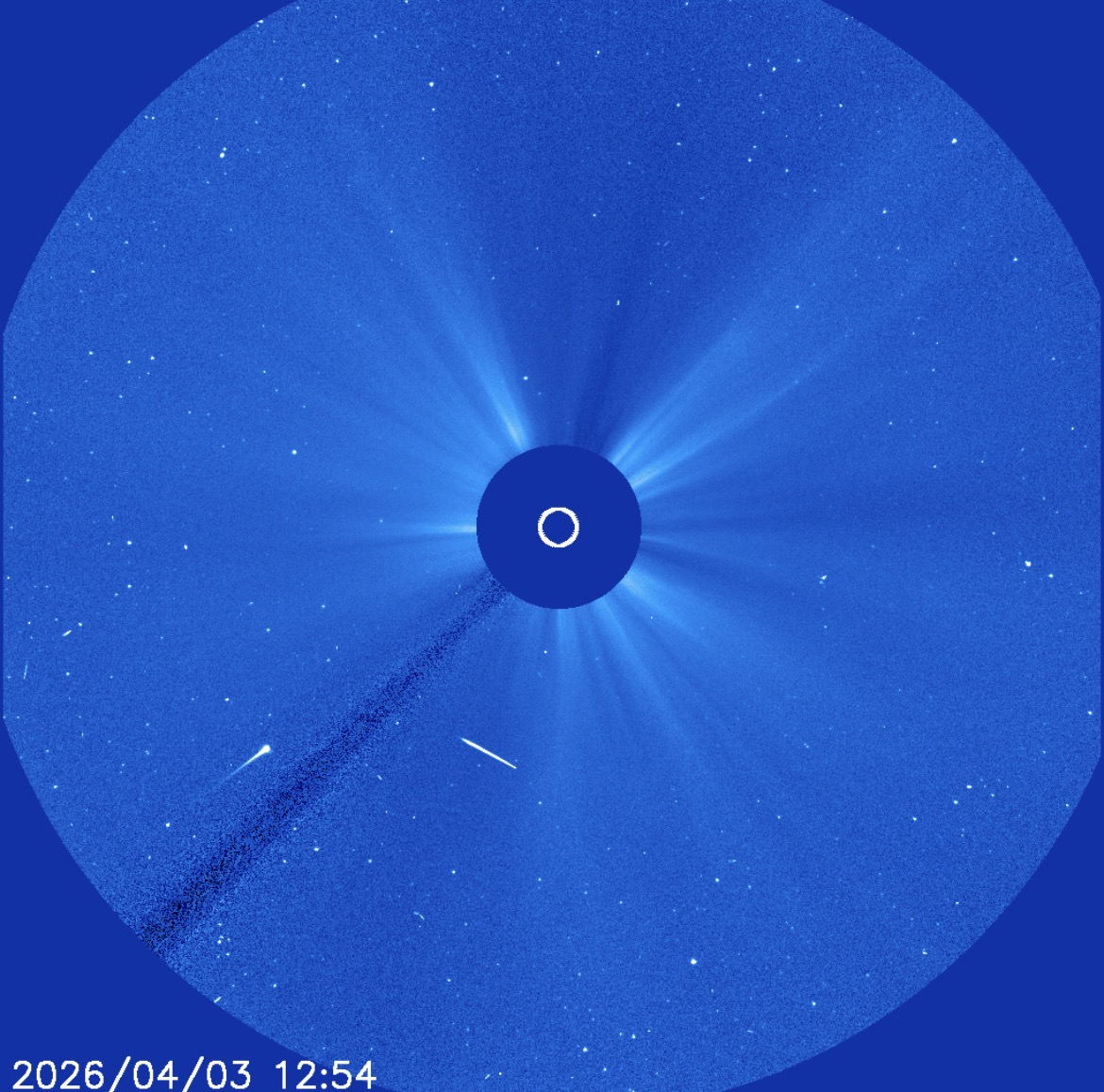
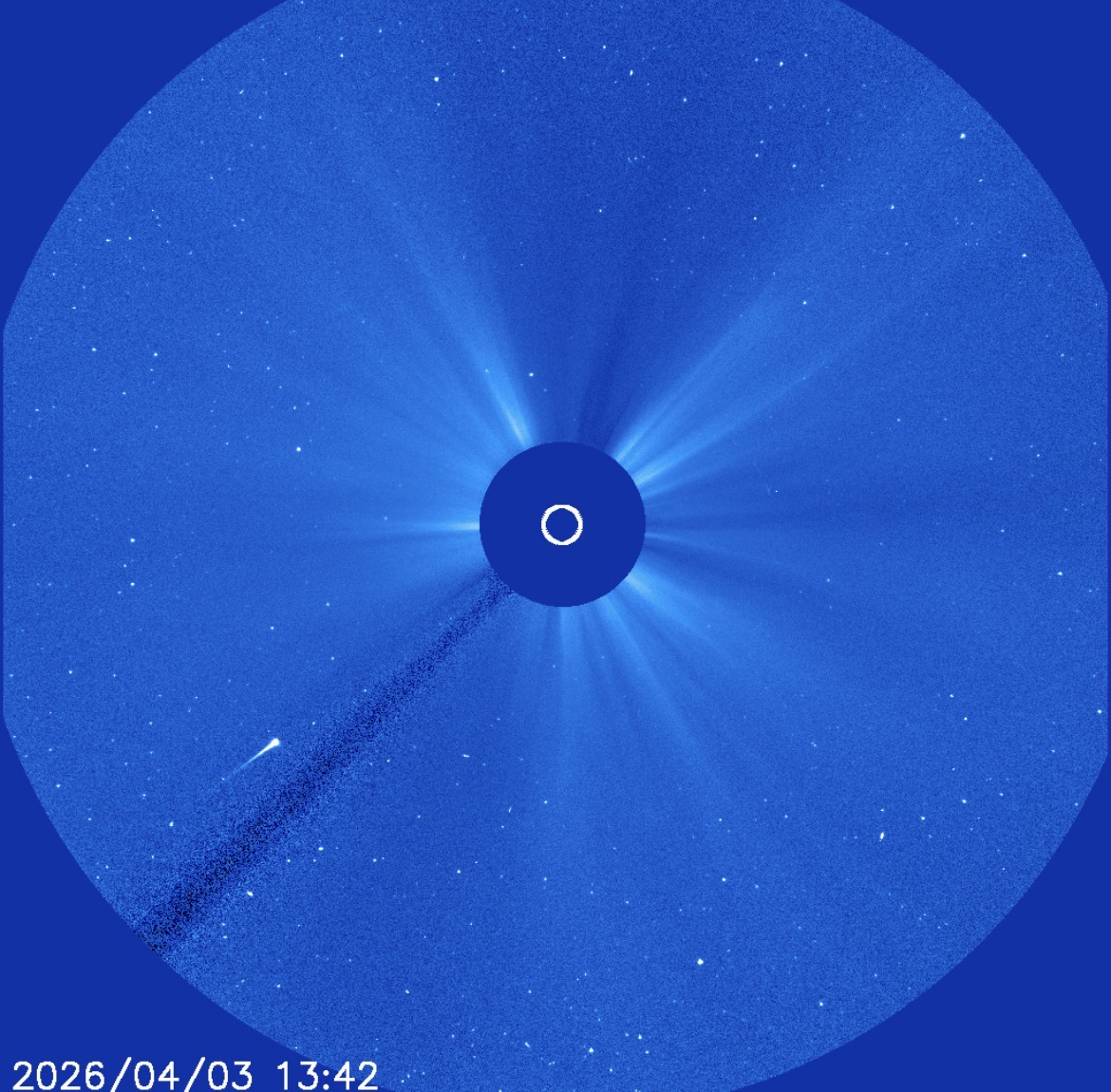
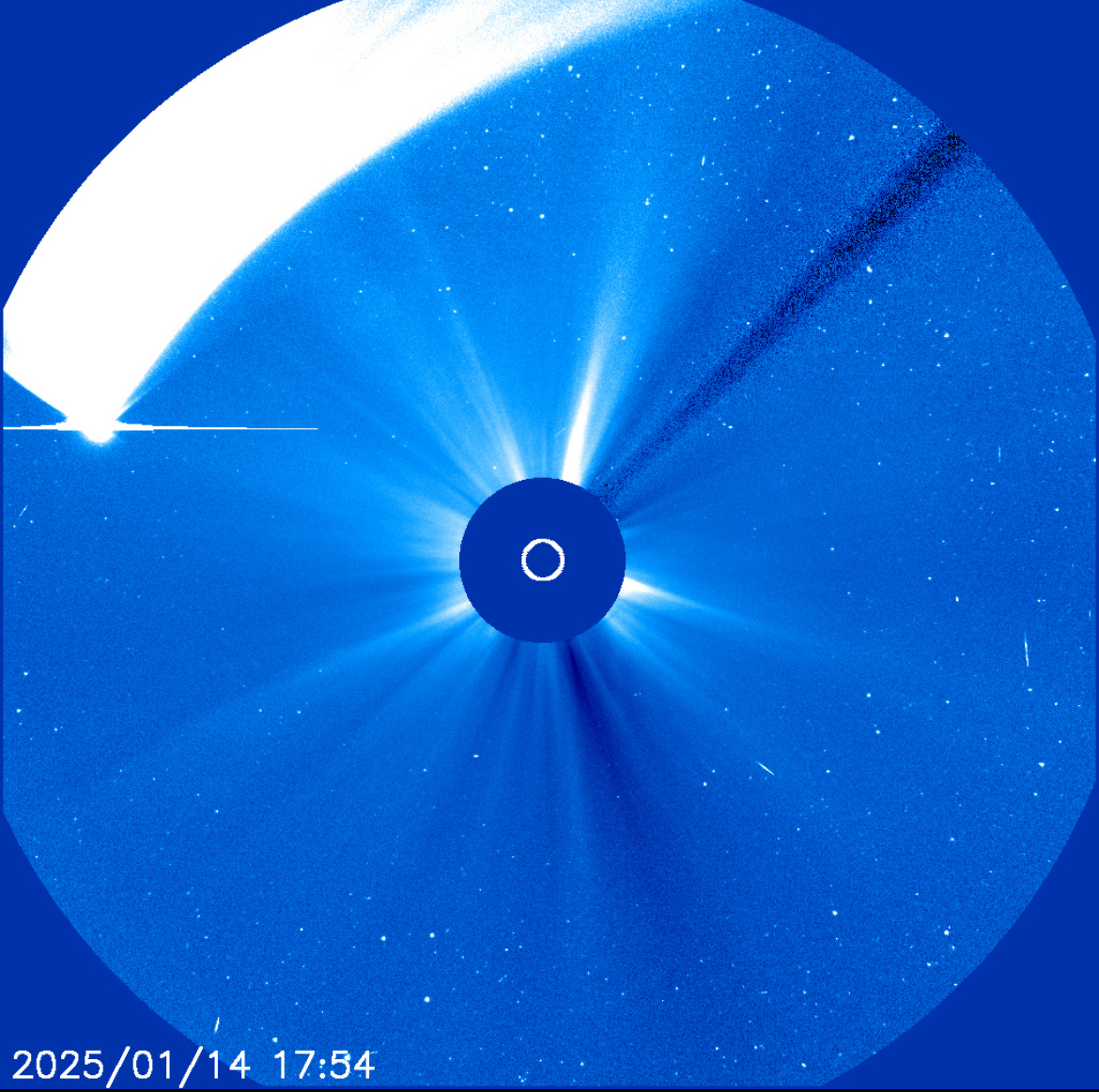
Now visible on the C2 coronagraph.
Attachments:
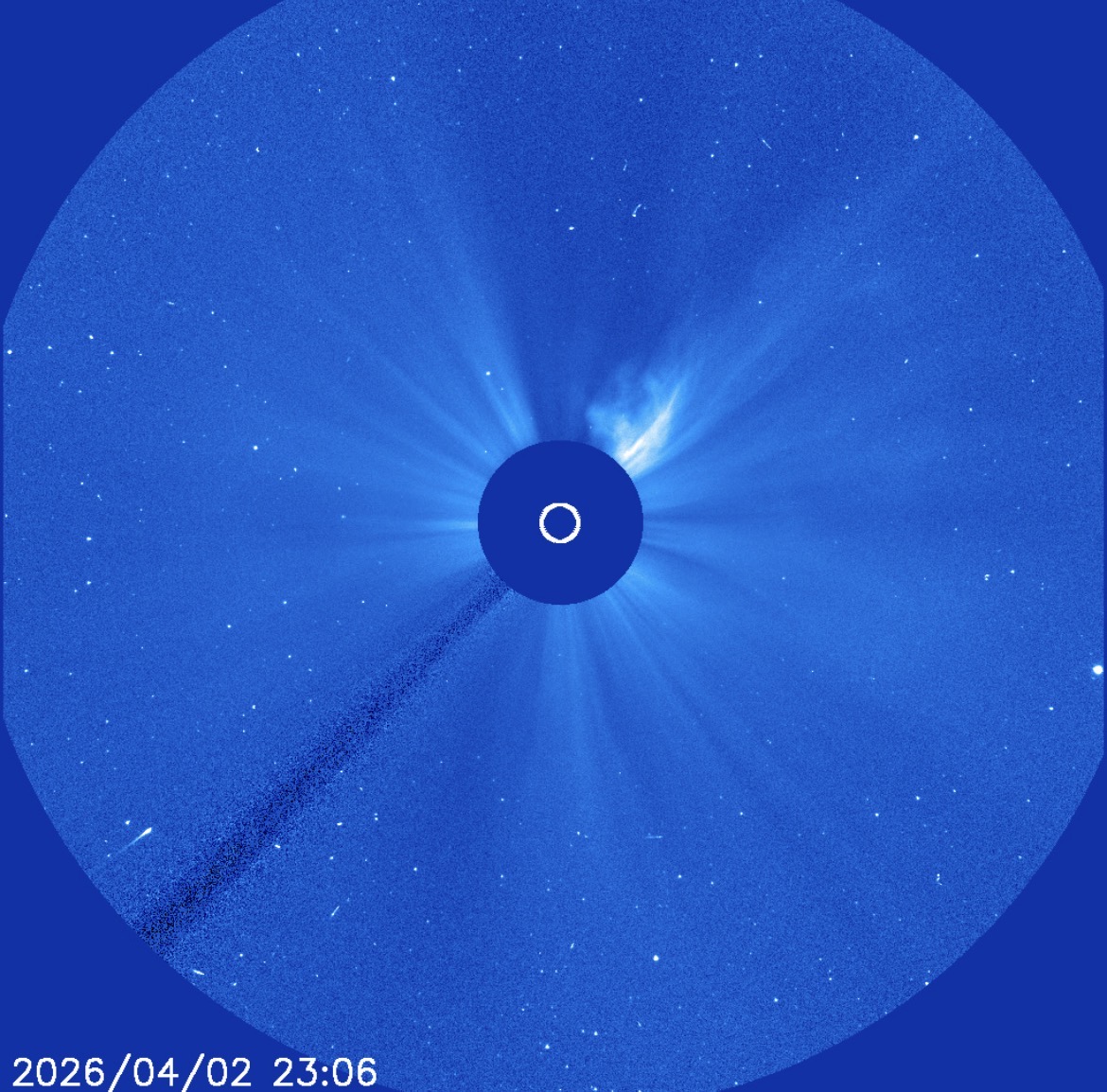
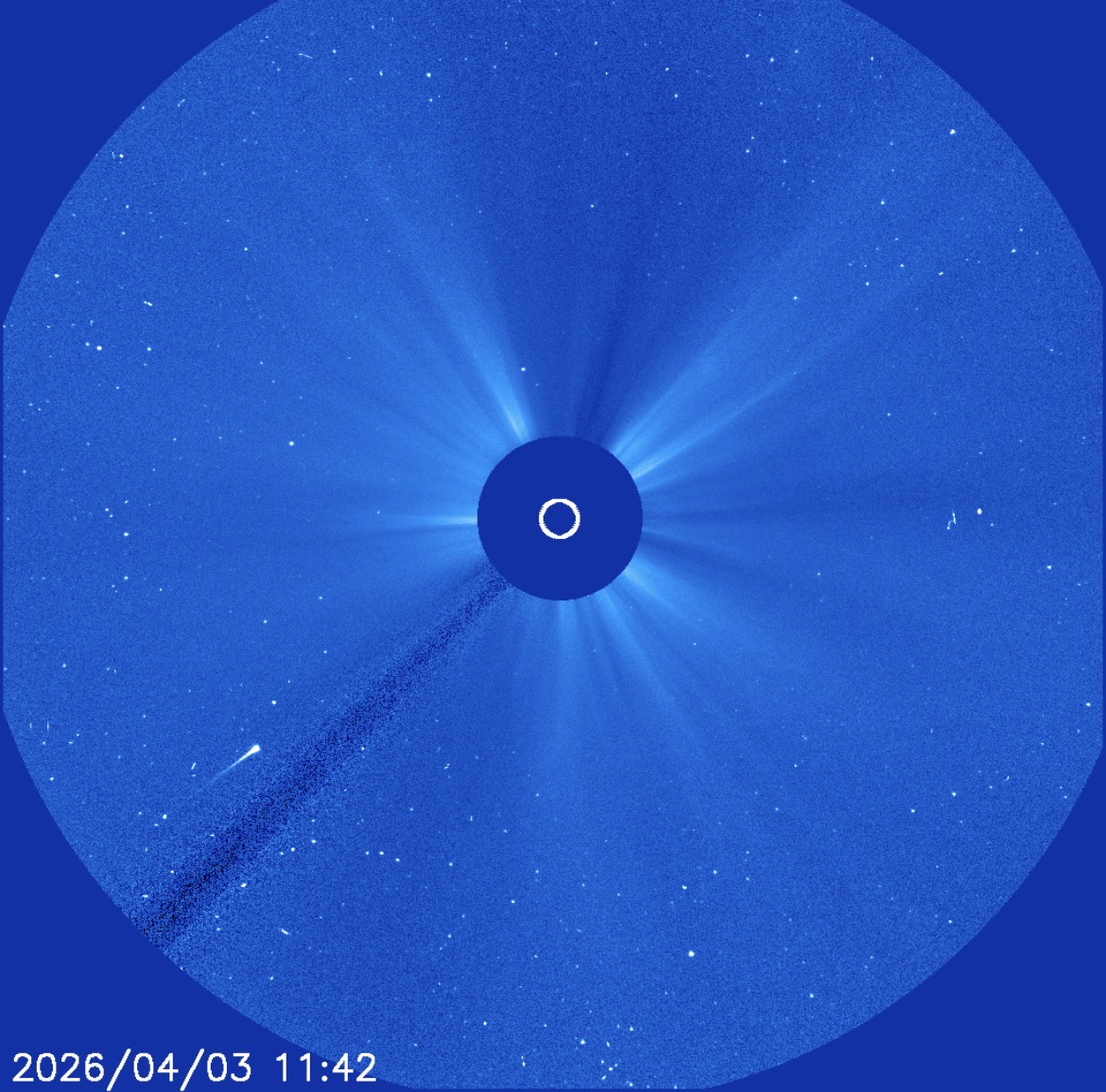
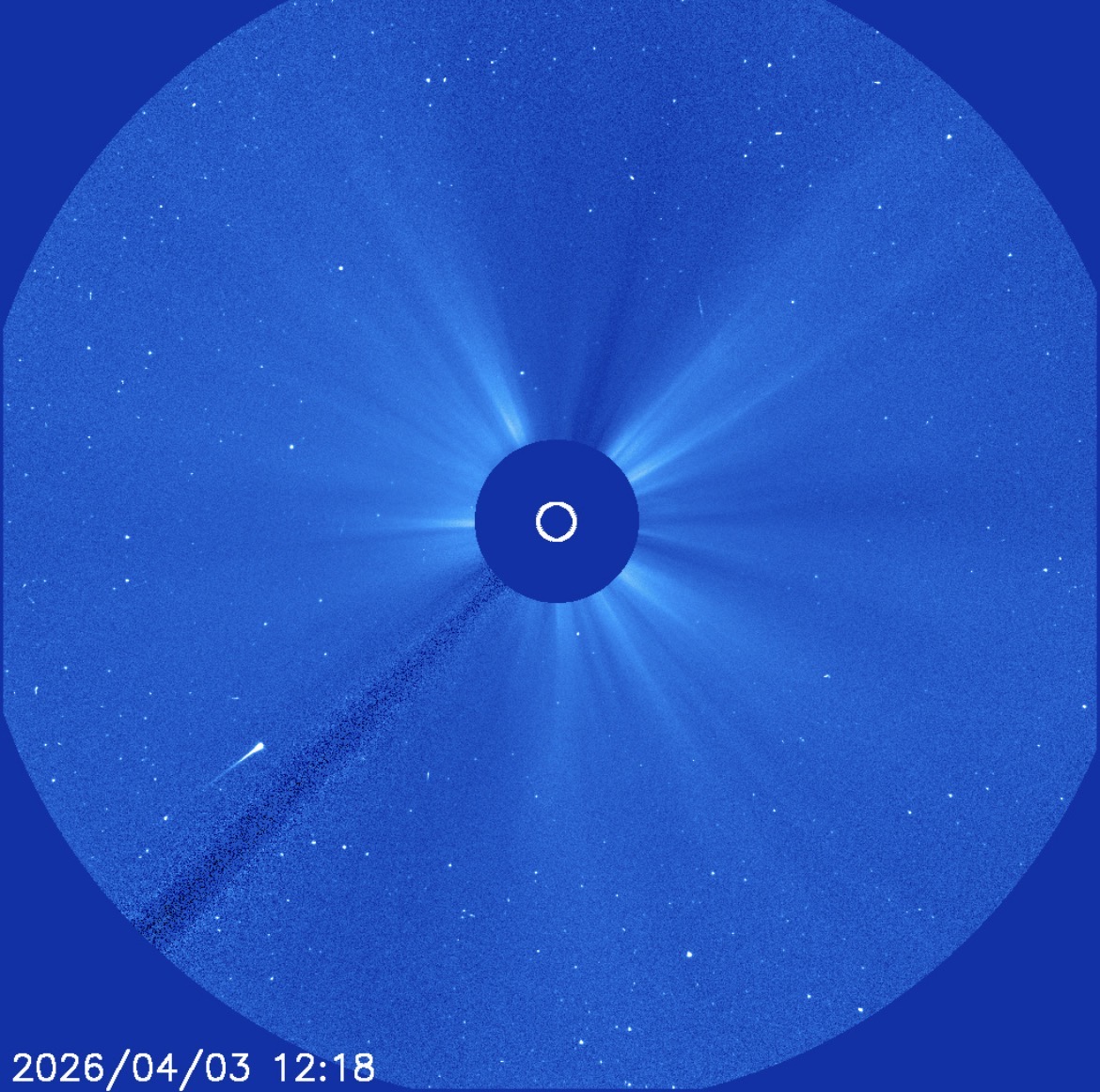
Bill BartonParticipantHere at last. Lower left of images from Soho LASCO C3 coronagraph.
Bill BartonParticipantJust found this on the internet concerning comet MAPS, has some interesting graphics.
Bill BartonParticipantThe European Space Agency’s Solar and Heliospheric Observatory (SOHO) satellite has two coronagraphs known as C2 (narrow field) and C3 (wide field).
C2’s field of view is between 1.5 & 6 solar radii, C3 between 3.7 & 6 solar radii. When viewed from the Earth one solar radii is around 0.25 degrees. Therefore C2 can see objects in the background of solar corona images between 0.375 degrees and 1.5 degrees elongation. C3 0.925 and 7.5 degrees elongation.
When Comet MAPS’s elongation falls to less than 7.5 degrees it should become visible, first in C3 and then in C2. According to the ephemeris on Dominic Ford’s ‘in-the-sky’ website this will be from April 03 to April 06. Of course, Comet MAPS may be destroyed as it approaches, or leaves, perihelion meaning it may not actually be visible between the dates just given.
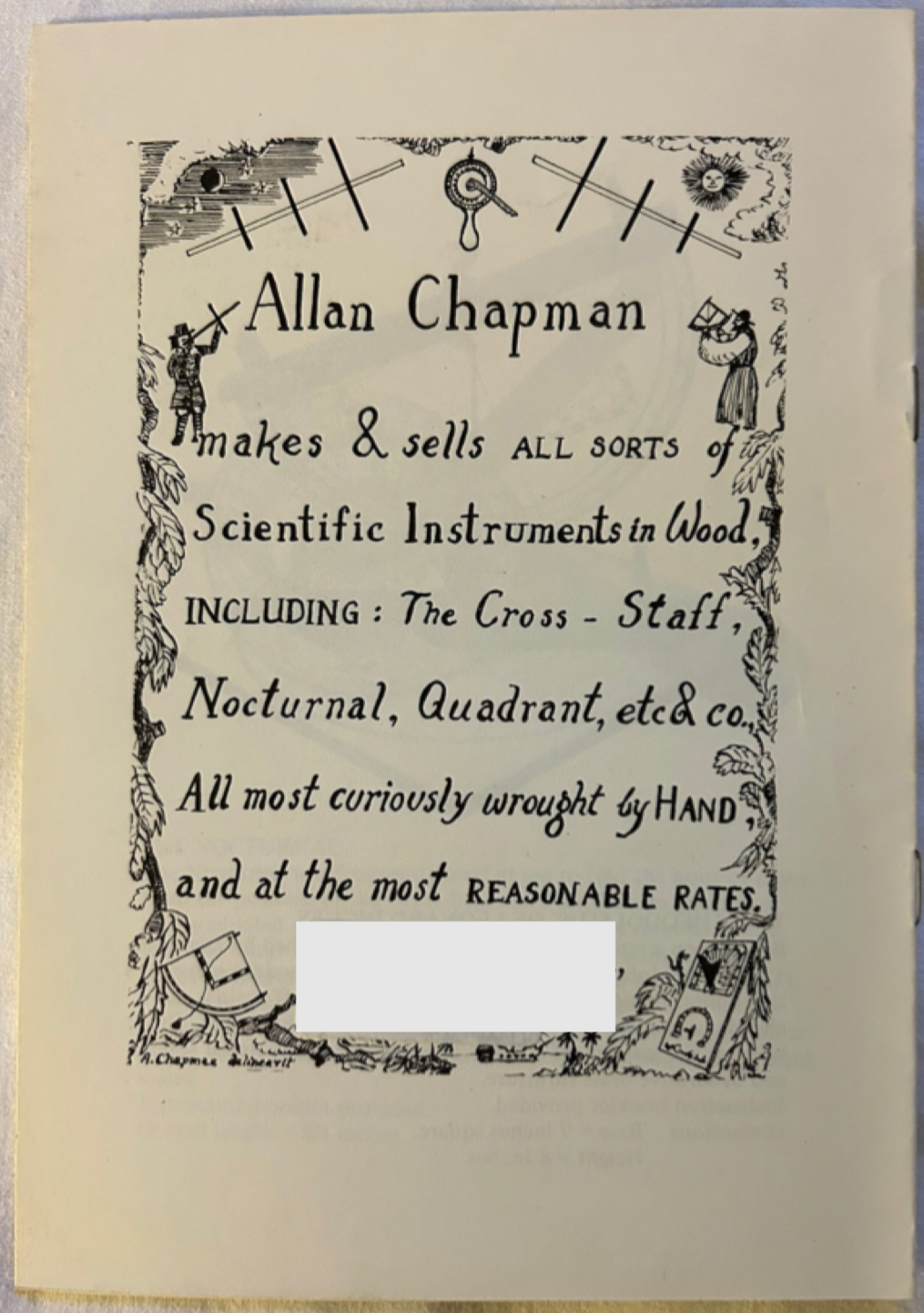
Bill BartonParticipantJust noticed Allan has an asteroid named after him.
https://www.wgsbn-iau.org/files/Bulletins/V006/WGSBNBull_V006_003.pdf
Bill BartonParticipantMy figure for the London bus was for an electric model, so is probably equivalent to the energy value of the fuel in the tank rather than the engine capacity. 340kW is also around 1/3 of a (Back to the Future) DeLorean.
-
This reply was modified 8 months ago by
 Bill Barton.
Bill BartonParticipantAt closest approach, is the comet going to be in the solar corona or chromosphere?
Bill BartonParticipant41.8MW/m2 is approximately equivalent to……
120 London busses (340kW), or
16,000 electric domestic kitchen kettles (2.5kW) or
55,000 horsepower (746W), or
An unknown quantity of giraffe-power (the Internet is distinctly lacking in conversation factor for this unit).-
This reply was modified 8 months ago by Bill Barton.
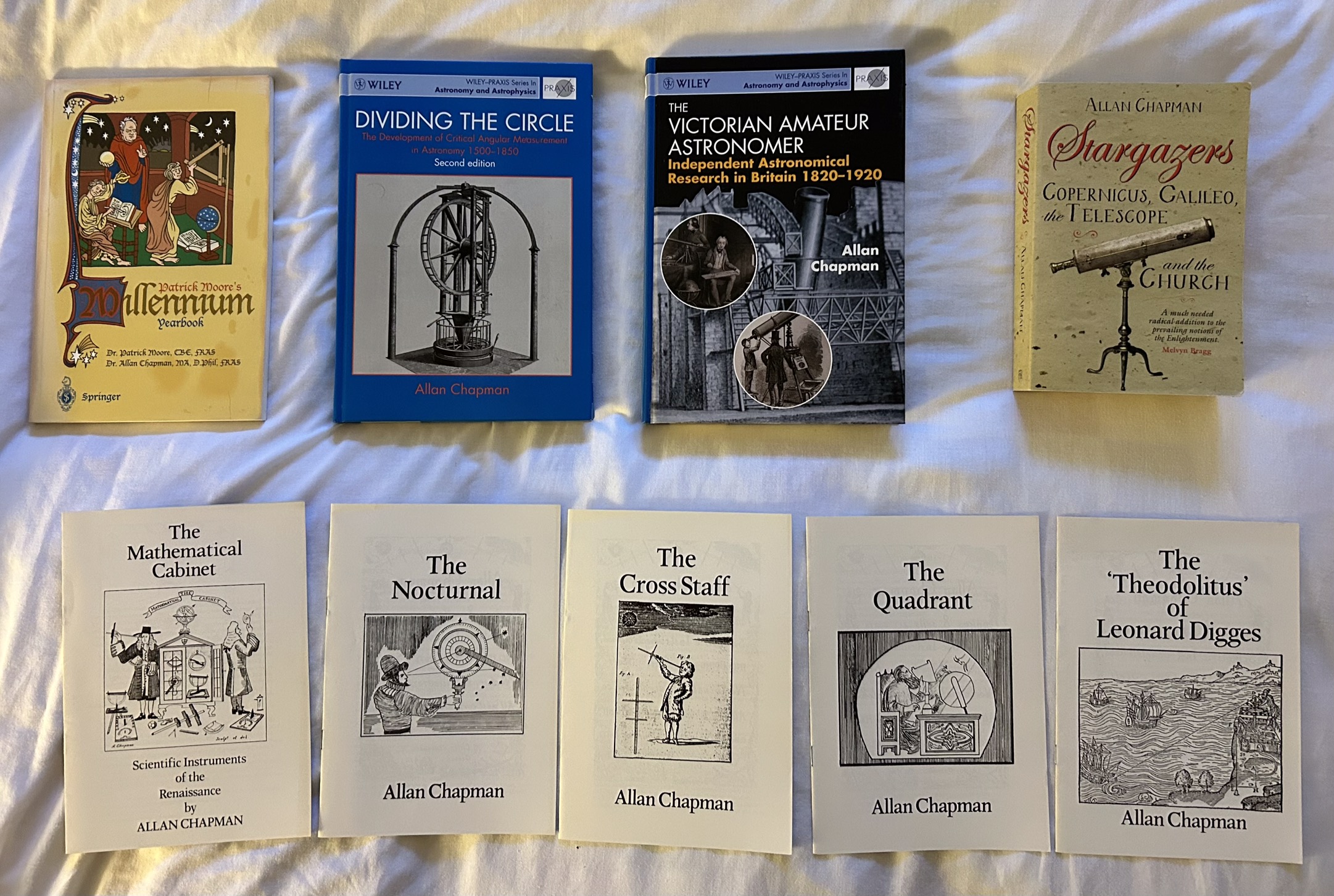
Bill BartonParticipantMy selection of Allan’s works, some academic, some not so.
4 January 2026 at 5:18 pm in reply to: Public solar observing: Baader full aperture filter or Herschel wedge? #632944Bill BartonParticipantModern Herschel wedges use a heat sink dissipate the unwanted energy. I have used one for public demonstration and mine (1¼” fitting) doesn’t get appreciably warm even after serveral hours use, although my aperture (63mm) was somewhat smaller then your 80mm. Is your Herschel wedge an 1¼”or 2″ fitting? 1¼” wedges are OK for apertures up to 100mm, whereas 2″ ones are OK up to 150mm aperture. Perhaps a 2″ one would be better for you as it will have a bigger capacity heat sink.
I find the image produced by Herschel wedges too bright for comfort so always use a post wedge filter to give me the image I want.
Bill BartonParticipantIt looks like Alan used Dexion to construct his mounts.
Bill BartonParticipantElbow telescopes were salvaged from World War II artillary guns. Back in the day amateur astronomers would use anything they could lay their hads on to observe the skies.
Bill BartonParticipantAlthough it’s been several years since I had any involvement with railway level crossings, the emergency telephones used to be lit with a beta lite.
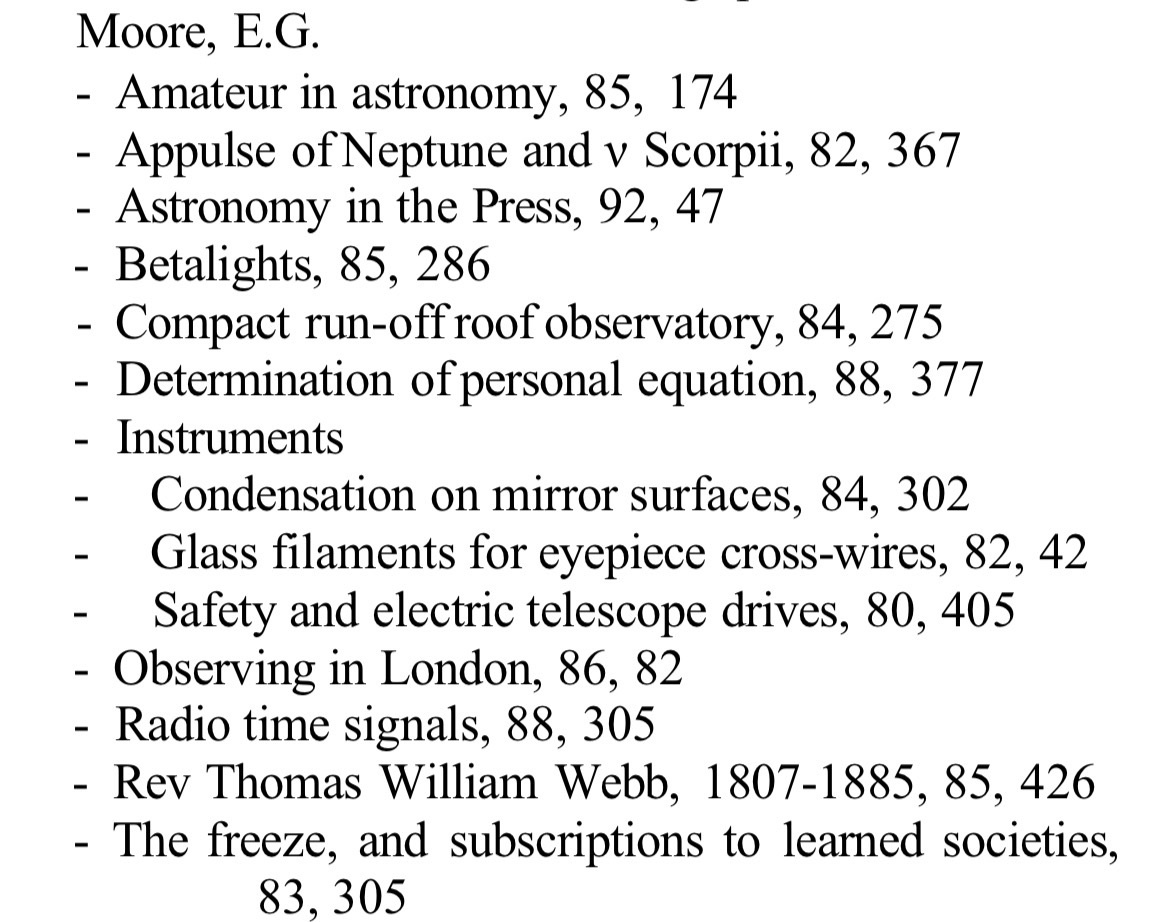
Bill BartonParticipantThere’s an E G Moore active in the BAA around this time, the attached image is from the second half-century Journal index. He also contributed to The Astronomer where his address was: 44 Nelson Road, Rayleigh, Essex. By the time his final Journal contribution was published (vol 92, p.47) in 1981 he had moved to 1 Hillside Villas, Station Road, Pluckley, Kent.
-
This reply was modified 12 months ago by Bill Barton.
-
This reply was modified 12 months ago by Bill Barton.
Attachments:
Bill BartonParticipantLater I used a different device and the booking went straight through without a hitch!
Bill BartonParticipantJames,
The current Orwell Astronomical Society Newsletter is here
https://www.oasi.org.uk/NL/NL_202504.pdfA complete archive of previous editions is here
https://www.oasi.org.uk/NL/NL_archive.phpBill BartonParticipantC/2024 (ATLAS) seems to have survived perihelion.
Attachments:
Bill BartonParticipantNow in the national news.
Bill BartonParticipantI’m looking for a ‘complete solution’ rather than ‘just a battery’ and the only one I’ve seen so far was at Screwfix
As far as Ah rating is concerned the sort of observing I do is limited to public outreach work where my equipment draws about 1A and the events generally don’t last longer than six hours. So a 10Ah battery should be more than sufficient.
My ulterior motive for this is that I’m already thinking about our 2025 Autumn Weekend Meeting in Orkney and was looking at a lower weight battery than my current (17Ah, I think) lead acid jump starter/leisure battery. On the evening of Sunday September 7 there is a lunar eclipse with the Moon rising in eclipse and coming out as the evening goes on which might be worth taking a telescope for.
-
This reply was modified 1 year, 10 months ago by Bill Barton.
-
AuthorPosts