Forum Replies Created
-
AuthorPosts
-
 Nick QuinnParticipant
Can you pull out of the Ephemeris when Artemis in Earths shadow?
I don’t think you can; unless somebody knows otherwise!
Nick QuinnParticipantThe table is correct: the burn takes place well below our horizon. If you run the predictions past 23:50hrs. you should see it rise at about 00:07hrs (on the 3rd). I’m not sure where you got the 10 hours from!
Nick QuinnParticipantUnfortunately this post on Seesat-L: http://satobs.org/seesat/Mar-2026/0111.html highlights a change to the mission timeline as posted on JPL Horizons. The TLI burn is now scheduled from MET 1d 01:08 for 8 minutes, i.e. April 2 23:32 – 23:40 with the spacecraft still below the UK horizon (based on a launch at April 1 22:24hrs.
Earth shadow entry is at 23:54hrs with the spacecraft at 7 degs elevation from the Sussex coast, so even an observation of a propellant dump is going to be just about impossible. A launch later in the window won’t change the visibility of the TLI burn for the UK and probably moves it into the Earth’s shadow – although perhaps a 1.5/2 hour delay moves any fuel dump back into sunlight?
Nick QuinnParticipantHello Grant,
You might want to look at Solar Eclipse Workbench: https://github.com/AstroWimSara/SolarEclipseWorkbench I haven’t used it myself but the underlying control software is gPhoto2 which I have used to good effect via a PERL script running on a Raspberry Pi. I can also fire my camera (Canon 70D) via an interface from the Pi to the remote shutter release socket.
Nick QuinnParticipantThe Glendale App https://aurora-alerts.uk/ is excellent; I highly recommend it.
Nick QuinnParticipantThis ATel has a high-resolution image from December 6th taken with the 8.1 metre Gemini North telescope – a 3 second exposure!
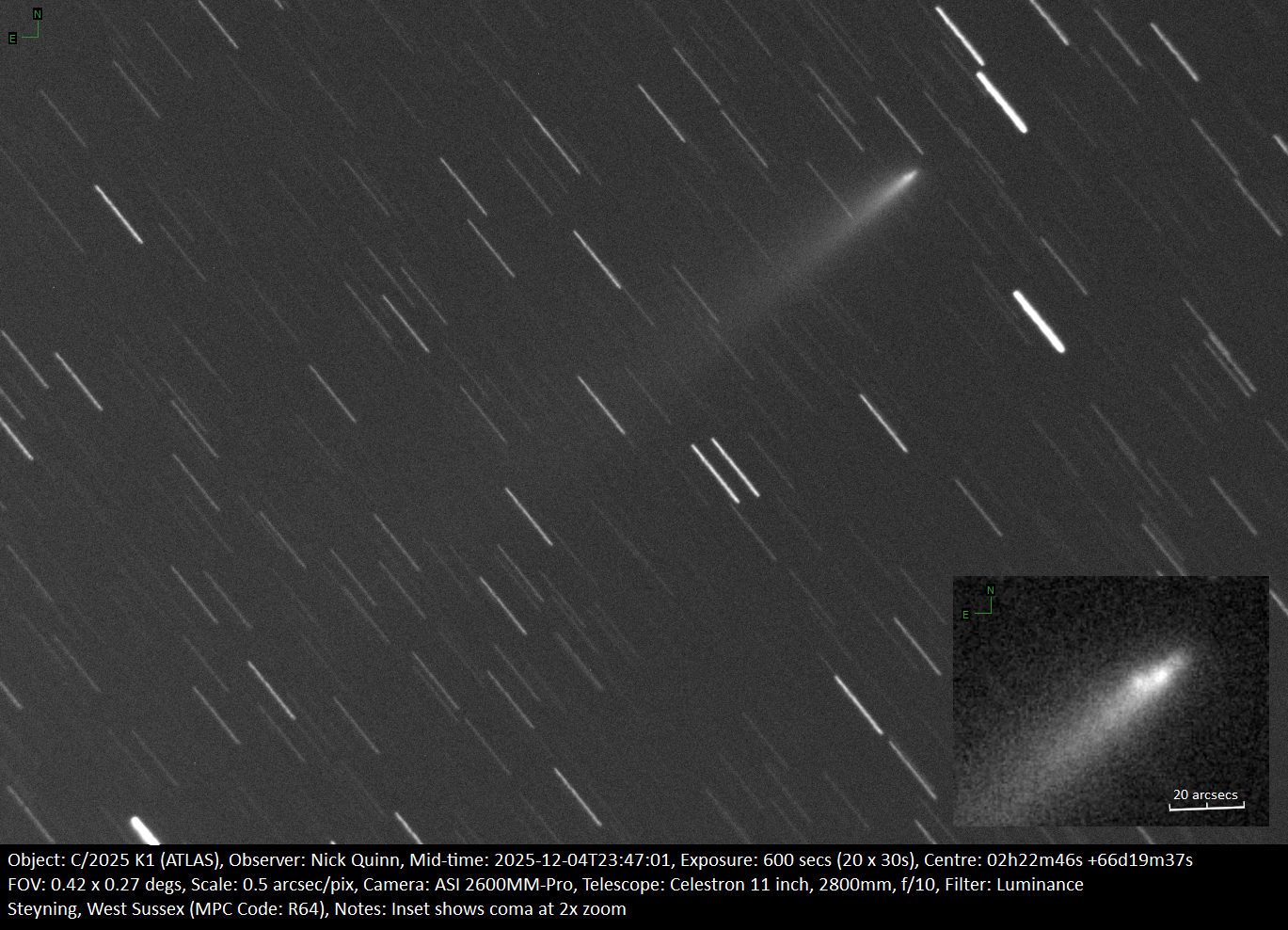
Nick QuinnParticipantLater on the comet was much higher and it was easier to image the fragments – although I have lost track of which ones are still extant.
https://britastro.org/observations/item.php?id=20251205_160939_9cad980d2d92.png
-
This reply was modified 10 months, 2 weeks ago by
 Nick Quinn.
-
This reply was modified 10 months, 2 weeks ago by Nick Quinn.
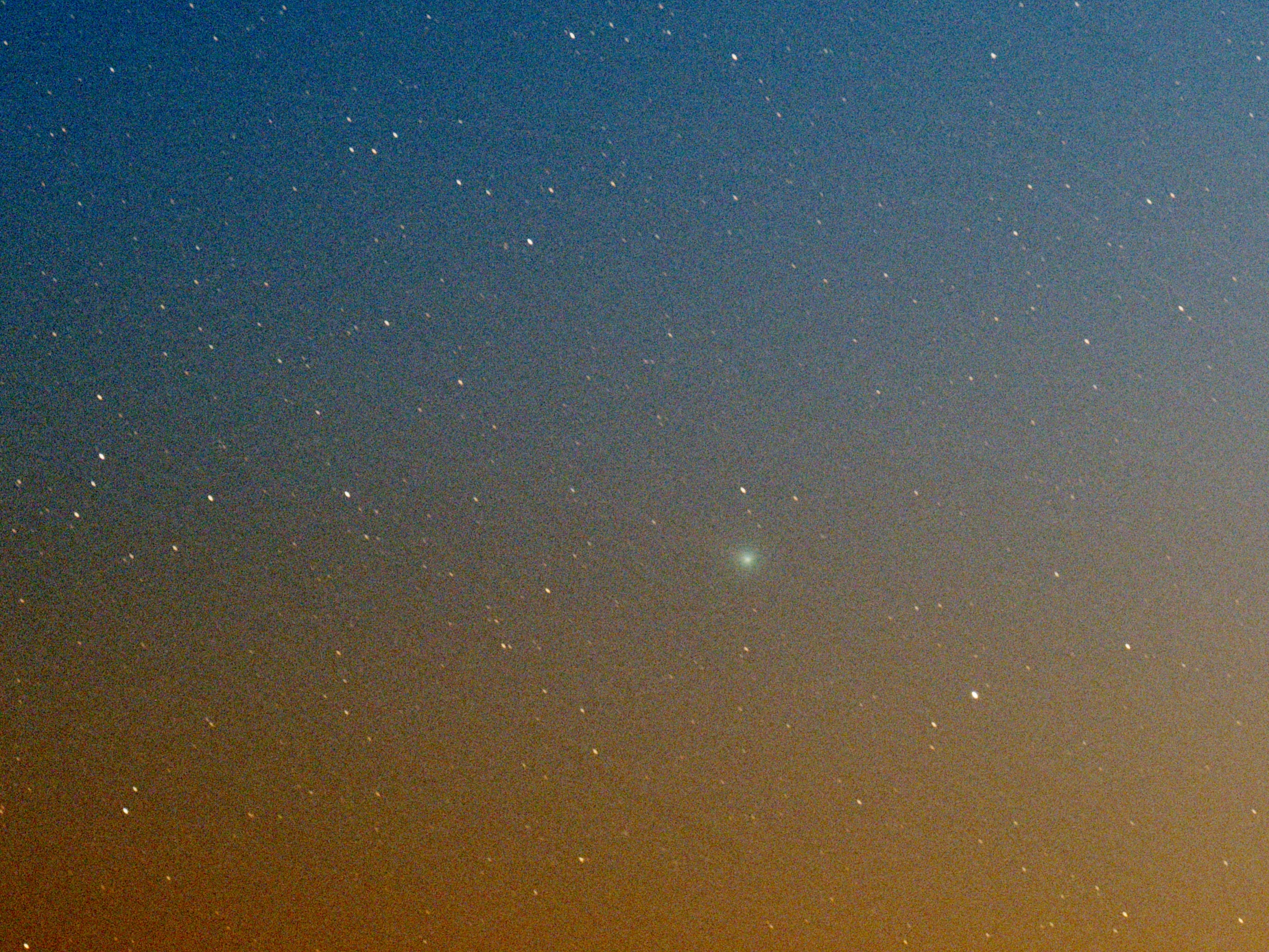
Nick QuinnParticipantManaged to image the comet Thursday evening just after sunset, over the English Channel.
https://britastro.org/observations/item.php?id=20251010_000150_7f5dcaef3f09.jpg
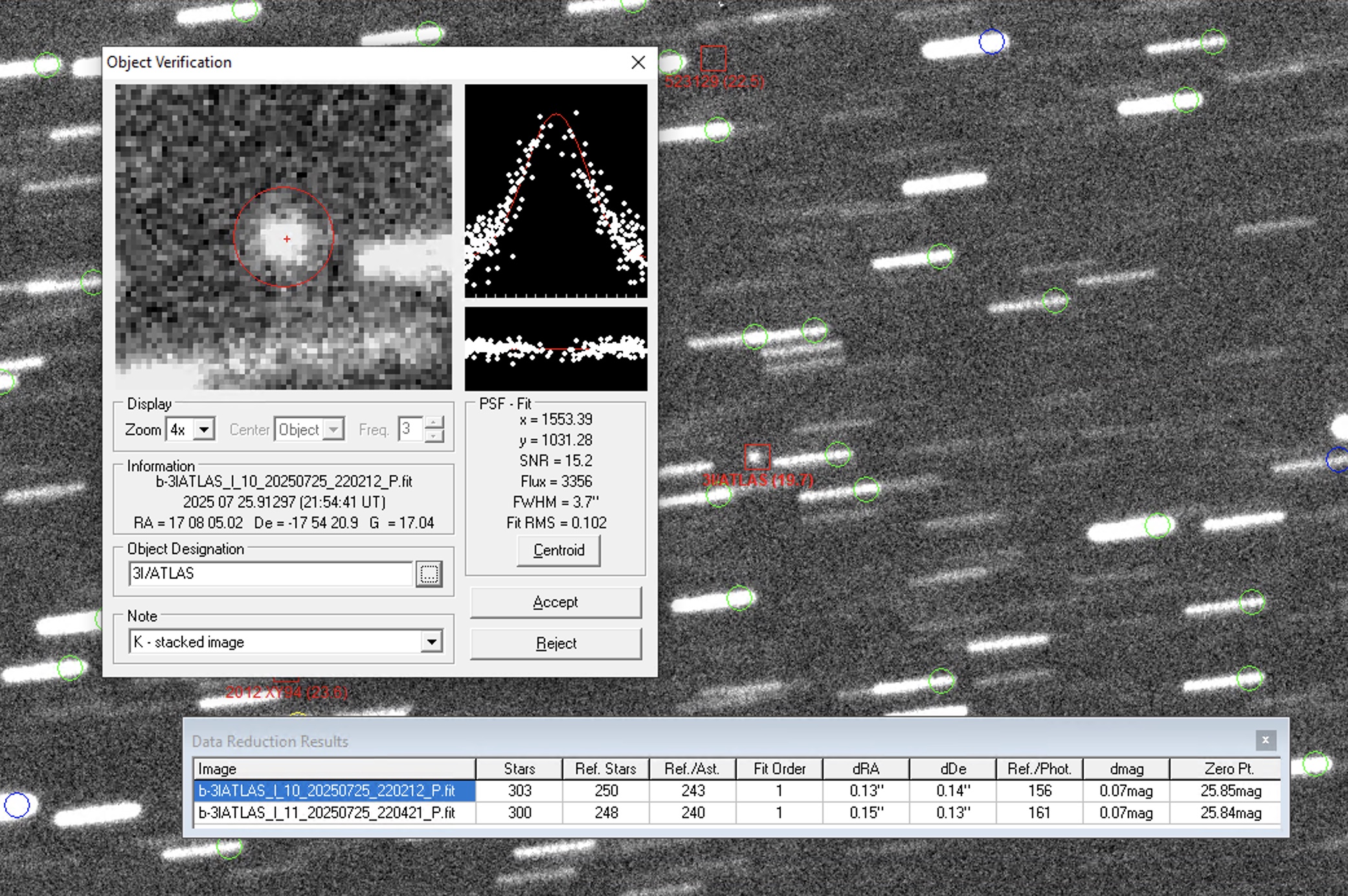
Nick QuinnParticipantI measure it as 17.0 with Astrometrica GAIA DR3 ‘g’ band filter.
https://britastro.org/observations/observation.php?id=20250726_151349_3fdc0db3f0b5c6df
Attachments:
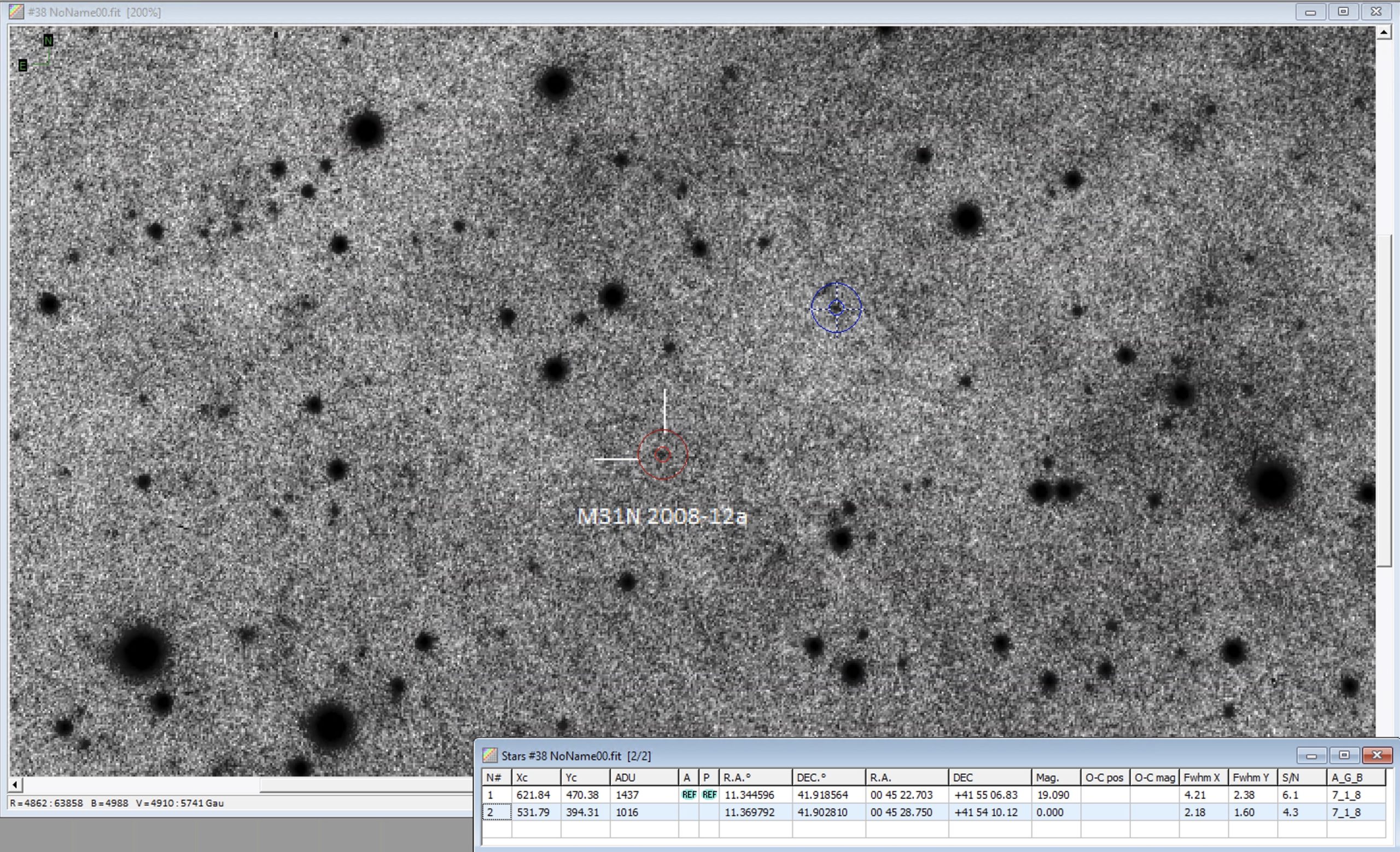
Nick QuinnParticipantDrifting cloud and near-full Moon severely hampered imaging this object. A stack of 16 x 2 min images through a Celestron 11, ‘L’ filter, barely shows the nova above the noise. Reference star has a V mag of 19.087 and the nova was fainter than that. Here is a screenshot from AstroArt 7.
Attachments:
Nick QuinnParticipantNick QuinnParticipantDid anybody record STEVE during the auroral activity? My RMS Meteor camera shows an interesting phenomenon around 21.00hrs. to the west of my location in Sussex, so somewhere over south/southwest England. My video is here: https://youtu.be/yXpZOL5TDWU STEVE, if indeed it is STEVE, appears on the lefthand side of the frame just to the left (south) of alpha Oph at az 263 deg, alt 21 deg. A few frames have been corrupted.
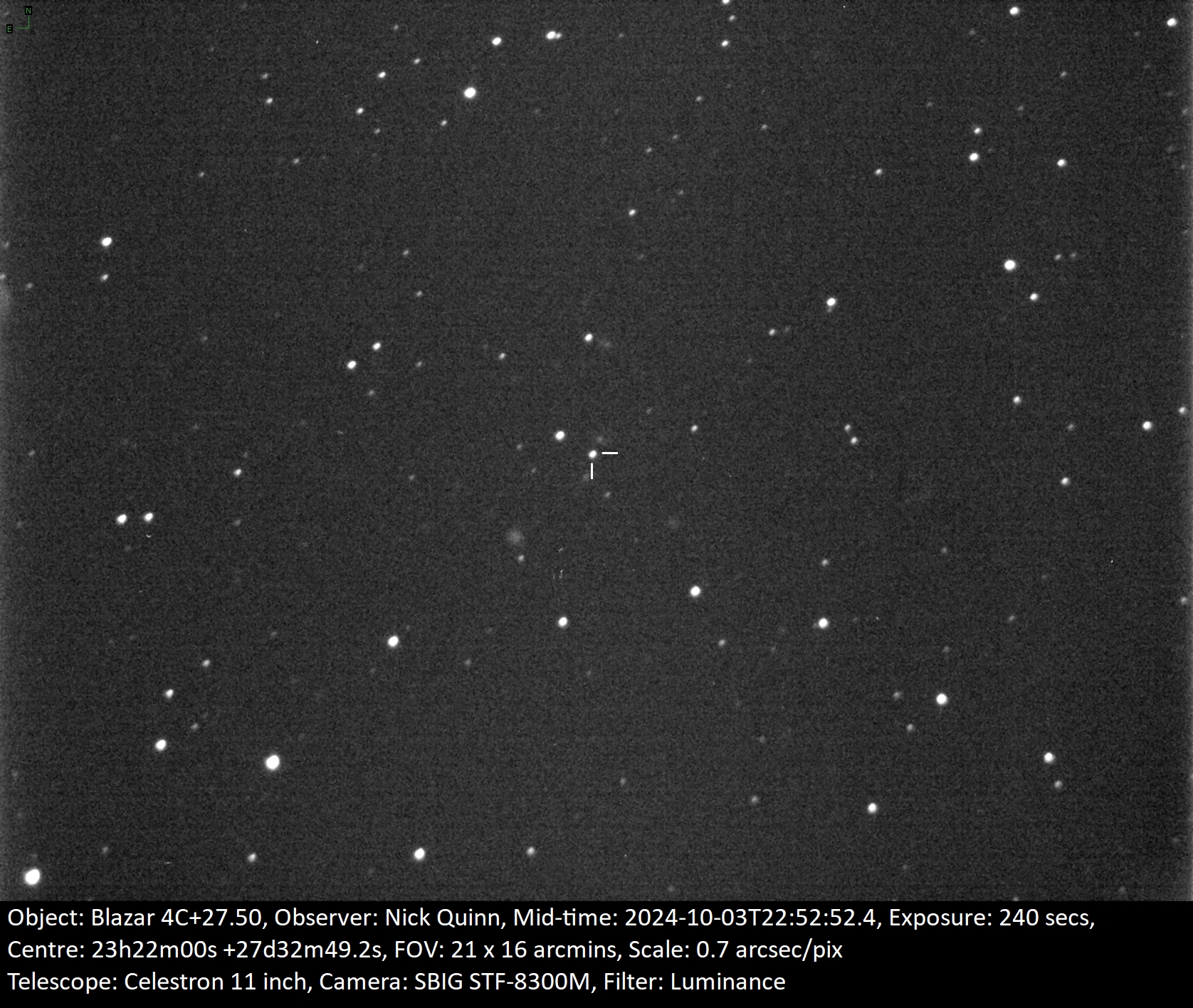
Nick QuinnParticipantAt 2024 October 3.956 I recorded it at about mag.14.3 with a wideband filter (L) and 13.6 (R)
https://britastro.org/observations/item.php?id=20241005_153149_2ae1ae1329d5.jpg
-
This reply was modified 2 years ago by Nick Quinn.
-
This reply was modified 2 years ago by Nick Quinn.
Nick QuinnParticipantAlongside imaging the Sun with a telephoto lens, I plan on using a DSLR with wide-field lens to capture Jupiter, Venus & 12P. It will all be automated so if it works it works and if it doesn’t I will still have a memory of the views of chromosphere and corona through a binocular!
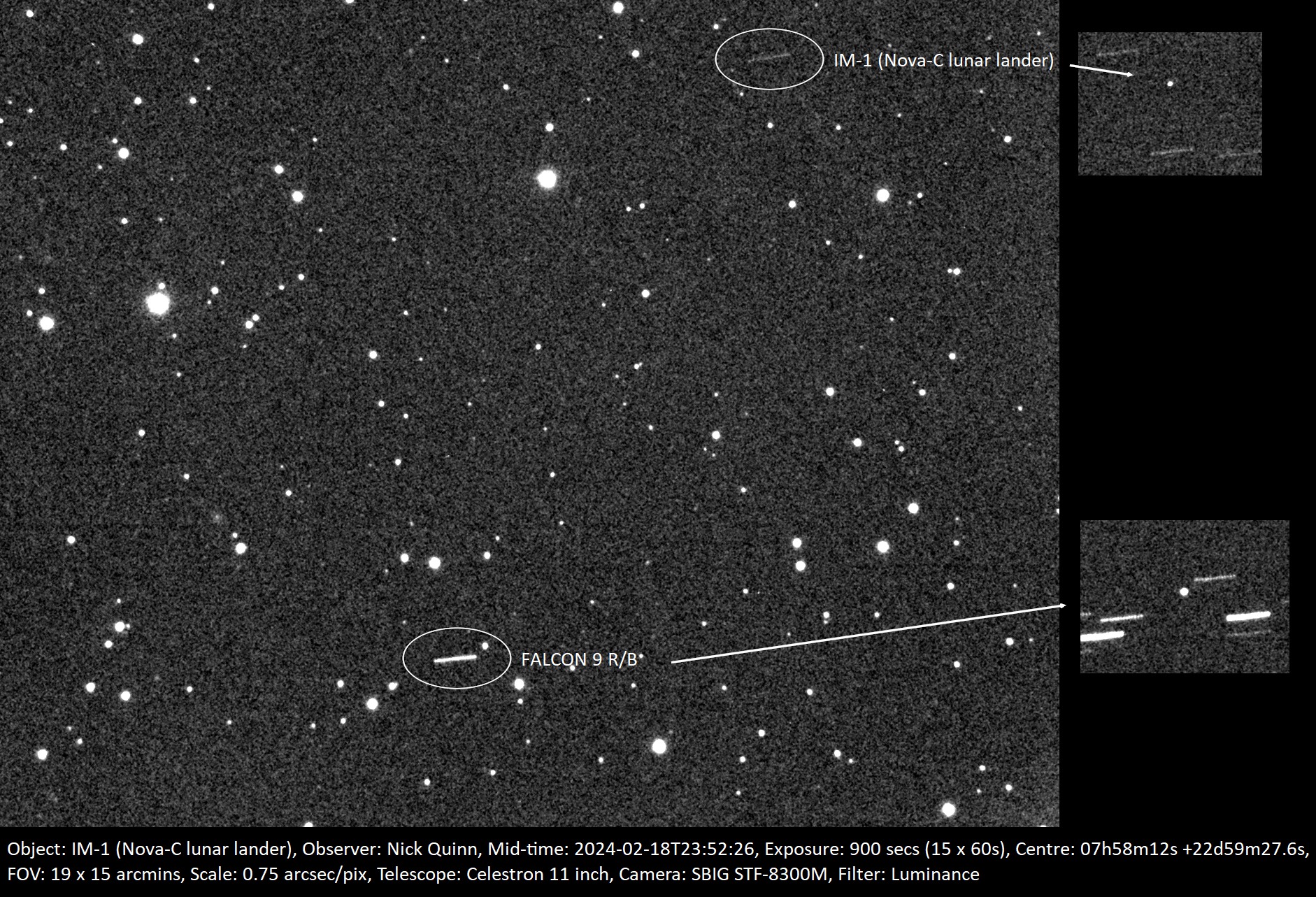
Nick QuinnParticipantI managed to image the lander and the Falcon 9 rocket booster in a rare (mostly) clear sky on Sunday night (2024 February 18/19). Matched positions given Project Pluto Artsat predictions: https://www.projectpluto.com/sat_eph.htm.
https://britastro.org/observations/item.php?id=20240220_130719_dfa372ad9446.jpg
Nick QuinnParticipantOk, our copies must be handled slightly differently then! Same The Mail Group address and post code but mine includes Sunbury-on-Thames. My general Royal Mail deliveries are now only 2 or 3 times a week but AFAIK I still seem to get pretty much everything.
Good luck!
Nick QuinnParticipantApart from a bit of trouble renewing my subscription a couple of years ago when the owners changed, I have received the magazine quite regularly every month.
The bottom of my address label shows ‘UNITED KINGDOM 385-01 (*1 of 5)’ which remains the same month-to-month and may indicate that it is part of a batch of 5 copies sent to the UK and packaged by The Mail Group in Sunbury-on-Thames. How does that compare to your label, Chris?
Nick
Nick QuinnParticipantJust about able to still image JUICE now over 1 million miles distant. I had to track the motion of the spacecraft as it was too faint for imaging at sidereal rate. Project Pluto gave a magnitude of 18.6 but I think it was a bit brighter, maybe closer to 18.
https://britastro.org/observations/observation.php?id=20230422_170616_b8fadbebb39febdd
Nick QuinnParticipantNice one, Grant!
Better skies here on April 17th, but not as good as your ‘murky conditions’. I reckon around mag. 17 as predicted by Project Pluto but we both have the booster as much fainter whereas Project Pluto had it 0.1 mag brighter.
Image: https://britastro.org/observations/observation.php?id=20230418_144755_2de4bfdcf6b88a29
Nick QuinnParticipantCloudy on Friday night but marginally better on Saturday. Magnitude: 15.
Would have been a very easy object under good sky conditions.JPL Horizons: 2023-Apr-15 22:05 12 08 17.94 -03 53 10.9
AstroArt: JUICE C2023 04 15.92043 12 08 17.81 -03 53 05.1 15.0 VAttachments:
-
This reply was modified 10 months, 2 weeks ago by
-
AuthorPosts