Forum Replies Created
-
AuthorPosts
-
 Denis BuczynskiParticipant
Hi Giovanni,
Would the fact that the eclipse image that you show was taken at a low altitude not mean that the image would look redder due to atmospheric extinction that if the image had been taken with the Sun higher in the sky?
Denis Buczynski
Disclaimer: comment from an inexperienced TSE observer of only one TSE, that of Cornwall in 1999.7 August 2026 at 2:39 pm in reply to: Paper on the variability of the blazar OJ 287 includeds BAA authors #642324Denis BuczynskiParticipantHi Jeremy.
I think I sneaked into that observers list. Albeit that my name is mispelled!
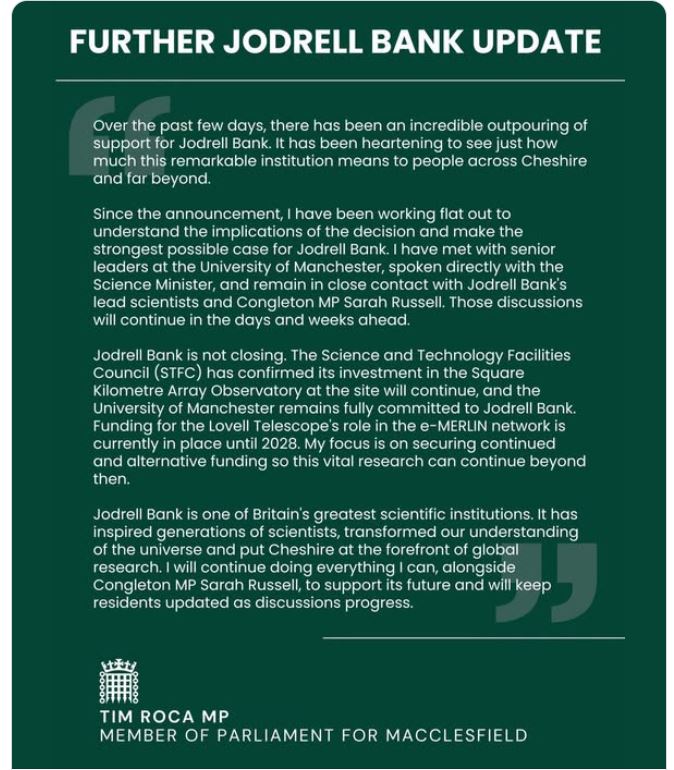
Denis BuczynskiDenis BuczynskiParticipantMore information from the local MP Tim Roca
Denis BuczynskiAttachments:
Denis BuczynskiParticipantHi All, I also watched the live stream and experienced the intermittent sound quality as the speakers moved closer and further way from the fixed microphone. Is it not possible have a secondary microphone atached to the speakers jacket lapel. This would be in additon to the fixed microphone. This arrangement is common when speaking at Local AS meeting etc. The BAA has used a jacket microphone at other meeeings to ensure good sound quality.
Denis Buczynski
PS Despite the sound problems I was able to get the main jist of what the speakers were saying it was just that some of the detail was lost, and that is the shame. I enjoyed the streamed meeiting and appreciate being able to watch especially as I live in Highland Scotland.Denis BuczynskiParticipantMore info from Phillip Houston on ATS Forum
Yes, a spectrum camera seems very likely. This camera has a rather small range of tilt adjustment, perhaps 40 – 50* or less, and only in one direction, unlike ordinary view cameras. It would work with an objective prism, and perhaps a long focus singlet objective. No need for achromatism in a dedicated spectrophotography system. In fact, a singlet lens and prism of the same glass would perhaps give a more linear spectrum spacing than anything achromatic. As John pointed out, focal length of a singlet varies with wavelength, requiring a range of tilt. Quarts optics would be needed to reach very far into the ultraviolet, but other materials could be used for visible and infra-red.
It seems likely that this plate (or film?) holder was part of a spectroscopy dedicated optical tube that attached to a larger telescope. The scale and long stem knob in the top photo appear designed for shifting the back to allow multiple images on one plate. A dark slide is pulled out at left. Typical practice for stellar spectrophotos of the day would have been to orient the prism and camera back so that the telescope drive could be shut off and the light would trail perpendicular to the dispersion spread, giving nice neat spectral lines and great stability.
On the bottom photo, you can see some narrow dovetails. This is consistent with fine English carpentry. Looks like mahogany and very well made.
Sam
Denis BuczynskiParticipantHello all,
Here some comments from John Briggs and Richard Berry in the Antiqur Telescope Forum:Hi Denis,
I’m pretty sure it’s a plate holder from a spectrograph. Some old instruments that I have seen had very inclined focal planes like this hardware suggests. One example is the setup used for early Raman spectroscopy. But I think some other types I have seen, but did not have time or circumstances to study, had similarly included plate holders.
All the 2×10-inch plate holders on the old Mount Wilson solar telescope Littrow spectrographs are tiltable to allow for varying focal lengths of the different wavelengths recorded in a given exposure (given that the camera used a lens with some inevitable chromatic aberration). But the maximum angle allowed was not nearly as great as what has been built into the unit you show.
I’ll see if I can find pictures of spectrographs with similar big-angle plate holders to give us a better clue!
–JWB.
And a bit more: These highly inclined plate holders were used on quartz spectrographs for violet and UV light, where the prism and the camera lens, etc., where made of quartz for good UV transmission. In this case, the camera lens might not have been more than a single element, given that the goal was transmission and focusing of UV. Only quartz was possible! Thus, the camera’s focal length was a function of wavelength. And from the appearance of how these things were made (with a big tilt), it was a strong function!Google “Adam Hilger quartz spectrograph.”
I recently learned that Adam Hilger had been an employee of John Browning in Hilger’s youth. (I’m a big fan of all things Browning!)
–JWB.
Hi all–I agree. There were similar plateholders on the spectrographs at C.R.E.S.S. at York University (Toronto) where I worked many years ago. The focal surface is inclined if there are refractive optics in the instrument. They would take many spectra on each plate, moving the plate down for each spectrum. If you examine it carefully, you’ll probably find what were called “deckers” that allow the spectroscopist to shoot a 6 to 10mm slice on a 3-1/4 x 4-1/4 plate, or whatever size the plateholders take. I was sometimes able to snatch boxes of out-of-date 103a-E Kodak glass plates before they chucked them out.
–Richard
Denis BuczynskiParticipantHi David,
Maybe it is a camera that is used for meteor spectroscopy with objective prism and lens attached. Observatories had camera bodies made like that by a firm called Gandolfi.
Denis BuczynskiDenis BuczynskiParticipantSuch sad news Allan’s passing. I had known him for decades as he did his post grad degree at Lancaster University, my home city. His lectures were unique and never to be forgotten. I heard him give a 1 hour talk at a BAA meeting at Alston Hall in Preston, the title was ” The History of Astronomical Photography and Spectroscopy”, he never used a single slide or image in delivering that talk, it was spellbounding for all in that room. He will be greatly missed by all that knew him. Allan Chapman RIP.
Denis Buczynski-
This reply was modified 8 months, 3 weeks ago by
 Denis Buczynski.
Attachments:
Denis BuczynskiParticipantSeem to remember that the lunar photometer using a photocell was used extensively by a Lunar section member Lawrence Fitton to measure albedo changes in local lunar topography. I think there was an interesting “discussion” in the LCC about the validity of the method with a member (David Jewitt) who became very famous as the first astronomer to recover Comet Halley at its 1986 apparition. Old days old memories!
Denis BuczynskiDenis BuczynskiParticipantRichard , you state “even if it was a comet with an m2 brightness of say the 2nd magnitude in the pre-dawn sky: fuzzy stars really stand out!”
Example being Comet Holmes 17p in November 2007. A bright fuzzy star that really stood out
Also Comet Comet IRAS-Araki-Alcock C/1983 H1 in May 1983.Denis BuczynskiParticipantHi Nick,
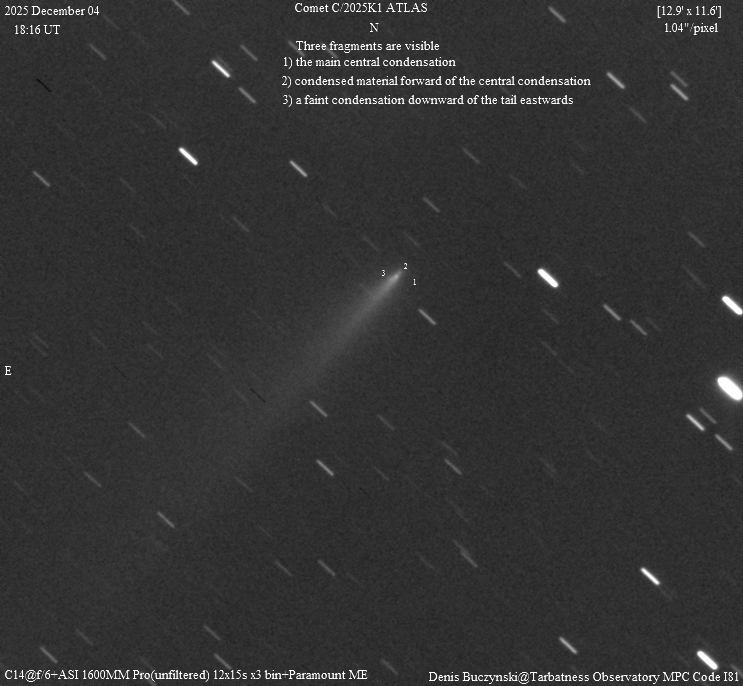
I imaged the comet yesterday evening 20251204 and recorded three fragments.I think only the main central condensation survives as one of the three original fragements. The other two I recorded are relatively new, appearing this last week after the two original secondary fragments faded.As I say “I THINK”
Denis Buczynski-
This reply was modified 10 months, 2 weeks ago by Denis Buczynski.
Attachments:
Denis BuczynskiParticipantNick,I realised that the 3i anti-tail we are seeing is not the “usual” type of comet anti-tail that we see in LP comets which lay a trial of dust along the orbit, which we can then see edge on as we cross the orbital plane of the comet.In 3i we are seeing dust that is being released at present but remaining in the direction of ejection.
Is that correct?
I am here to learn that is why I am in the BAA.Denis BuczynskiParticipantHi Martin, great news that you have finished the project and I am so pleased that I was able to donate the mirror blanks, they had been sat in my study for some time, so a very good end.
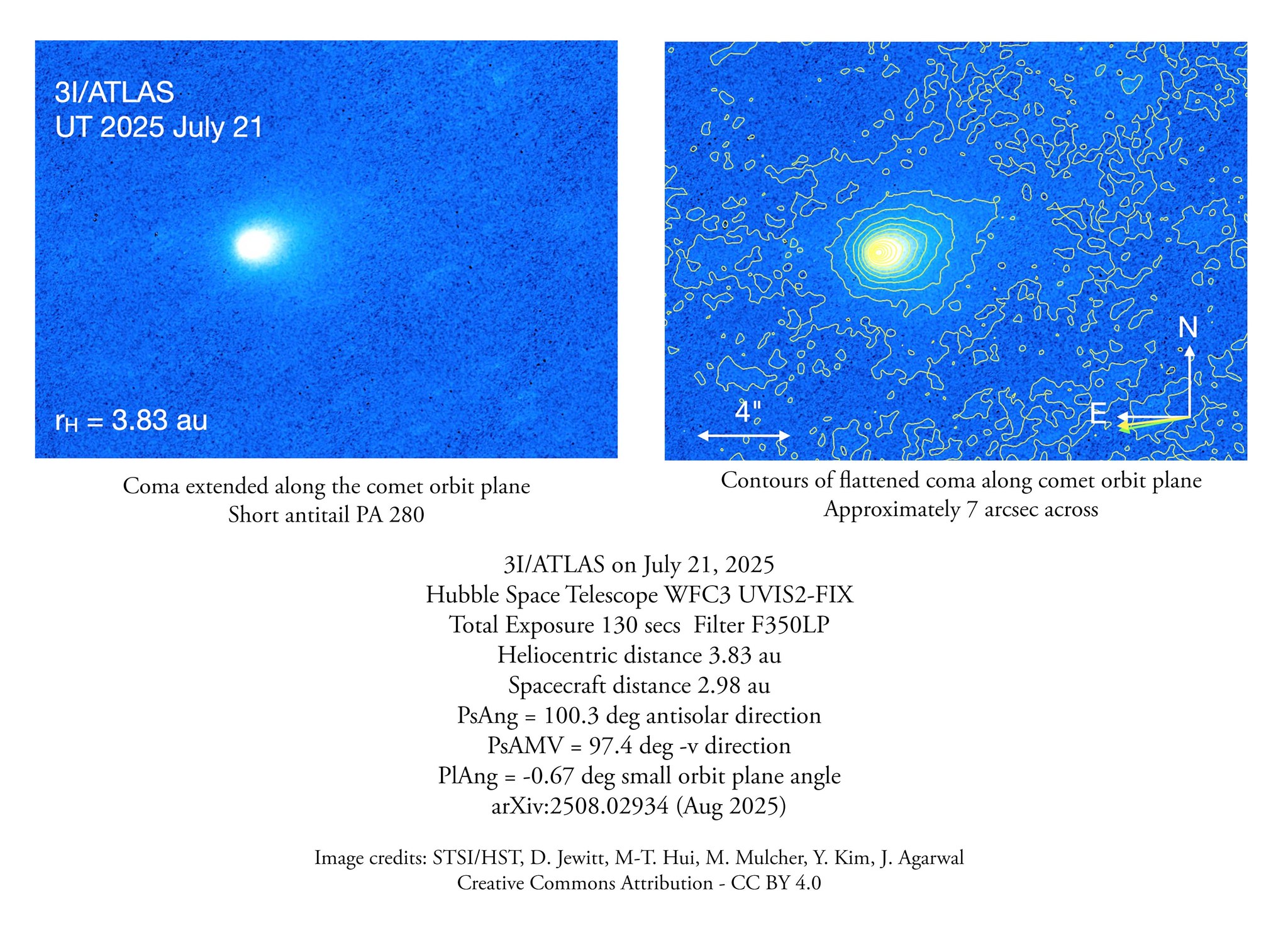
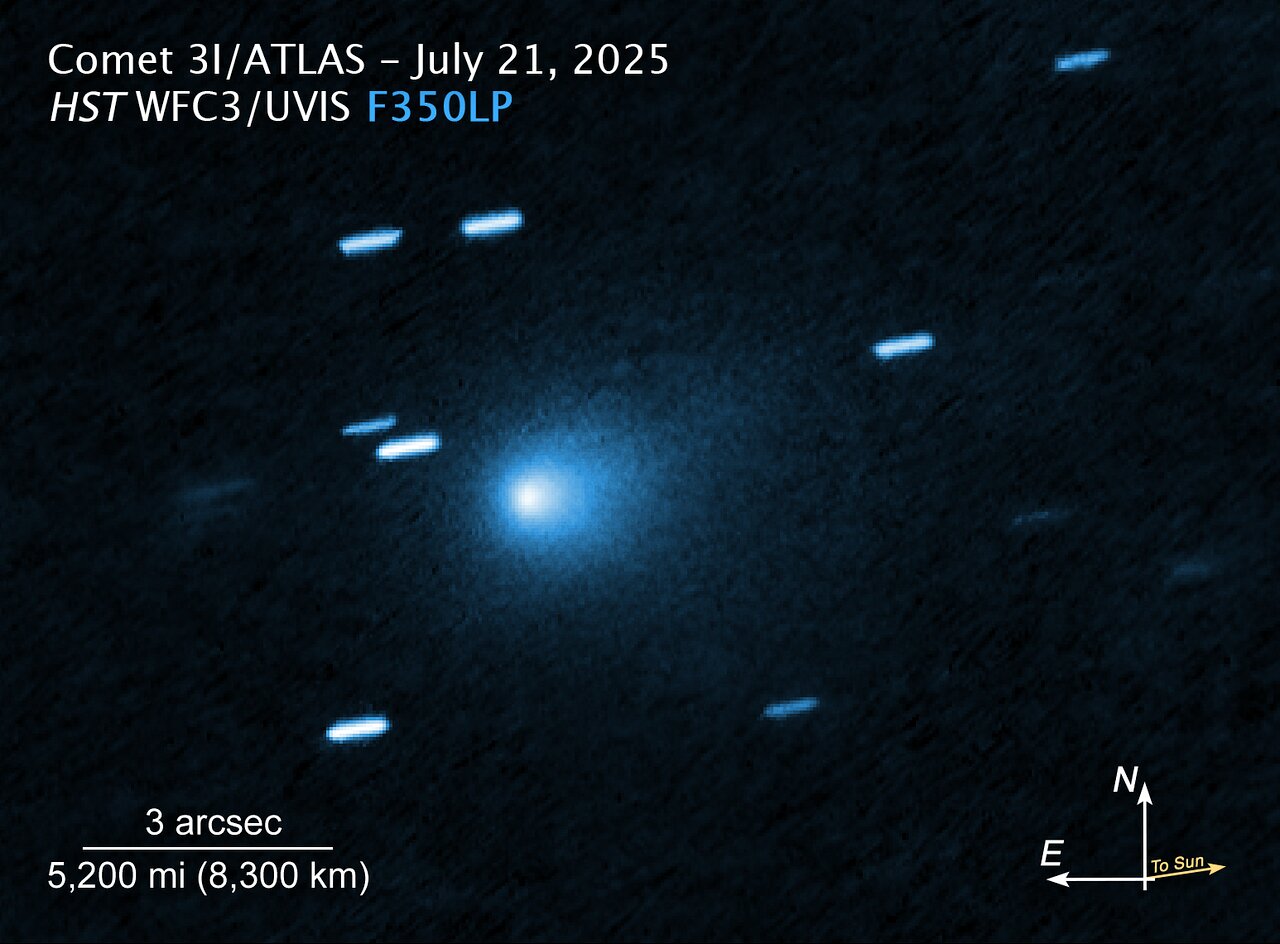
Denis BuczynskiDenis BuczynskiParticipantHi Nick It seems that the coma elongation you have seen in your image is also recorded by HST, they comment that the extension is a plume ejected from the sunward side of the comet.
HST observed this comet and gave the following report.
Hubble’s observations are allowing astronomers to more accurately estimate the size of the comet’s solid icy nucleus. The upper limit on the diameter of the nucleus is 5.6 kilometers, though it could be as small as 320 metres across, researchers report. Though the Hubble images put tighter constraints on the nucleus size compared to previous ground-based estimates, the solid heart of the comet presently cannot be directly seen, even by Hubble. Observations from other observatories, including the NASA/ESA/CSA James Webb Space Telescope, will help refine our knowledge about the comet, including its chemical makeup.Hubble also captured a dust plume ejected from the Sun-warmed side of the comet, and the hint of a dust tail streaming away from the nucleus. Hubble’s data yields a dust-loss rate consistent with comets that are first detected around 480 million kilometres from the Sun. This behaviour is much like the signature of previously seen Sun-bound comets originating within our Solar System.
The big difference is that this interstellar visitor originated in some other Solar System elsewhere in our Milky Way galaxy.
-
This reply was modified 1 year, 2 months ago by Denis Buczynski.
-
This reply was modified 1 year, 2 months ago by Denis Buczynski.
Attachments:
Denis BuczynskiParticipantThis object has now been officially designated as an interstellar comet
Now officially announced as 3I/ATLAS = C/2025 N1 (ATLAS)
https://minorplanetcenter.net/mpec/K25/K25N12.htmlDenis BuczynskiParticipantSuch sad news. Terry was a leader in his field and a man who brought ccd image observing to the UK amateur astronomer world.I knew him for many years (1980’s onwards) via the BAA and TA. I bought and used SX cameras since Starlight Xpress was formed. I still have an SVFH9.Terry was always approachable and was able to advise and help wherever he could.He will be sorely missed by all who know him. Definitely a one off character never to be replaced or surpassed.
RIP Terry Platt
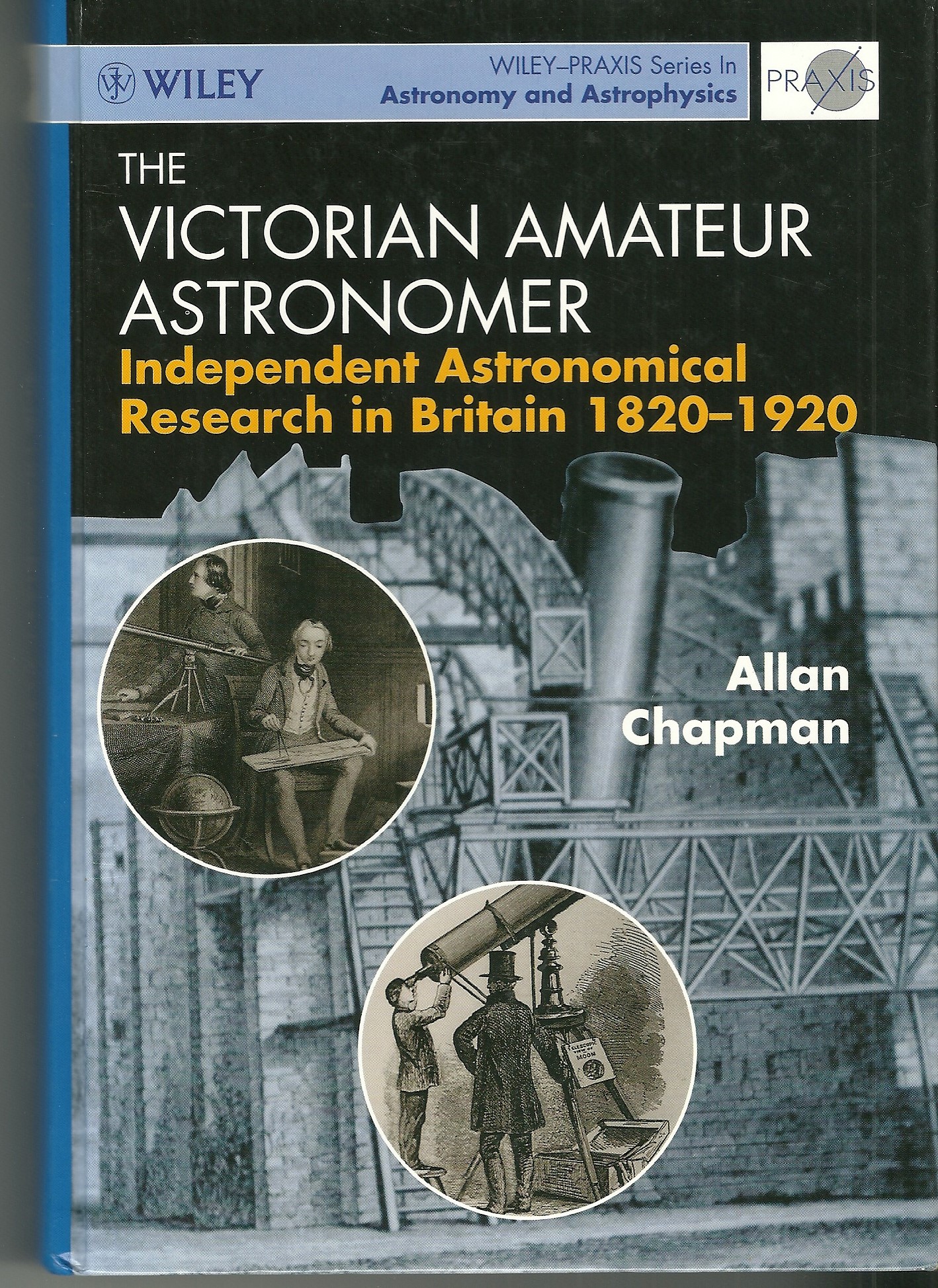
Denis BuczynskiDenis BuczynskiParticipantHi James, If they are still available I will buy the Variable stars books, the Chapman book and the Gaposhkin book. Parcel them up and let me know the total price including postage. You will have my postal address, if not mail me privately.
Denis BuczynskiDenis BuczynskiParticipantPaul,What type of titles are you wanting to add your astronomical library? I have an extensive collection of of books and magazines ( exaample is S@T 1940 to 2010) and I am looking to downsize in the near future.
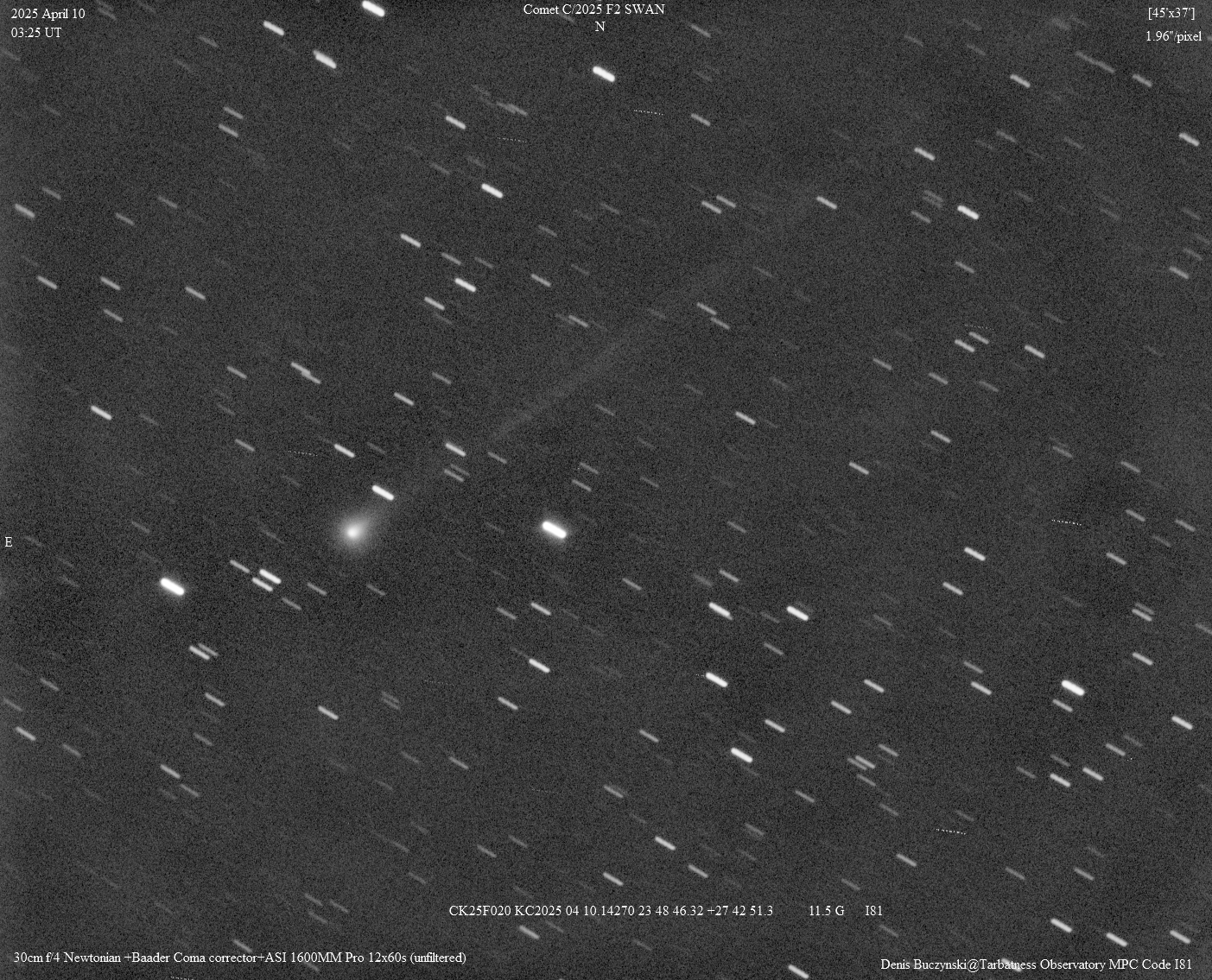
Denis BuczynskiDenis BuczynskiParticipantMy image taken on the morning of 20250410 from Tarbatness Highland Scotland.
Attachments:
Denis BuczynskiParticipantNo eruption tonight. Observation at Tarbatness MPC Code I81 mag 9.8 v band image.
Denis Buczynski -
AuthorPosts