Search Results for 'espin telescope'

› Forums › Search › Search Results for 'espin telescope'

Viewing 20 results - 141 through 160 (of 1,113 total)
  • Author
    Search Results
  • #626147
    Grant Privett
    Participant

    When you set up the mount, the weights should be adjusted so that if you disengage the gears/worms (only do this if someone has a very firm hold on the counterweight arm) the telescope can be pushed to any position by finger.

    Is that the case with this mount? If the telescope is strongly out of balance then the Home request may fail.

    Also, am not quite clear from what you wrote. Does it complete the Home operation (with two tone noises) and come to a complete halt without producing the error message or does it only produce the error message when you try a subsequent slew?

    I am with Martin on this one, the help support from the SB website is a good place to look to cure this problem – but its not rapid.

    #626116
    Sheridan
    Participant

    The Open University astronomy club has just had a new Paramount mount attached to its Sky software in its obervatory.
    We can’t get it setup so if there’s anyone able to assist with this we are willing to pay expenses and perhaps a meal.
    HELP please as we are unable to take local schools, cubs, brownies, scouts etc round.

    Sheridan Williams

    #626115
    Sheridan
    Participant

    The Open University astronomy club has just had a new Paramount mount attached to its Sky software in its obervatory.
    We can’t get it setup so if there’s anyone able to assist with this we are willing to pay expenses and perhaps a meal.
    HELP please as we are unable to take local schools, cubs, brownies, scouts etc round.

    Sheridan Williams

    bmerrikin
    Participant

    Hi Matt – thanks for your email regarding HAG’s 16” Newtonian. It is currently advertised on Astro Buy and Sell and although we have had some interest there has been no serious offer so the telescope still remains available. I would stress that we are negotiable on the price
    Regards
    Barry

    #625883
    Matt Dawson
    Participant

    Hello,
    Was this telescope sold?
    Thanks,
    Matt

    #625656
    Denis Buczynski
    Participant

    Can someone tell me the exact methodology that Edwin Hubble used to determine the magnitudes of the Cepheid variable he discovered in M31. Did just make eyeball estimates from the photographic plates, or did he use measurements of photographic star diameters.Or another method. The variations in magnitude were small and the star was faint and small on the plates.Probably the seeing was different on various nights and the star would hev been poorly defined on some nights and sharply defined and in focus on other nights. Telescope tracking and focus would have had an effect too. I just wondered how the determinations were actually made. Somebody will have studied this ground breaking set of observations in detail. I am curious to know. Perhaps I have missed a seminal publication which outlines the methodology. I need to know.
    Denis Buczynski

    Robin Leadbeater
    Participant

    You can do it with a fixed mount using the natural sidereal motion to drift the sun across the slit as I experimented with here with my LHIRES
    http://www.threehillsobservatory.co.uk/astro/spectra_29.htm
    With Buil’s other instrument the SolEx, it is essentially a high resolution spectrograph which is mounted on a telescope and the mount is normally driven at x times sidereal, taking advantage of improvements in camera sensitivity and speed to reduce the scan time so the result is less reliant on stable conditions. The details of this device are yet to be revealed though

    #625636
    Robin Leadbeater
    Participant

    That master of innovation in spectroscopy, Christian Buil has just announced his latest remarkable creation. It appears to be a fully integrated computerised spectroheliograph. In essence, a “Smart Spectroheliograph” which can produce narrow band images of the sun at any wavelength you chose without a telescope or computer
    http://www.astrosurf.com/topic/171610-soleil-du-10102024-et-nouveaut%C3%A9/

    Cheers
    Robin

    #625474

    In reply to: Equipment advice

    Gordon MacLeod
    Participant

    Many thanks Andy for replying.
    Yes, an altazimuth mount that is light is a great is idea. I’ve also been thinking of siting the Dobsonian outside as it is so easy to use and get one of the 365 all weather covers that are in some of the telescope retailers websites.
    Looking forward to getting back observing after quite a few years away from it.

    Gordon.

    #625473

    In reply to: Equipment advice

    Andy Wilson
    Keymaster

    Hi Gordon,
    I know what you mean, lugging a heavy telescope outside can put me off observing.
    Assuming you are using your Televue for visual observing, I wonder if an altazimuth mount would be lighter? You can get manual or ones that track sufficiently for visual observing. Some of the tripods themselves can still be a little heavy, though the whole package should be lighter than an equatorial mount.
    The latest smart telescopes look very interesting. I am contemplating buying one of the lighter models. Of course the observing experience will be different. They specialise in Deep Sky targets and none are good for planets. Most can observe the Moon and Sun, though only the full disc.
    Best wishes,
    Andy

    #625350
    Andy Wilson
    Keymaster

    Many thanks for all of the kind words.

    Yes, this means I will become a ‘professional astronomer’, a three year position as a ‘Postdoctoral Research Fellow in Astrophysics’. Early career astronomy researchers typically work at a variety of institutions or countries on two to three year contracts with specific research goals.

    My research will involve examining spectra taken by the William Herschel Telescope. The main part of my PhD was identifying candidate young stars, using photometry in the optical and infrared. The WHT will obtain follow up spectra for several thousand of these candidate young stars. These spectra will allow me to confirm or refute their nature as young stars.

    Best wishes,
    Andy

    #625180
    Richard Miles
    Participant

    Jeremy. In reviewing the 4 definitely observed eruptions, Brad Schaefer’s comments that the recurrence timescales are 7×81.4, 78.5, 79.7, and then states a likely 78.3 ± 0.3 yr should apply between 1946 and the next eruption. So that translates to 2024.4 ± 0.3. I don’t understand how he can ascribe such a small uncertainty (± 0.3 yr) in this prediction. Statistically from the above numbers you could envisage a distribution in which 9 eruptions span the range 77 to 85 yr, and that since the last two have been in the lower half of that distribution, the next event has more chance of being in the higher half, i.e. more like 82 ± 3 yr, which then takes it to the beginning of 2026. It does look like he has made an assumption that the periodicity is for some reason decreasing on average monotonically in a somewhat linear fashion. Is there some theoretical reason why that might be the case, I wonder?

    P.S. Brad Schaefer has done all sorts of research over the years. Am putting together a paper at present that uses three references to his work from 1985, 1986 and 1987. He writes that he was the first to work on this subject since antiquity and few if any other visual observers have since investigated this topic. The references are:
    Schaefer, B.E., 1985. “Predicting heliacal risings and settings”, Sky and Telescope, lxx, 261–3.
    Schaefer B. E., 1986, “Atmospheric extinction effects on stellar alignments”, Archaeoastronomy (Supplement to Journal for the History of Astronomy), (10), S32–42.
    Schaefer, B.E., 1987. Heliacal rise phenomena. J. Hist. Astron., 18(11), S19.

    #625163
    Trevor Emmett
    Participant

    Hi John,

    Thanks for this. I’ve signed the petition and shared it on my social media.

    I have a personal reason for wanting this telescope saved (see above). I would be delighted to help your group in any way I can, though my location (in north Cambridgeshire) may limit my involvement.

    Please let me know if there is anything I can do to assist in this project.

    Good luck!

    Best Wishes,

    Trevor

    #625076
    John Nichol
    Participant

    Hello,

    Just an update on this. We are in the process of putting together a group with the intention of recovering this historic telescope. This will not be an easy task as several failed attempts have been made previously. We are taking a non-confrontational approach in the hope that the current custodian of the telescope will give a positive response. A petition has been set up and we need as many signatures as possible as this will be central in our efforts to secure the telescope. Please help us by signing this and leaving a positive comment. We would particularly welcome comments from those who have had any association with the telescope in the past. Our group will consist of people who have historical links to the telescope and others with appropriate skills. The size of the group will be limited in order to facilitate effective management.

    Should we be successful in securing the telescope, moving it from its current location will be a challenging task due to its size and limited access. A crane and truck will be needed to move it.

    If recovered it is important that the telescope is used to educate and inspire others to think more about our precious earth and the universe in general.

    It seems like our historical observatories such as the former home of the RGO at Herstmonceux and Mills observatory, Dundee, are increasingly under threat. Although I believe the Mills Observatory has now been given a reprieve. I am sure that you will agree that we must do our best to hold onto our historical observatories and telescopes and not allow them to pass into history. Here is the link to the petition:

    https://www.change.org/p/save-espin-s-telescope-let-it-be-restored?source_location=search

    Thanks for looking.

    John Nichol

    #625005
    Jeremy Shears
    Participant

    This nova in was discovered independently by Itagaki (Japan) on 2024 Sep. 09.436 UT at unfiltered CCD mag 11.4 and by Pearce (W. Australia) on 2024 Sep. 04.474 UT at unfiltered CCD mag 11.3.
    It has the designation V1725 Sco.

    It is located at (J2000.0) 17 06 46.54 -35 28 06.8 so it is pretty far south.

    A fine image by Mazin Younis from his remote telescope in Morocco: https://britastro.org/observations/observation.php?id=82105

    Gary Poyner used a remote telescope to image it:
    Sep 10.4333 10.375V Slooh Australia 1

    #625000

    In reply to: Particle detectors.

    Robin Leadbeater
    Participant

    There is an interesting little “Muon Telescope” project here using 4 Geiger detectors in a coincidence detecting array
    http://parac.eu/projectmk30.htm

    Cheers
    Robin

    #624967
    David Trowbridge
    Spectator

    David and Robin,

    Your suggestions are spot on and I no longer have that error. Processing now runs to completion. Very helpful.

    For some reason, some of my spectral images appear with two parallel traces close together, but at different Y-values. I suspect it may be a tracking problem — as if the mount is being over-corrected, causing the telescope to oscillate between two slightly different directions.

    Thank for your assistance.

    David

    #624360

    I wish you all a good and beautiful observation.
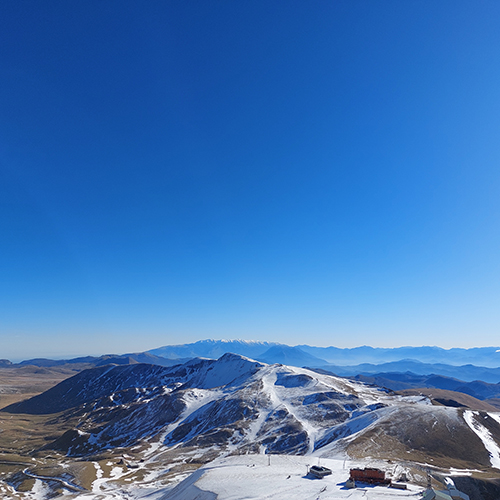
    I planned to observe the event by taking the telescope to an altitude of 2500m on Mount Aquila in the Gran Sasso d’Italia. Unfortunately, the weather forecast is not favourable. Here in the valley (L’Aquila city) it has been thunderstorms and hail for a few days, and on the high peaks even worse. I will stay on the terrace at home, God send me good luck.

    Pictured is the panorama from the summit of Monte Aquila. Below, the two domes of the Abruzzo astronomical observatory (at an altitude of 2120 m)

    Attachments:
    #624239
    Jeremy Shears
    Participant

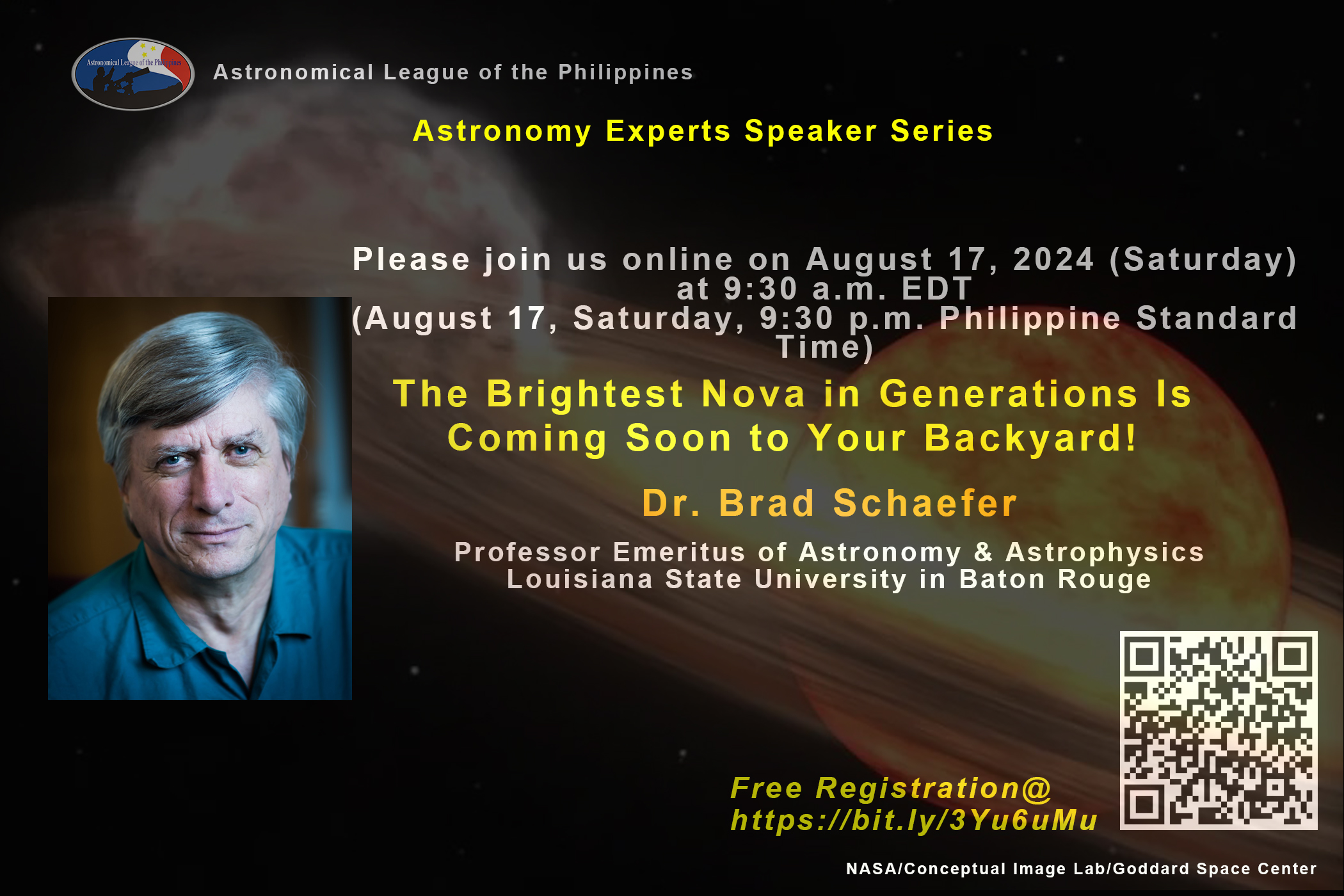
    Invitation to Brad Schaefer’s Zoom talk on August 17th regarding the predicted eruption of T CrB

    I am sharing this invitation from Edwin Aguirre about this Zoom talk on August 17 (Saturday) at 1:30 p.m. UTC (14.30 BST)
    It will be interesting to hear his prediction for the time of the eruption.

    Jeremy

    I would like to invite you and the BAA members to Brad Schaefer’s Zoom talk on August 17 (Saturday) at 9:30 a.m. EDT (1:30 p.m. UTC) regarding the anticipated eruption of T Coronae Borealis. The talk is free and open to the public.

    Attached are the details of Brad’s online talk. In addition to Zoom, the event will be streamed on Facebook Live and recorded for YouTube viewers.

    NOTE: Everyone needs to register first in order to get the Zoom link for the webinar. You can either scan the QR code on the attached announcement with your cellphone or go directly to the Zoom registration page:

    https://us02web.zoom.us/webinar/register/WN_Bm_NLfhkSQyG0Es31OYkqg#/registration

    Brad’s talk is part of the “Astronomy Experts Speaker Series” that Imelda and I started two years ago in collaboration with the Astronomical League of the Philippines. As you know, the Philippines is a relatively small developing country in Southeast Asia, and many people there cannot afford to travel overseas to attend astronomy seminars and conferences.

    So, our goal is to help raise public science literacy and awareness in the country by inviting renowned scientists, researchers and science communicators to share their knowledge and expertise online with the Filipino people through our Zoom webinar series. It is all part of our international astronomy educational outreach efforts.

    To date, our guest speakers have included:
    Prof. Jay Pasachoff (Williams College), who talked about his 2021 Antarctic solar eclipse expedition
    Zolt Levay (STScI), who discussed the Hubble Space Telescope’s most iconic images
    Dave Eicher (Astronomy magazine editor-in-chief), who spoke about galaxies and galaxy classification
    Fred Espenak (Mr. Eclipse), who talked about predicting and chasing total solar eclipses
    J. Kelly Beatty (Sky & Telescope magazine senior editor), who spoke about the fight against light pollution
    David Levy on how he and the Shoemakers discovered Comet Shoemaker-Levy 9
    Heidi Hammel (AURA vice president for science), who spoke about the James Webb Space Telescope’s latest findings
    Dan Green (CBAT director), who discussed the nature of comets
    Debbie Elmegreen (IAU president), who talked about galaxies at the dawn of the Universe
    Father Chris Corbally, S.J. (Vatican Observatory/Steward Observatory), who explained the mystery of “The Star of Bethlehem”
    Brother Robert Macke, S.J. (Curator of the Vatican Observatory’s meteorite collection at Castel Gandolfo, Italy), who talked about meteorites, asteroid 101955 Bennu, and the OSIRIS-REx mission
    Brother Guy Consolmagno, S.J. (Vatican Observatory director), who talked about Vesta and the Dawn mission
    Valentin M. Pillet (National Solar Observatory director), who discussed the solar corona and the current Solar Cycle 25
    Mike Brown (Caltech), who talked about Pluto and the search for Planet Nine
    Robert Nemiroff (Michigan Tech), co-founder and editor of NASA’s Astronomy Picture of the Day (APOD)
    Jonathan McDowell (Harvard-Smithsonian Center for Astrophysics), who spoke about the Chandra X-ray Observatory and the invisible Universe.
    For fall/winter, we plan to have Meg Urry (Yale University), who will talk about the supermassive black hole lurking at the center of the Milky Way, and Michael S. Kelley, program scientist for the Planetary Defense Coordination Office at NASA Headquarters, who will discuss the impact threat posed by NEOs, and for next year, NASA astronaut Don Pettit, who will talk about astrophotography from the International Space Station. We are currently finalizing the schedules for their respective webinars.

    We hope you can join us for Brad’s talk on the 17th!

    Best regards,

    Edwin

    • This reply was modified 2 years, 2 months ago by Jeremy Shears.
    #624197

    Topic: UZ Boo

    in forum Variable Stars
    Gary Poyner
    Participant

    More interesting VS activity for you to get your teeth into…

    Japanese observer Masayuki Moriyama has reported the UGWZ type dwarf nova in outburst on August 08.531UT at magnitude 12.91C (vsnet-outburst 31039). This is the brightest outburst to be detected since March 2019. The field is getting pretty tricky in the evening sky from the UK, so any observations will be greatfully received. Please upload to the VSS DB asap.

    The 2013 outburst was probably the best covered, with four rebrightenings observed after the initial outburst. The whole event lasted around a month.

    UZ Boo can be found at 14 44 01.21 +22 00 54.8 (J2000.0), and charts can be plotted and configured to your telescope at the AAVSO Variable Star Plotter here

    Good luck,
    Gary

    • This topic was modified 2 years, 2 months ago by Gary Poyner.
Viewing 20 results - 141 through 160 (of 1,113 total)